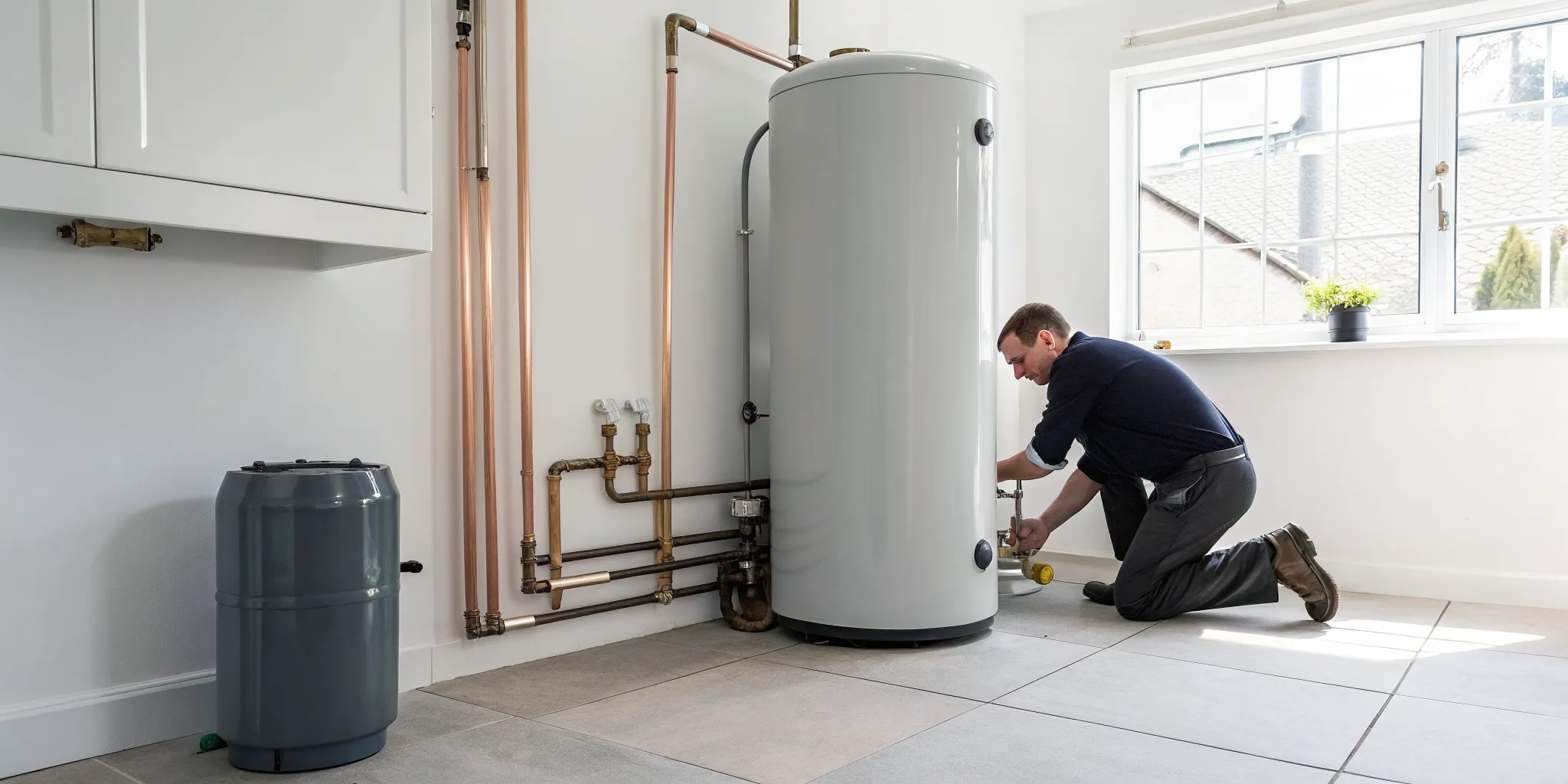
Living in the Okanagan means dealing with unique challenges, and your home’s plumbing is no exception. A standard water heater that might last a decade elsewhere often fails much sooner here. Why? Our local water is packed with minerals that build up inside your tank, forcing it to work harder until it eventually gives out. At TruFinity Plumbing Heating & Cooling, we see this every day. This article breaks down everything you need to know about a hot water tank replacement in our region, from recognizing the early warning signs to understanding the benefits of systems designed to handle our specific water conditions.
Key Takeaways
- Hard water is your water heater's biggest enemy: Here in the Okanagan, mineral buildup from hard water significantly shortens a tank's lifespan, making annual flushing essential to prevent premature failure.
- Act on warning signs to avoid a crisis: Don't ignore rusty water, strange noises, or small leaks, as these are clear indicators that your tank is failing and addressing them early can save you from a sudden, messy breakdown.
- Explore all your options before you buy: A replacement involves more than just price; consider the long-term energy savings of a tankless model and ask about professional installation, financing plans, and available rebates to make the best investment for your home.
Is It Time to Replace Your Hot Water Tank?
Most of us don’t think about our hot water tank until we’re hit with an icy shower. It’s an appliance that works quietly in the background, but when it starts to fail, the signs are hard to ignore. An aging or failing water heater not only disrupts your daily routine but can also lead to higher energy bills and even serious water damage. Knowing what to look for can help you plan for a replacement before you’re left in the cold. If you notice any of the following signs, it might be time to give TruFinity Plumbing Heating & Cooling a call.
Look for Rust and Discolored Water
If you turn on your hot water tap and see brownish, discolored water, it’s a major red flag. This often means the inside of your tank is rusting away. The anode rod, a component designed to prevent corrosion, may have completely deteriorated, leaving the steel tank vulnerable. Here in the Okanagan, our hard water can accelerate this process. While the rusty water might clear up after running for a bit, it’s a clear signal that the structural integrity of your tank is compromised. A corroded tank will eventually leak or burst, so it’s best to address this issue right away to prevent water damage and ensure your water is clean.
Listen for Strange Noises
Your hot water tank should operate almost silently. If you start hearing popping, rumbling, or banging sounds coming from the unit, it’s usually a sign of sediment buildup. Over the years, minerals from the Okanagan’s hard water settle at the bottom of the tank and harden. When the burner kicks on, water gets trapped under this layer of sediment and boils, creating those strange noises. This process not only makes your heater less efficient, forcing it to work harder to heat your water, but it also puts stress on the tank itself. The constant strain can lead to cracks and leaks over time, making those sounds an early warning system for a future failure.
Spotting Leaks and Water Damage
A puddle of water around the base of your hot water tank is one of the most urgent signs that you need a replacement. Even a small leak is a serious problem because it almost always indicates a crack or fracture in the internal tank. Unfortunately, this isn’t something that can be repaired; the entire unit will need to be replaced. Make it a habit to visually inspect the area around your tank for moisture, rust stains on the floor, or active dripping. Catching a leak early can save you from the headache and expense of major water damage. If you spot any water, it’s time to call for professional plumbing repairs immediately.
Dealing with Inconsistent Temperatures
Are your showers getting shorter because the hot water runs out too quickly? Or maybe the water just never seems to get as hot as it used to. Inconsistent water temperature is a classic symptom of a failing water heater. This can be caused by a faulty heating element or, more commonly, a thick layer of mineral sediment insulating the water from the heat source. Your tank has to work overtime just to reach the set temperature, which drives up your energy bills and puts extra wear on the components. While a single part can sometimes be replaced, in an older tank, it’s often the first of many problems to come.
How Long Do Hot Water Tanks Last in the Okanagan?
On average, a traditional tank-style water heater has a lifespan of about 8 to 12 years. But if you live here in the Okanagan, that number can be a bit optimistic. The biggest factor shortening the life of water heaters in our region is something you can’t see but is definitely in your water: a high mineral content. This is what we call "hard water," and it’s tough on our plumbing.
As TruFinity Plumbing Heating & Cooling has seen in countless homes from Kelowna to Penticton, our local water conditions create unique challenges. The consensus among local plumbers is clear: "The region has notably hard water with high mineral content, which causes faster sediment buildup in water heaters, mineral deposits in pipes, and reduced appliance lifespan. Annual flushing is more critical here than in coastal BC due to these conditions." This sediment buildup forces your heater to work harder, reduces its efficiency, and can lead to premature failure. That’s why understanding your tank's age and the impact of our local water is the first step in preventing a cold shower and a flooded basement.
Why Okanagan's Hard Water Shortens Tank Life
The hard water in the Okanagan is rich in minerals like calcium and magnesium. When you heat this water, these minerals separate and settle at the bottom of your tank, creating a thick layer of sediment. This layer acts as an insulator between the heating element and the water. Your water heater is then forced to run longer and hotter to heat the water, which wastes energy and puts a huge amount of stress on the tank itself. This constant overheating can weaken the steel and lead to cracks and leaks. Those rumbling or popping sounds you might hear from your tank? That’s often water boiling and bubbling up through that thick layer of sediment. A water filtration system can help solve this problem at the source, protecting your appliances.
How to Find Your Tank's Age
Not sure how old your water heater is? It’s easy to find out. Look for the manufacturer's sticker on the side of the tank; it contains a serial number. While every brand is a little different, most use a code in the serial number to indicate the date of manufacture. Often, the first four digits tell you what you need to know. For example, a serial number starting with "0816" would typically mean the tank was made in the eighth week of 2016. A quick search for your specific brand’s serial number format can confirm this. If your tank is getting close to that 8-year mark, it’s time to start thinking about a replacement before it fails unexpectedly. A water heater buying guide can help you explore your options.
What Does a Hot Water Tank Replacement Cost?
Thinking about the cost of a new hot water tank can be stressful, but it doesn’t have to be a mystery. The final price tag is a combination of the unit itself, the complexity of the installation, and the professional labor required to get the job done right. While it’s a significant home investment, understanding the breakdown can help you budget effectively and make a choice that fits your family’s needs. The total cost can vary based on the type of heater you choose, its size, and its energy efficiency. At TruFinity Plumbing Heating & Cooling, we believe in total transparency, so let’s walk through what you can expect.
Typical Replacement Costs in BC
To give you a general idea, the average cost to replace a standard hot water tank in British Columbia often falls between $882 and $1,807. However, this is just a starting point. At Trufinity, we find that most professional replacements, including the unit and full installation, typically range from $3,000 to $8,000. This wider range accounts for everything from a straightforward swap of a conventional tank to upgrading to a high-efficiency or tankless water heater, which can have a higher upfront cost but save you money over time. The final price depends heavily on the model you select and the specific requirements of your home.
Factoring in Labor and Installation
The price on the box is only half the picture. Professional labor is a crucial part of your hot water tank replacement, often making up a significant portion of the total cost. This isn't just about carrying the new unit into your basement. A professional installation from a certified technician includes the safe disconnection and responsible disposal of your old tank, any necessary adjustments to your plumbing, gas, or electrical lines, and ensuring all connections are secure and up to current safety codes. Paying for expert installation means you’re paying for peace of mind, knowing your new heater will operate safely and efficiently for years to come.
Our Transparent Pricing and Promotions
We want to make your investment as manageable as possible. TruFinity Plumbing Heating & Cooling is committed to upfront pricing, so you’ll never be surprised by hidden fees. We also have offers to help you save, including $100 OFF a new hot water tank installation. If you’re considering an upgrade, we offer $500 OFF a tankless water heater installation. To help with your budget, we provide flexible financing options, like zero payments and zero interest for three months. Plus, members of our TruLoyalty+ plan receive an additional 5% discount on all equipment installations.
Tank vs. Tankless: Which is Right for Your Home?
Choosing a new water heater is a big decision that impacts your daily comfort and your utility bills. The two main players are traditional storage tanks and modern tankless heaters. Each has its own set of benefits, and the best fit for your Okanagan home depends on your family’s hot water needs, your budget, and your long-term energy goals. TruFinity Plumbing Heating & Cooling installs and services both types, and our goal is to help you find the perfect match. Let’s walk through the key differences so you can make a choice you feel great about.
About Traditional Tank Heaters
You’re probably most familiar with traditional tank heaters. These units feature an insulated tank that holds and continuously heats a large volume of water, typically between 40 to 80 gallons, keeping it ready for when you turn on the tap. Their main advantage is a lower upfront installation cost and straightforward, proven technology. However, they can run out of hot water during periods of high demand, leaving someone with a cold shower. They also take up a significant amount of space and experience "standby heat loss," using energy to keep the stored water hot even when you aren't using it. In the Okanagan, our hard water can also lead to faster sediment buildup, which reduces efficiency and shortens the tank's lifespan if not regularly maintained.
The Benefits of Going Tankless
Tankless water heaters, also known as on-demand heaters, are a game-changer for many households. Instead of storing water, these compact units use powerful burners to heat water the instant you need it. The biggest benefit? An endless supply of hot water. You can run the dishwasher, do a load of laundry, and still have a hot shower. Because they only heat water when it's needed, they are significantly more energy-efficient, which can lead to noticeable savings on your monthly bills. Tankless models also have a much longer lifespan, often lasting 20 years or more. While the initial investment is higher, Trufinity helps make the switch easier with offers like $500 off a tankless installation.
Comparing Energy Use and Costs
When it comes to cost, it’s a classic case of paying now or paying later. Traditional tanks have a lower purchase price, with replacement costs often falling between $882 and $1,807. Tankless heaters have a higher upfront cost but deliver long-term savings through reduced energy consumption. According to the Department of Energy, a tankless unit can be 24% to 34% more energy-efficient than a conventional storage tank. Over a 20-year lifespan, those savings add up. At TruFinity Plumbing Heating & Cooling, we provide transparent, upfront pricing for both options and offer flexible financing plans to help manage the initial investment, ensuring you can choose the best system for your home without financial stress.
DIY vs. Professional Installation: What's the Best Choice?
It’s tempting to tackle home projects yourself. A quick search online can make almost any task seem manageable, and who doesn’t want to save a bit of money? But when it comes to replacing a hot water tank, this isn’t just another weekend project. It involves complex plumbing, high-voltage electricity, or even natural gas lines, where a small mistake can lead to major problems. Making the right choice here is about more than just your budget; it’s about your home’s safety and your family’s peace of mind.
Before you grab your toolbox, it’s important to weigh the real risks of a DIY installation against the security that comes with professional service. A licensed plumber not only has the right tools but also the training to handle the unexpected and ensure your new unit operates safely and efficiently for years to come. Let’s break down why calling a professional from TruFinity Plumbing Heating & Cooling is almost always the best path forward.
The Risks of a DIY Installation
Even if you’re skilled with home repairs, a hot water tank installation presents unique challenges. The work often requires soldering copper pipes to create a perfect, leak-proof seal, a skill that takes practice to master. An improper connection can lead to slow leaks that cause water damage over time or a major flood that ruins your basement. There are also serious safety hazards. A common DIY mistake is turning the power on before the tank is completely full of water, which can instantly burn out the heating elements. For gas heaters, an incorrect connection could result in a dangerous gas leak. Beyond the immediate risks, a DIY installation can also void your new water heater’s warranty, leaving you without coverage if the unit fails prematurely.
Why You Should Hire a Professional
Hiring a professional from TruFinity Plumbing Heating & Cooling means putting the job in the hands of a certified expert. Our Red Seal plumbers are familiar with all local building codes in the Okanagan, ensuring your installation is fully compliant and safe. We handle every part of the process, from correctly sizing the unit for your family’s needs to managing the electrical or gas connections that are too risky for a DIY project. A professional installation also guarantees that your manufacturer’s warranty remains valid. Plus, we take care of removing and responsibly disposing of your old tank. With our TruLoyalty+ membership, you also get the added benefit of an extended labor warranty on our work, giving you complete confidence in your investment.
When to Call for Emergency Service
Many homeowners wait until their hot water tank fails completely before calling for help, but this can be a costly mistake. A sudden breakdown often leads to water damage and leaves you scrambling for a solution. You can avoid this by watching for early warning signs. If you notice puddles around your tank, hear loud popping or rumbling sounds, see rusty or discolored water coming from your taps, or find that your hot water runs out much faster than it used to, it’s time to act. These are all signs that your tank is nearing the end of its life. Don’t wait for a leak to become a flood. If you spot any of these issues, call Trufinity for emergency plumbing repairs. We offer 24/7 service to keep your home safe and your hot water flowing.
Our Hot Water Tank Replacement Process
When your hot water tank gives out, you need a solution that’s fast, reliable, and straightforward. At TruFinity Plumbing Heating & Cooling, we’ve refined our replacement process to be as smooth and stress-free as possible, always keeping you in the loop. Our Red Seal certified plumbers handle every detail with care, from the initial assessment to the final checks. We believe in total transparency, which is why our process includes detailed, upfront quotes, photo documentation of our work, and complete warranty registration for your new equipment. You can trust that we’ll get your hot water running again with the professionalism and expertise your home deserves. Our goal is to provide a seamless experience that gives you lasting peace of mind.
Step 1: Professional Assessment
The first step is always a thorough, on-site assessment. One of our certified technicians will visit your home to inspect your current hot water tank and diagnose the problem. We don’t just look at the tank; we evaluate your home’s entire hot water system, including your plumbing connections, venting, and your family’s daily water usage. This allows us to recommend the perfect replacement unit for your specific needs and budget. Before any work begins, we provide a clear, detailed quote outlining all costs. There are no hidden fees or surprises, just honest, upfront pricing so you can make an informed decision with confidence.
Step 2: Safe Removal and Installation
Replacing a hot water tank involves working with water, gas, and electrical lines, which is why it’s a job best left to the pros. Our licensed plumbers begin by safely shutting off the water, gas, and electrical supply to the old unit. We then carefully drain and remove your old tank, ensuring your home is protected throughout the process. The new tank is then expertly installed according to manufacturer specifications and all local building codes. We handle every connection with precision to guarantee a safe, efficient, and reliable plumbing installation that will serve your family for years to come.
Step 3: Final Testing and Warranty
Once your new water heater is installed, our job isn’t done. We conduct a series of rigorous tests to ensure everything is working perfectly. This includes checking all connections for leaks, verifying correct water pressure, and testing the thermostat to make sure your water heats to the right temperature. We’ll walk you through your new system, explain any new features, and provide tips for ongoing maintenance. Finally, we handle all the paperwork for your equipment’s warranty registration and provide you with complete documentation for your records. For even greater protection, our TruLoyalty+ membership offers an extended two-year labor warranty on our work.
How to Choose Your New Water Heater
Selecting a new water heater is a big decision that impacts your daily comfort and your utility bills for years to come. It’s more than just finding a unit that fits in the closet; it’s about matching the technology to your family’s needs, your home’s energy source, and even our local Okanagan climate. Thinking through a few key factors will help you find the perfect balance of performance, capacity, and efficiency. At TruFinity Plumbing Heating & Cooling, we help homeowners make this choice every day, ensuring you get a reliable system that delivers hot water exactly when you need it.
Find the Right Size and Capacity
Getting the size right is the first step to hot water happiness. A tank that’s too small will leave you with cold showers, while one that’s too large will waste energy heating water you don’t use. For traditional tank heaters, capacity is measured in gallons. A good starting point is to consider your household size and the number of bathrooms. A family of four will likely need a larger tank than a couple living in a small condo. We can help you determine the ideal size by calculating your home’s peak demand, ensuring you have enough hot water for simultaneous uses like running the dishwasher and taking a shower.
Consider Fuel Type and Efficiency
Your water heater’s fuel source is its biggest long-term cost factor. In the Okanagan, most homes use either natural gas or electricity. While electric models are often less expensive to purchase, natural gas units typically have lower monthly operating costs. It’s also important to look at the unit’s energy efficiency. Modern water heaters come with an Energy Factor (EF) or Uniform Energy Factor (UEF) rating. The higher the number, the more efficient the unit is. A high-efficiency model might have a higher upfront price, but it can lead to significant savings on your energy bills over the life of the appliance.
Why Your Local Climate Matters
The Okanagan’s distinct seasons, with cold winters and hot summers, play a role in your water heater’s performance. If your tank is located in an uninsulated space like a garage or crawlspace, it has to work much harder to maintain its temperature during the winter, leading to higher energy consumption. Insulating the tank and the first several feet of hot water pipe is a simple, effective way to reduce this standby heat loss. When we provide a professional assessment, we consider your home’s specific layout and our local climate to recommend a unit that will operate efficiently all year round, keeping you comfortable without breaking the bank.
How to Extend Your New Water Heater's Life
Getting a new water heater is a significant investment in your home’s comfort. To make sure it lasts as long as possible, a little proactive care goes a long way. This is especially true here in the Okanagan, where our local water conditions can be tough on appliances. The good news is that a few simple habits can add years to your water heater's life, improve its efficiency, and help you avoid unexpected breakdowns.
As the experts at TruFinity Plumbing Heating & Cooling often explain to homeowners, "The region has notably hard water with high mineral content, which causes faster sediment buildup in water heaters." This mineral buildup acts like a layer of sludge at the bottom of your tank, forcing it to work harder to heat your water and leading to premature failure. By focusing on regular flushing, considering water filtration, and performing simple maintenance checks, you can protect your investment and ensure you have reliable hot water for years to come. These steps are the key to getting the best performance from your new unit.
The Importance of Annual Flushing
Think of annual flushing as a detox for your water heater. Over time, the minerals from our hard water settle at the bottom of the tank, creating a layer of sediment. This buildup insulates the water from the heating element, reducing efficiency and putting extra strain on the system. Regularly draining and flushing the tank removes this sediment, which helps prevent corrosion and keeps your heater running smoothly.
Because of our water quality, annual flushing is more critical here in the Okanagan than in other parts of BC. It’s one of the most effective things you can do to extend your tank’s lifespan. Trufinity offers a professional water heater flush to make this essential task easy and affordable for local homeowners.
Protect Your Tank with Water Filtration
If you want to stop sediment buildup before it even starts, a whole-home water filtration system is your best defense. Instead of just removing sediment from your tank once a year, a filtration system treats the water as it enters your home. This protects not only your hot water tank but also your pipes, dishwasher, washing machine, and faucets from the damaging effects of hard water.
Installing a water filtration system can significantly prolong the life of your appliances, improve their efficiency, and even make your water taste better. It’s a proactive solution that provides peace of mind and protects your entire plumbing system from the unique challenges of Okanagan water.
Simple Maintenance and Temperature Tips
Beyond flushing and filtration, a few other simple habits can help keep your water heater in top shape. First, check the temperature setting. Most manufacturers recommend a setting of 120°F (or 49°C). This is hot enough for most household needs, reduces energy consumption, and lowers the risk of scalding.
It’s also a good idea to have a professional test the temperature and pressure relief (TPR) valve and inspect the anode rod during annual service. The anode rod is a crucial component that helps prevent the tank from rusting. For comprehensive care, our TruLoyalty+ membership plan includes regular check-ups to ensure every part of your system is working correctly.
Financing Options for Your Replacement
A new hot water tank is a significant investment in your home's comfort and value, but the cost doesn't have to be a barrier. We understand that this is often an unexpected expense, which is why TruFinity Plumbing Heating & Cooling provides several ways to make your replacement more affordable. From flexible payment plans that spread out the cost to local rebates that put money back in your pocket, you have options. Thinking through your budget ahead of time can help you choose the best long-term solution for your home without financial strain. We believe in transparent pricing and helping you find a path forward that works for your family.
Flexible Payment Plans
Paying for a new water heater all at once isn't always practical. That's why we offer straightforward financing options to help you manage the cost. Through our partnership with Financeit, you can get the hot water tank you need now and pay for it over time with manageable monthly payments. We even have promotional offers, like zero payments and zero interest for three months, to give you extra breathing room. This approach allows you to invest in a high-quality, energy-efficient model without disrupting your budget. Our team can walk you through the simple application process during your consultation.
Finding Rebates and Incentives
Did you know you might be eligible for rebates that can lower the total cost of your new water heater? Both the government and utility providers offer incentives for homeowners who upgrade to more energy-efficient systems. TruFinity Plumbing Heating & Cooling stays current on all available programs, including natural gas water heater rebates for income-qualified households and heat pump water heater rebates. These programs can save you hundreds of dollars. Be sure to check our offers and rebates page or ask our technicians about the latest opportunities available in the Okanagan.
Save More with Our Membership Plan
For ongoing savings and peace of mind, consider joining our TruLoyalty+ program. Members receive exclusive benefits that make home maintenance easier and more affordable. When it comes to a major installation like a new hot water tank, our members get an immediate 5% discount on the equipment. This discount is on top of any other promotions or rebates you qualify for. Our membership plan also includes priority service and extended warranties, giving you extra protection for your investment. It’s a simple way to keep your home systems running smoothly while saving money.
Related Articles
- Hot Water Tank Replacement Cost in Kelowna: A Detailed Breakdown
- Hot Water Tank Installation in Kelowna: Step-by-Step Guide
- Understanding the True Cost of Electric Hot Water Tank Installation in Kelowna
Frequently Asked Questions
How can I tell if my water heater just needs a repair or a full replacement? The best way to know for sure is to have a professional take a look, but a good rule of thumb is to consider the tank's age and the nature of the problem. If your water heater is relatively new (under 8 years old) and has a single issue, like a faulty heating element, a repair is often the most sensible choice. However, if your tank is older and you're dealing with issues like rust, leaks from the tank body, or multiple component failures, a replacement is almost always the more cost-effective solution in the long run.
Is a tankless water heater really worth the higher upfront cost for an Okanagan home? For many families, the answer is a definite yes. While the initial investment is higher, a tankless heater provides an endless supply of hot water, which is a huge benefit for busy households. They are also much more energy-efficient since they only heat water on demand, leading to lower monthly utility bills. Given their longer lifespan (often 20 years or more) and better performance with our hard water, the long-term savings and convenience can easily justify the upfront cost.
How long does a typical hot water tank replacement take? A standard replacement of a similar-sized tank is a fairly straightforward process for our certified technicians. In most cases, the entire job can be completed in just a few hours. This includes the time to safely drain and remove your old unit, install the new one, connect all the plumbing and energy lines, and test everything to ensure it's working perfectly before we leave.
What does a professional installation from TruFinity Plumbing Heating & Cooling include? Our professional installation is a complete, all-inclusive service designed for your peace of mind. It starts with a proper assessment to ensure you get the right unit for your home. The service includes the safe disconnection and responsible disposal of your old tank, expert installation of the new unit to meet all safety codes, and thorough testing of all functions. We also handle the warranty registration for you and clean up the work area completely.
Why is annual flushing so important here in the Okanagan? Annual flushing is the single most important piece of maintenance for a tank-style water heater in our region. The hard water in the Okanagan is full of minerals that settle at the bottom of your tank, forming a thick layer of sediment. This forces your heater to work much harder, wastes energy, and can cause the tank to overheat and fail prematurely. Flushing the tank once a year clears out this damaging buildup, keeping your unit running efficiently and helping it last as long as possible.


.webp)