Here in the Okanagan, our water heaters face a unique challenge: some of the hardest water in British Columbia. This high mineral content leads to faster sediment buildup, putting extra stress on your system and often causing a sudden water heater no hot water issue. While this local problem can shorten a heater's life, it doesn't always mean a major failure. This guide is written specifically for Kelowna and Okanagan residents. We'll help you troubleshoot the most common causes, from simple resets to signs of mineral damage, so you know when you can fix it and when to call the experts at TruFinity Plumbing Heating & Cooling.
Key Takeaways
- Start with Simple, Safe Diagnostics: Before calling for service, check your circuit breaker for an electric model or the pilot light for a gas one. Also, look for any visible leaks and confirm if the issue affects your entire home or just a single faucet.
- Hard Water is the Main Culprit in the Okanagan: Our region's high mineral content causes sediment buildup, which is the primary reason water heaters fail prematurely here. Scheduling an annual flush is the most effective way to protect your unit and extend its lifespan.
- Leave Dangerous Repairs to the Pros: For your safety, always contact a certified technician for any problems involving gas lines, electrical wiring, or significant water leaks. Attempting these repairs yourself can be hazardous and may lead to more serious damage.
No Hot Water? Check These Things First
Waking up to an icy shower is a rough start to any day. When your water heater stops working, it can feel like a major crisis, but sometimes the fix is surprisingly simple. Before you assume the worst, there are a few quick checks you can safely perform yourself. This guide will walk you through the first steps to diagnose the problem. By running through this checklist, you can identify the cause or at least gather useful information before calling a professional.
Safety First: Shut Off Power and Gas
Before you touch your water heater, your number one priority is safety. If you have an electric model, go to your home’s main electrical panel and turn off the breaker dedicated to the water heater. For a gas heater, find the gas shut-off valve on the pipe leading to the unit and turn it to the “Off” position. This simple but critical step prevents the risk of electric shock or a gas leak while you investigate. Taking a moment to ensure the power is off is the most important part of any DIY diagnostic.
Check Your Breaker Box
If you have an electric water heater, a tripped circuit breaker is a common culprit for a sudden loss of hot water. Head to your breaker box and look for a switch that is in the "Off" or middle position. If you find one, flip it firmly back to the "On" position. Wait about an hour to see if the water heats up. If the breaker trips again right away, don't keep resetting it. This usually points to a more serious issue, like a faulty heating element or a wiring problem, which requires professional attention from a company like TruFinity Plumbing Heating & Cooling.
Confirm the Gas Supply is On
For those with a gas water heater, the first thing to check is the pilot light. This is a small, constant flame that ignites the main burner when needed. Look for a small window or opening at the bottom of the tank to see if the flame is lit. If it’s out, you can try relighting it by following the instructions printed on the tank. If the pilot light won’t stay lit after a few tries, you likely have a malfunctioning thermocouple. This safety device shuts off the gas if the flame goes out, and it’s a component that should be replaced by a qualified technician.
Is It One Faucet or the Whole House?
Next, determine the scope of the problem. Is the cold water coming from just one shower, or is it affecting every faucet in your home? Turn on the hot water tap in your kitchen, your bathroom sink, and your tub. If you get hot water from some faucets but not others, the issue isn't your water heater. Instead, the problem is likely isolated to a specific fixture, such as a clogged pipe or a faulty mixing valve in that faucet. If there’s no hot water anywhere, the problem lies with the water heater itself. For fixture-specific issues, our plumbing repair services can help.
Look for Leaks Around the Tank
Take a moment to carefully inspect the area around your water heater. Look for any signs of moisture, from small drips to large puddles on the floor. A leak is a serious sign that your water heater’s internal tank may have corroded and failed. This is especially common here in the Okanagan, where our hard water causes sediment to build up and accelerate corrosion. If you see any water, the unit cannot be repaired and will need to be replaced immediately to prevent significant water damage to your home. In this case, shut off the main water supply to the tank and call Trufinity for an urgent assessment.
Troubleshooting Your Gas Water Heater
If you have a gas water heater, a few common culprits are often behind a sudden loss of hot water. Before you do anything else, remember that working with gas appliances requires extreme caution. If you ever smell gas, stop what you are doing, leave your home immediately, and call your gas company and a certified professional from a safe location. These steps are for basic visual checks you can perform safely. For anything that involves taking parts off or handling the gas line, it’s always best to call in an expert from TruFinity Plumbing Heating & Cooling to handle it safely and correctly.
Is the Pilot Light Out?
The pilot light is a small, continuously burning flame that ignites the main burner when your water heater needs to heat water. If this flame goes out, your heater won't work. Many older models have a small window or opening near the bottom of the tank where you can check to see if the flame is lit. If you don’t see a flame, the pilot is out. While some tanks have instructions for relighting it, this can be tricky. Newer water heaters often don't have a standing pilot light; instead, they use an electronic ignition system. If you have a newer model and suspect an ignition issue, it’s a clear sign to call for a professional plumbing repair.
Check for a Faulty Thermocouple
If you find that your pilot light won't stay lit, the problem is likely a faulty thermocouple. This is a critical safety component that senses the heat from the pilot light. If the flame goes out, the thermocouple cools down and automatically shuts off the gas supply to prevent a dangerous gas leak. Over time, these sensors can wear out, break, or get covered in soot, causing them to fail. While a thermocouple is a relatively simple part, replacing it involves working directly with the gas assembly. For your safety, this repair should always be handled by a qualified technician from Trufinity who can ensure it's done right.
Is the Thermostat Causing Lukewarm Water?
If your water is warm but not hot, your thermostat might be the issue. First, check the temperature dial on the gas control valve, which is usually a black or grey box on the front of the tank. For safety and efficiency, it should be set to around 50°C (122°F). If the setting seems correct but the water is still lukewarm, the thermostat itself could be failing. Here in the Okanagan, sediment buildup from our hard water can also cause problems. A thick layer of mineral scale at the bottom of the tank can insulate the water from the burner, making it harder for the thermostat to get an accurate reading and heat the water properly.
Inspect the Gas Valve and Supply Line
A simple but sometimes overlooked check is the gas supply valve. Follow the gas line from the wall to your water heater and find the shut-off valve, which usually has a small handle. Make sure this handle is parallel to the gas pipe, which indicates it's in the "ON" position. If the handle is perpendicular to the pipe, the gas is off. If the valve is on but you still suspect a gas supply issue, do not attempt to disconnect or adjust the gas line yourself. Any potential blockages or problems with the gas line require immediate professional attention from a company like TruFinity Plumbing Heating & Cooling to ensure your family’s safety.
Troubleshooting Your Electric Water Heater
Electric water heaters are generally reliable, but when they stop working, it’s usually due to one of a few common parts. Before you do anything else, your first and most important step is to go to your breaker box and shut off the power to your water heater. Working with high-voltage electrical components is dangerous, and you should only proceed with troubleshooting once the power is completely disconnected.
With the power safely off, you can start to investigate a few potential culprits. Most issues with electric models come down to a tripped safety switch, a failed heating element, or a faulty thermostat. These components are the heart of your heater, working together to warm your water. If one of them fails, the entire system can stop working correctly, leaving you with cold showers. Here in the Okanagan, our notoriously hard water adds another layer of complexity. The high mineral content leads to sediment buildup inside the tank, which puts extra stress on these parts and often causes them to fail sooner than expected. This is why regular maintenance is so critical in our region. Let’s walk through some of the most common troubleshooting steps you can take to diagnose the problem.
Reset the High-Temperature Cutoff Switch
Your electric water heater has a safety feature called a high-temperature cutoff switch. If the water inside the tank gets too hot, this switch trips to cut power and prevent a dangerous situation. Sometimes, a random power surge or a faulty thermostat can cause it to trip. To reset it, find the access panels on the side of your tank (there are usually two). After removing the screws and the panels, you’ll see some insulation. Push it aside to find a red button, which is the reset switch. Press it firmly. If it clicks, it was tripped. If this doesn't solve the problem or it trips again, it's a sign of a deeper issue that needs a professional diagnosis from TruFinity Plumbing Heating & Cooling.
Test the Heating Elements
Your water heater has two heating elements, an upper and a lower one, that do the actual work of heating the water. If one of them burns out, you might get lukewarm water or no hot water at all. You can test them for continuity with a tool called a multimeter, but this is a more advanced step. If you’re not comfortable using one, it’s best to leave this to a professional. Failed heating elements are a frequent problem in our region because mineral scale from hard water can build up and cause them to overheat and burn out. A technician can quickly test the elements and perform any necessary plumbing repairs safely.
Identify a Broken Thermostat or Dip Tube
The thermostat is the brain of the operation, telling the heating elements when to turn on and off. If the thermostat fails, it won't send the signal to heat the water, leaving you with a cold tank. Another less obvious culprit could be the dip tube. This plastic tube sends incoming cold water to the bottom of the tank to be heated. If it breaks or cracks, cold water will mix with the hot water at the top of the tank. The main symptom of a broken dip tube is having hot water that runs out extremely fast. Replacing either a thermostat or a dip tube involves draining the tank and should be handled by a qualified plumber from Trufinity.
Figuring Out Why Your Water is Only Lukewarm
Lukewarm water is a classic sign that something is wrong with your electric water heater. The most common cause is a failed heating element. Since there are two elements, if the bottom one fails, the top one will still heat a small amount of water in the tank, but it won't be enough for a full shower. Another possibility is that your thermostat is simply set too low, so check the dial and see if adjusting it helps. Finally, a broken dip tube or significant sediment buildup can also lead to lukewarm water. If a quick thermostat adjustment doesn't fix it, it’s time to have a professional from TruFinity Plumbing Heating & Cooling take a look.
What's Wrong with My Tankless Water Heater?
Tankless, or on-demand, water heaters are fantastic for efficiency, but they come with their own unique set of quirks. Unlike traditional tanks that keep a large volume of water hot, these units heat water as it passes through. This means the troubleshooting steps are quite different. If your tankless heater is giving you the cold shoulder, the problem often lies with flow rate, venting, or the mineral-rich water we have here in the Okanagan. Before you get too frustrated, let's walk through a few common issues that might be causing your hot water hiccup. Many of these are simple checks you can do yourself, while others are a clear sign it's time to call in a professional from TruFinity Plumbing Heating & Cooling.
Are You Overloading the System?
Have you ever tried to run a shower, the dishwasher, and the washing machine all at once, only to get a lukewarm spray? This is a classic sign of an overloaded tankless system. These units are rated for a specific flow rate, which is the number of gallons per minute they can heat. If you demand more hot water than the unit can produce, it simply can't keep up. Think of it like a highway: too much traffic leads to a slowdown. For larger homes in Kelowna or families with high water usage, the solution might be staggering your hot water use or even installing a second unit to handle the demand. A professional can help you determine if your heater is sized correctly for your household's needs.
Check for Blocked Vents
Proper venting is absolutely essential for your tankless water heater to operate safely and efficiently, especially if it’s a gas model. The system needs to pull in fresh air for combustion and expel exhaust fumes safely outside. If these vents get blocked by a bird's nest, leaves, snow, or other debris, it can cause the unit to shut down as a safety precaution. You can do a quick visual inspection of the exterior intake and exhaust vents to make sure they’re clear. However, if you suspect the blockage is inside the vent pipe itself, don't try to clear it on your own. This is a job for a qualified technician from TruFinity Plumbing Heating & Cooling to ensure it's handled safely.
Clear Mineral Buildup from Sensors
Here in the Okanagan, our water is notoriously hard. This high mineral content is the number one enemy of tankless water heaters. Over time, limescale can build up on internal components, including the sensors that detect water flow. If these sensors are coated in scale, they might not register that you've turned on a tap, and the heater won't fire up. This can lead to intermittent hot water or no hot water at all. Regular flushing, or descaling, is the best way to prevent this. While DIY kits are available, a professional flush ensures all the buildup is safely removed. For a long-term fix, consider a whole-home water filtration system to protect your heater and other appliances.
Understanding the "Cold Water Sandwich"
If you’ve ever turned off the shower for a minute to lather up, then turned it back on to a surprising blast of cold water before it gets hot again, you’ve experienced the "cold water sandwich." This is a common trait of tankless systems. When you first turn on the tap, the heater fires up and sends hot water. When you turn it off, some hot water remains in the pipes. When you turn it back on, that trapped hot water comes out first, followed by a slug of cold water that was in the heater, and then the newly heated water arrives. It’s not a sign of a malfunction, but rather a quirk of on-demand heating. Newer models often have features to minimize this effect.
Why Water Heaters Fail Faster in the Okanagan
If you’ve ever felt like your appliances don’t last as long as they should, you’re not imagining things. Living in the beautiful Okanagan Valley means dealing with some of the hardest water in British Columbia. This high mineral content is the number one reason water heaters in our region work harder and fail sooner than in other parts of the province. The good news is that you can do something about it.
The key is understanding what’s happening inside your tank. The same minerals that leave spots on your dishes are creating a much bigger problem for your water heater. Over time, this buildup reduces efficiency, puts stress on components, and ultimately shortens the lifespan of your unit. Let's break down exactly what our local water is doing to your heater and how you can fight back.
The Problem with Hard Water and Sediment
"Hard water" simply means our water has a high concentration of dissolved minerals, primarily calcium and magnesium. While it’s perfectly safe to drink, it causes problems when it’s heated. The heating process causes these minerals to solidify and settle at the bottom of your water heater tank as a thick layer of sediment. Think of it like sand or gravel slowly accumulating over time. This buildup is a constant issue for homeowners across Kelowna, West Kelowna, and Penticton. It forces your water heater to work less efficiently and puts a huge amount of strain on the entire system, which is why regular maintenance is so critical here.
How Mineral Scale Damages Your Heater
That layer of sediment at the bottom of your tank creates a barrier between the heating source and the water. For a gas heater, the burner has to run longer and hotter to heat the water through the scale, which can overheat and weaken the bottom of the tank. For an electric model, that same scale can completely encase the lower heating element, causing it to burn out. You might even hear a rumbling or popping noise from your tank as water trapped beneath the sediment boils. This isn't just an annoying sound; it's a clear signal that your heater is struggling under the strain of mineral buildup.
Why We Recommend Annual Flushing
The most effective way to combat sediment buildup is to have your water heater flushed annually. This maintenance involves draining the tank to clear out all the accumulated minerals, restoring your heater's efficiency and extending its life. Because our water is so hard, this isn't just a suggestion in the Okanagan, it's essential preventative care. While flushing is a great annual fix, the best long-term defense is to stop the minerals from getting into your tank in the first place. A whole-home water filtration system can solve the problem at the source, protecting not just your water heater but all of your plumbing and appliances. Contact TruFinity Plumbing Heating & Cooling to schedule a flush or learn more about filtration options.
Is It Time to Replace Your Water Heater?
Deciding whether to repair or replace your water heater can feel like a big decision. While a simple fix is sometimes all you need, there are moments when investing in a new unit is the smarter, safer, and more cost-effective choice in the long run. If your water heater is consistently letting you down, it might be sending you clear signals that its time is up. Paying attention to these warning signs can help you avoid a sudden, cold-water emergency and a messy cleanup. Let's walk through the key indicators that suggest a replacement is on the horizon.
Warning Sign: Age and Inefficiency
Like most home appliances, water heaters have a finite lifespan. A traditional tank-style water heater typically lasts about 10 to 12 years. If yours is approaching or has surpassed that age, it’s wise to start thinking about a replacement, even if it hasn't failed completely. As units get older, their efficiency drops, meaning they have to work harder and use more energy to heat the same amount of water. This decline leads to higher utility bills. Proactively replacing an aging unit allows you to explore modern, high-efficiency options and avoid the stress of an unexpected breakdown.
Warning Sign: Rust, Corrosion, or Leaks
Some of the most obvious signs of failure are also the most serious. If you notice any water pooling around the base of your tank, it’s a major red flag. Leaks often indicate that the inner tank has corroded and is failing, a problem that can't be repaired. Another telltale sign is discolored or rusty water coming from your hot water taps. This suggests the inside of your tank is rusting away and mixing with your water supply. If you see either of these signs, it's time to call for professional plumbing repairs immediately to assess the situation and prevent significant water damage.
Warning Sign: High Bills and Poor Performance
Is your hot water lukewarm, or does it run out much faster than it used to? This drop in performance often points to a failing component, like a burned-out heating element or a faulty thermostat. You might also hear strange noises like popping or rumbling from the tank. This is usually caused by a thick layer of sediment buildup at the bottom, which forces the unit to work overtime to heat the water. Here in the Okanagan, our hard water makes this a common issue. This inefficiency not only gives you poor performance but also drives up your energy bills.
Considering a Tank or Tankless Heater?
If replacement is necessary, it’s a great opportunity to consider what type of heater best suits your home. While traditional tank heaters are reliable, many homeowners are switching to tankless models. Tankless heaters provide hot water on demand, are more energy-efficient, and have a longer lifespan. They are also less prone to the sediment issues that plague tank models. If your family has grown or your needs have changed, you might also find that your old tank was simply too small. The team at TruFinity Plumbing Heating & Cooling can help you explore all your heating services options and find the perfect fit.
When to Call TruFinity Plumbing Heating & Cooling
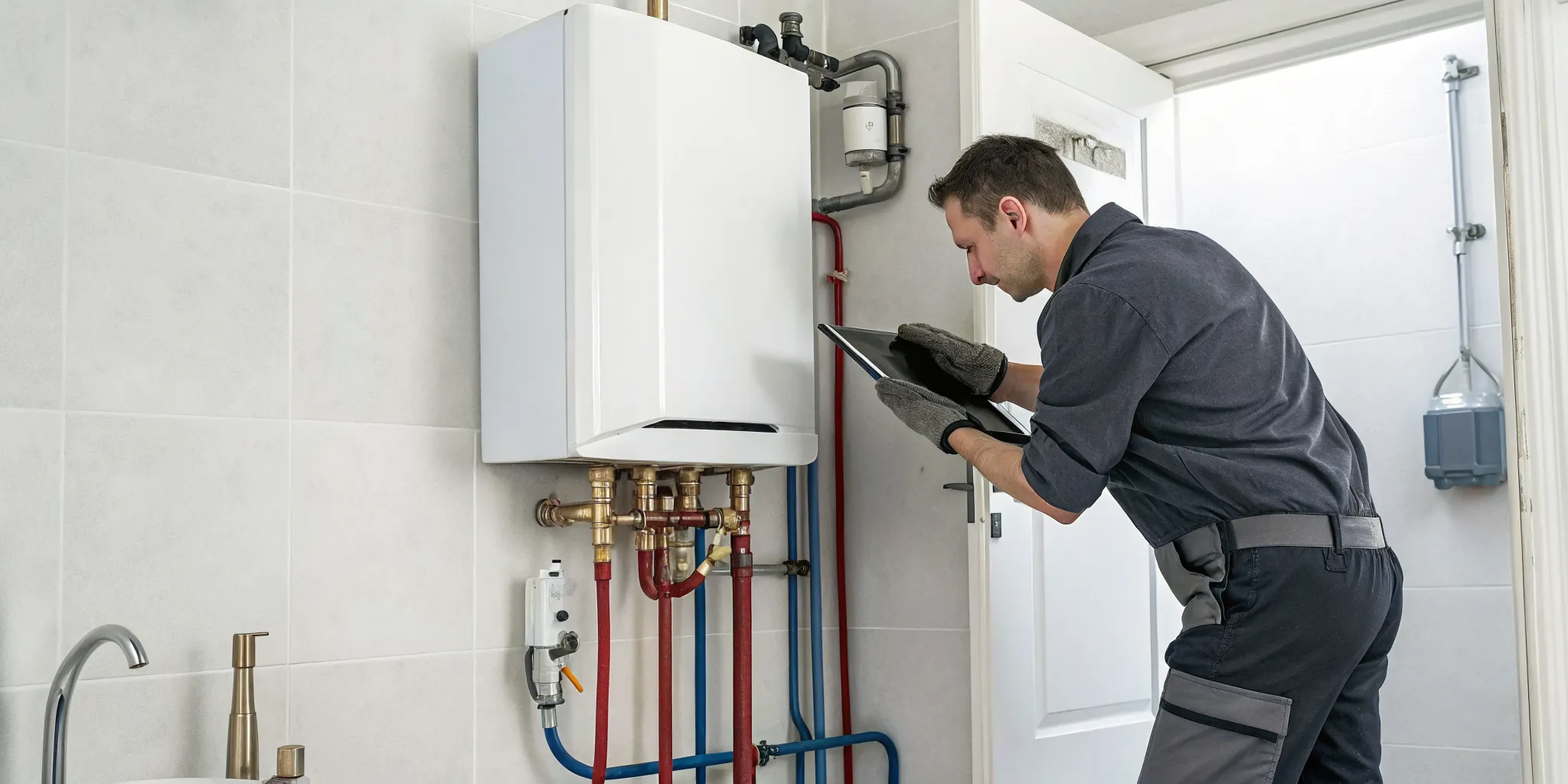
While many minor home repairs can be handled on your own, a water heater is one appliance where it pays to be cautious. Gas lines, high-voltage electricity, and the risk of water damage make many repairs a job for a certified professional. If you’ve run through the basic checks and are still facing a cold shower, it’s time to call for backup. Our team at TruFinity Plumbing Heating & Cooling is always ready to help, just as we were for this customer:
"We recently had our hot wanted tank spring a leak, and the team at TruFinity have been incredibly helpful. Julian, our technician, was personable... Highly recommend this team." — Kassi Sherman
If You Smell Gas or See a Major Leak
This is a true emergency. If you smell rotten eggs, which indicates a natural gas leak, do not turn any lights on or off, use your phone, or unplug any appliances. Leave your home immediately. Once you are a safe distance away, call 911 and your gas utility provider. For a major water leak, find your home's main water shut-off valve and turn it off to prevent flooding. Once the immediate danger is handled, call us for an emergency plumbing repair. Your safety is the top priority, and our team is trained to manage these situations securely.
For Any Electrical Repairs
Working with electricity and water is a dangerous combination. While resetting a circuit breaker is a safe first step, any further electrical troubleshooting should be left to a professional. If the breaker trips repeatedly, or if you suspect an issue with a heating element, thermostat, or the unit's wiring, please don’t attempt a DIY fix. The risk of electric shock or causing a fire is too high. The technicians at TruFinity Plumbing Heating & Cooling have the proper tools and expertise to diagnose and resolve electrical problems safely, ensuring your system is working correctly and your home is secure.
If You've Tried Everything Else
You’ve checked the pilot light, reset the breaker, and confirmed the thermostat is on, but you still don’t have hot water. At this point, the problem is likely an internal component, such as a faulty thermocouple, a broken dip tube, or a failed heating element. These issues require specific tools and knowledge to diagnose and fix correctly. Instead of spending more time and frustration on the problem, let our experts take a look. We can quickly identify the root cause and provide a clear solution to get your hot water running again.
For a Safe Installation and Warranty Protection
If it turns out you need a new water heater, professional installation is essential. An improperly installed unit can lead to gas leaks, carbon monoxide exposure, water damage, or inefficient performance. Furthermore, most manufacturers require installation by a licensed professional to keep the warranty valid. A DIY installation could void your warranty, leaving you responsible for the full cost of future repairs. Our team at Trufinity ensures your new heater is installed safely, meets all local codes, and protects your warranty. We even offer flexible financing options to make the replacement process smoother.
How to Prevent Future Hot Water Problems
The best way to deal with a water heater problem is to prevent it from happening in the first place. A little proactive care goes a long way, especially here in the Okanagan where our water is notoriously hard on appliances. By staying on top of a few key maintenance tasks, you can extend the life of your water heater, improve its efficiency, and ensure you always have the hot water you need. These simple steps can save you from the headache of unexpected breakdowns and costly emergency repairs. Think of it as an investment in your home's comfort and your peace of mind.
Schedule an Annual Flush and Inspection
If you only do one thing for your water heater, make it this. Over time, minerals from our region's hard water settle at the bottom of the tank, creating a thick layer of sediment. This buildup forces your heater to work harder to heat the water, reduces its efficiency, and can eventually cause the tank to fail. An annual flush clears out this sediment, keeping your unit running smoothly. At TruFinity Plumbing Heating & Cooling, we combine this with a full inspection to catch any small issues before they become big problems. Scheduling this service once a year is the single most effective way to protect your investment.
Test the T&P Relief Valve
Your water heater’s Temperature and Pressure (T&P) relief valve is a critical safety component. It’s designed to automatically open and release pressure if the temperature or pressure inside the tank gets dangerously high, preventing a potential explosion. You should have this valve tested annually to ensure it hasn’t seized up or become clogged with mineral deposits. While it’s a simple test, it can sometimes cause an older valve to leak. If you’re not comfortable doing it yourself, our technicians can test the valve during your annual inspection and replace it if it’s not working correctly, keeping your home and family safe.
Inspect the Anode Rod
Inside your water heater tank is a component called a "sacrificial" anode rod. Its job is to attract corrosive elements in the water, essentially corroding itself so that your tank doesn't. This simple rod is your tank's primary defense against rust and leaks. Because of the high mineral content in Okanagan water, this rod can get eaten away faster than in other regions. We recommend having it inspected every year or two. Replacing a depleted anode rod is a simple, inexpensive repair that can add years to the life of your water heater, saving you from a much more expensive replacement down the road.
Consider a Water Filtration System
While annual maintenance is essential, the ultimate long-term solution for protecting your water heater is to tackle the root of the problem: hard water. Installing a water filtration system removes the minerals that cause sediment buildup and corrosion before they ever reach your appliances. This not only protects your water heater but also extends the life of your dishwasher, washing machine, faucets, and pipes. You’ll notice the difference with softer skin, cleaner dishes, and the peace of mind that comes from knowing your home’s plumbing system is protected from the inside out.
Related Articles
- Why No Hot Water? Common Causes and Solutions
- No Hot Water? A Homeowner’s Guide to Gas Water Heater Issues
- No Hot Water? When to Call a Plumber in Kelowna
- Electric Water Heater Parts & Accessories: What You Need to Know
Frequently Asked Questions
How often should I really flush my water heater here in the Okanagan? Because our local water is so high in minerals, we strongly recommend flushing your tank-style water heater once a year. This isn't just a general guideline; it's specific advice for our region. That annual flush clears out the sediment that builds up quickly, which helps your heater run more efficiently and last longer. Skipping it can lead to damage and a much shorter lifespan for your unit.
Is it better to repair my old water heater or just replace it? This often comes down to age and cost. A good rule of thumb is to consider the age of your unit. If your tank heater is over 10 years old and needs a significant repair, replacement is usually the smarter financial move. A new, more efficient model will likely save you money on energy bills, and you won't have to worry about another breakdown soon. For newer units, a simple repair is often all that's needed.
Why is my water heater making a popping or rumbling sound? That noise is almost always a sign of major sediment buildup at the bottom of the tank. What you're hearing is water getting trapped under that layer of mineral scale and boiling, which creates steam bubbles that pop. It's a clear signal that your heater is struggling and needs to be flushed. If left untreated, this can cause serious damage to the tank over time.
Are tankless water heaters a good choice for homes with hard water? Tankless heaters can be a great option, but they are not immune to hard water. In fact, the narrow passages inside them can get clogged with mineral scale, which can stop them from working. If you choose a tankless model, regular descaling maintenance is absolutely essential. For the best long-term solution, we recommend pairing any water heater, tank or tankless, with a whole-home water filtration system to protect your investment.
What's the first thing I should do if I find a leak around my water heater? If you discover water pooling around your tank, your first step is to shut off the water supply to the unit. There should be a valve on the cold water pipe leading into the heater; turn it clockwise until it stops. Next, shut off the power (at the breaker) or gas supply to the unit for safety. Once you've done that, call a professional like TruFinity Plumbing Heating & Cooling right away to prevent further water damage.


.webp)