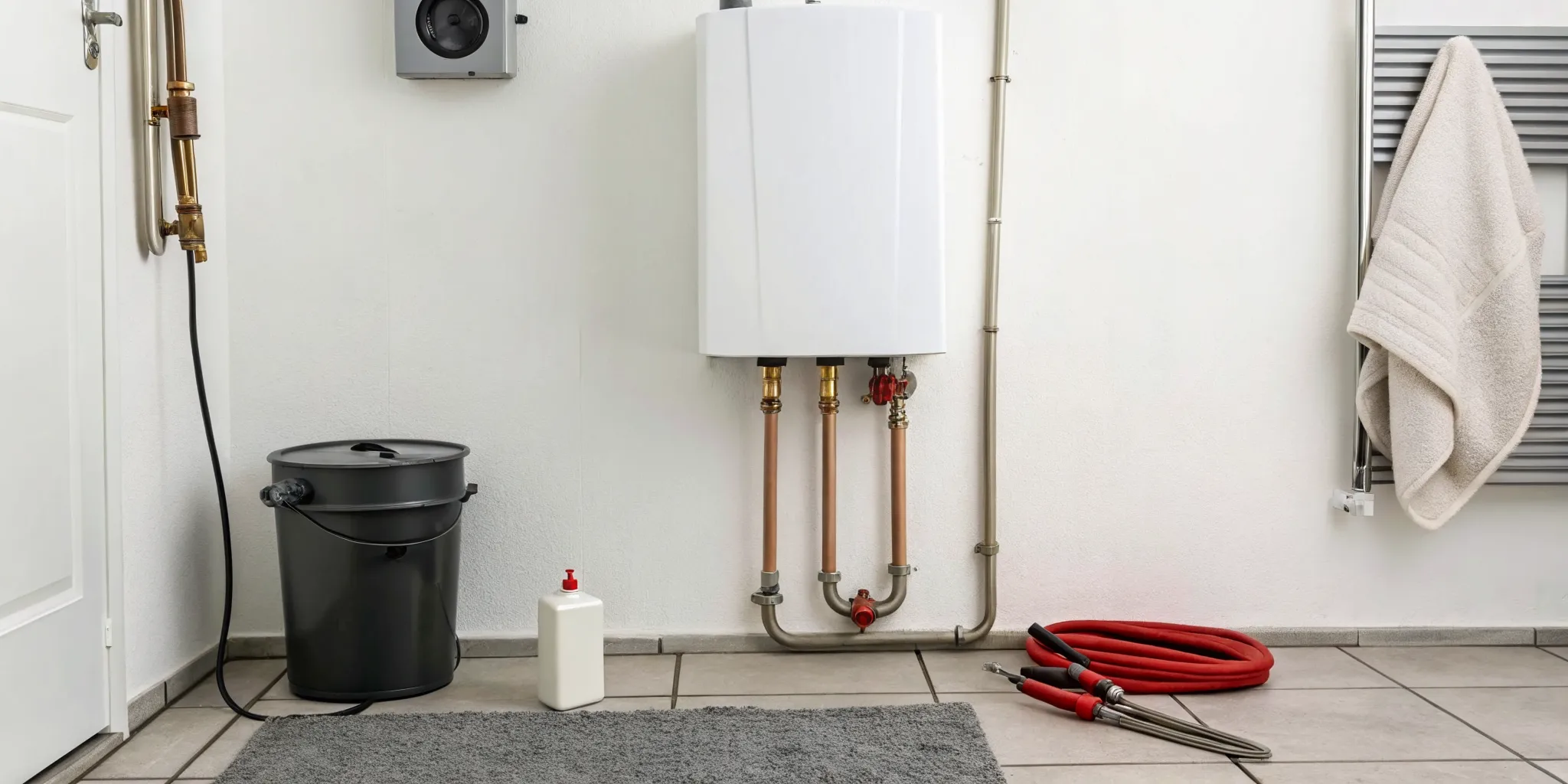
You invested in a tankless water heater for its efficiency and longevity. Seeing it leak can feel like that investment is literally going down the drain. Protecting your appliance starts with understanding why it’s failing. When you have a tankless water heater leaking, it’s often a symptom of an underlying issue that, if ignored, could lead to a much costlier repair. Whether it’s the relentless effect of the Okanagan’s hard water or a worn-out safety valve, identifying the root cause is critical. This guide provides a clear, practical checklist for diagnosing the problem and outlines preventative measures to keep your unit running smoothly for years to come.
Key Takeaways
- Address Hard Water to Prevent Leaks: Mineral buildup from the Okanagan's hard water is a primary cause of tankless water heater leaks. Scheduling an annual professional flush is the most effective way to protect your unit's internal components and prevent costly damage.
- Know When to Call a Professional: You can safely tighten visible water connections, but leaks involving gas lines, internal parts, or safety valves require a certified technician. Handling these issues yourself can be dangerous and often voids your manufacturer's warranty.
- Implement a Prevention Strategy: Beyond annual flushing, you can prevent future leaks by having a professional inspect your system yearly, installing a water filtration system to combat scale, and checking that your home's water pressure is within a safe range.
Why Is My Tankless Water Heater Leaking?
Finding a puddle under your tankless water heater is never a welcome sight. Even without a large storage tank, these efficient units have many connections and components where leaks can start. Most of the time, the culprit is one of a few common issues, from loose fittings to the unique challenges posed by our local water here in the Okanagan. Understanding the cause is the first step to getting your hot water flowing again without the worry of water damage.
The Problem with Okanagan's Hard Water
If you live in Kelowna, Vernon, or anywhere in the Okanagan, you’re likely familiar with hard water. This is the number one enemy of tankless water heaters in our area. As our team often explains to homeowners, "The region has notably hard water with high mineral content, which causes faster sediment buildup in water heaters." This scale accumulation corrodes sensitive internal parts like the heat exchanger and valves, eventually causing them to fail and leak. This is why an annual system flush is so important here. A water filtration system can also make a huge difference in protecting your investment.
High Water Pressure
Your home’s water pressure might be higher than your tankless unit can safely handle. When the pressure is too intense, it puts constant stress on the pipe fittings, joints, and internal components of the heater. You might even hear a banging sound in your pipes, often called a "water hammer," which is a clear sign of high pressure. Over time, this strain can cause connections to loosen or crack, leading to persistent drips or even a significant leak. If you suspect this is the issue, it’s best to have a professional from TruFinity Plumbing Heating & Cooling take a look.
A Faulty Pressure Relief Valve
Every tankless water heater has a temperature and pressure relief (TPR) valve. This is a critical safety feature designed to automatically release water if the pressure or temperature inside the unit gets too high. However, the valve itself can fail. If you notice a slow, steady drip coming directly from the TPR valve, it’s often because its internal seal has worn out. While it might seem like a small drip, it’s a sign that a key safety component needs to be replaced by a qualified technician to ensure your system operates correctly.
Loose Connections or Worn-Out Parts
Over years of heating and cooling cycles, the vibrations from normal operation can cause water line connections to gradually loosen. The threaded fittings where your cold water enters and hot water exits the unit are common places for small leaks to appear. Inside the unit, rubber gaskets and O-rings create watertight seals, but these parts can become brittle and crack with age. A simple loose connection can sometimes be tightened, but diagnosing a worn-out internal part is a job for a professional plumbing repair expert.
How to Find the Source of the Leak
Finding a puddle under your tankless water heater can be stressful, but locating the source is the first step toward a solution. Before you do anything else, grab a flashlight and get ready to play detective. Systematically checking a few key areas will help you understand what’s going on and whether you need to call for professional help. Most leaks originate from just a handful of common spots, like connection points, drain lines, or safety valves, and a careful look can often pinpoint the problem.
Your goal is to trace the water back to its starting point. Look for active drips, water stains on the wall, or mineral buildup on the pipes themselves. Remember that water travels, so the puddle on the floor might not be directly under the source of the leak. By carefully inspecting the unit and its surroundings, you can gather the information needed for an effective repair. If you find a significant leak or feel unsure at any point, it’s always best to contact a certified technician from TruFinity Plumbing Heating & Cooling for professional plumbing repairs to avoid further damage.
Start with a Visual Inspection
Your first step is a simple but thorough visual check. With your flashlight, carefully examine the entire tankless unit, from top to bottom. Look for obvious signs of water, like drips falling from the casing or running down the pipes. Pay close attention to the wall behind and below the heater for any water stains or discoloration, as this can indicate a slow, long-term leak. Also, look for any white, chalky residue or greenish corrosion on the pipe fittings. This is often a telltale sign of a small leak that has been evaporating over time, leaving mineral deposits behind.
Check the Condensate Drain
If you have a high-efficiency condensing tankless water heater, it will have a condensate drain line. This small plastic pipe is designed to safely remove acidic condensation produced during operation. Check this line for any cracks, loose fittings, or blockages. A clog from debris can cause water to back up and leak directly from the bottom of the unit. Make sure the drain line isn't kinked and has a clear path to a proper drain. A blocked condensate line is a common issue, but it's important to handle it correctly to prevent backups and potential water damage. If you suspect a clog, our team can help with professional drain cleaning.
Examine the Water Connections
Next, focus on the main water connections. Your tankless heater has an inlet for cold water and an outlet for hot water, and these connection points are common culprits for leaks. Check the fittings where the pipes meet the unit. Over time, vibrations can cause these connections to loosen. More importantly, here in the Okanagan, hard water can cause mineral scale to build up inside the fittings, leading to corrosion and failed seals. Run your fingers (carefully) around these connections to feel for moisture. A slow drip here is a clear sign that a washer needs replacing or the connection needs to be addressed by a professional. Installing one of our water filtration services can help prevent this issue.
Inspect the Pressure Relief Valve
Every water heater has a Temperature and Pressure Relief (TPR) valve. This critical safety device is designed to open and release water if the pressure or temperature inside the unit gets too high. You can usually spot it as a brass valve with a small lever on top, connected to a pipe that runs down toward the floor. If you see water dripping from the end of this pipe, it could mean one of two things: either the valve is faulty and isn't sealing properly, or it's doing its job because of excessive pressure in your system. Do not attempt to cap or block this valve. A leaking TPR valve is a serious sign that your system needs immediate attention from a licensed plumber at TruFinity Plumbing Heating & Cooling.
Found a Leak? Here’s What to Do Next
Discovering a puddle under your tankless water heater is stressful, but don't panic. Taking a few immediate, careful steps can prevent a small drip from turning into a major problem. This guide will walk you through the essential actions to take right away, from securing the area to gathering the right information for a professional. By acting quickly and safely, you can protect your home from water damage and get your hot water running again with minimal fuss. Think of this as your emergency action plan. We’ll cover how to safely shut everything down, what to look for, and how to prepare for a service call.
First, Shut Off the Water and Power
Before you do anything else, you need to stop the flow of water and cut the power or gas supply to the unit. This is the most important step for safety and damage prevention. First, locate the cold water inlet pipe on your tankless heater and turn the handle on the shut-off valve clockwise until it stops. Next, if you have an electric model, go to your breaker box and flip the switch for your water heater to the "off" position. For a gas unit, find the gas line running to the heater and turn the valve handle so it's perpendicular to the pipe. This stops the flow of gas and is a critical safety measure.
Perform a Quick Safety Check
With the water and power off, you can take a closer look without risk. Your goal here isn't to fix the problem, but to identify where the water is coming from. A common source of leaks is the temperature and pressure relief (TPR) valve, which is a safety device designed to release pressure. Look for a small lever-operated valve on the unit with a pipe leading down from it. See if water is dripping from the end of this pipe. Check all the visible water connections for drips as well. Remember, this is just a visual inspection. Avoid touching or trying to tighten any components, especially if you're not familiar with them.
Document the Leak for Your Plumber
Now is a great time to play detective. Grab your phone and take a few clear pictures or a short video of where the water is coming from. Is it a slow drip or a steady stream? Is it coming from a specific connection, the bottom of the unit, or the wall behind it? Note any error codes displayed on the unit’s digital screen. When you call for a plumbing repair, providing this information helps the technician diagnose the issue more quickly. It allows our team at TruFinity Plumbing Heating & Cooling to prepare for the job and potentially bring the right parts on the first visit, saving you time and hassle.
Minimize Water Damage (For Now)
While you wait for a professional to arrive, your final step is damage control. Place a bucket or some old towels directly under the drip to catch the water and protect your floors. If there's already a significant amount of water, mop it up to prevent it from seeping into your subfloor or drywall. This is a temporary fix, but it can save you from a much more expensive repair down the road. If you’re dealing with a serious leak, remember that Trufinity offers a 45-minute emergency response to get the situation under control fast.
DIY Fix vs. Calling a Pro: Know the Difference
It’s tempting to roll up your sleeves and tackle a home repair yourself. While that can-do spirit is great, a leaking tankless water heater is one of those jobs where you need to know your limits. Some issues are simple fixes, but others involve complex systems that can be dangerous if handled incorrectly. Making the wrong call could lead to bigger leaks, water damage, or even safety hazards involving gas or electricity.
Knowing when to put the tools down and pick up the phone is key. This guide will help you understand which tasks are safe for a confident DIYer and which absolutely require a certified professional. Your safety, your home’s integrity, and your water heater’s warranty all depend on making the right choice. When in doubt, the safest bet is always to consult an expert from TruFinity Plumbing Heating & Cooling.
Leave Gas and Internal Parts to the Experts
This is the most important rule: if you suspect a gas leak or see water coming from the main body of the unit, stop immediately and call a professional. The internal components, especially the gas burner and the heat exchanger, are complex and require specialized knowledge to service safely. A mistake here isn't just costly; it's dangerous. Our technicians at TruFinity Plumbing Heating & Cooling hold Class B Gasfitter certifications, ensuring they have the training to handle these systems correctly. Don’t take risks with your family’s safety. For any issues beyond simple, visible connections, it’s time to call for professional help.
Protect Your Warranty & Heat Exchanger
Did you know that most manufacturers’ warranties become void if an unauthorized person attempts a repair? Before you try to fix a leak yourself, consider the long-term cost. You could save a small amount on a service call today only to lose complete coverage for a major component failure tomorrow. The heat exchanger is the heart of your tankless unit and the most expensive part to replace. A botched DIY repair could damage it, leaving you with a massive bill that your warranty won't cover. Professional service from Trufinity not only fixes the problem correctly but also keeps your valuable warranty intact.
Signs You Need a Professional Diagnosis
Sometimes, a leak is a symptom of a deeper problem. If you’re seeing persistent error codes on your unit’s display, hearing unusual noises like banging or whistling, or if the leak returns after you’ve tightened a fitting, you need a professional diagnosis. These are signs that the issue may involve internal pressure, sediment buildup, or a failing component that requires specialized tools to identify. Our team uses electronic leak detection and other advanced equipment to pinpoint the exact cause, ensuring we fix the root of the problem, not just the symptom. Don't let a small issue turn into a complete system failure.
Easy Fixes You Can Safely Handle
Not every drip requires an emergency call. There are a few simple things you can safely check yourself. Start by looking at the visible water inlet and outlet connections. If a fitting feels loose, you can gently tighten it with a wrench, being careful not to overtighten. Another common culprit is a blocked or kinked condensate line, which is the small plastic tube that drains moisture away from the unit. You can check to make sure it’s clear and properly seated. If these quick checks don’t solve the leak, you’ve safely ruled out the simplest causes, and it’s time to have a TruFinity expert take a closer look.
How to Prevent Future Tankless Water Heater Leaks
Once you’ve fixed the immediate leak, your next thought is probably how to keep it from happening again. The good news is that with a little proactive care, you can significantly extend the life of your tankless water heater and prevent most common leaks. Prevention is all about staying ahead of the two biggest culprits: mineral buildup and excess pressure.
In the Okanagan, our water is particularly hard, which makes regular maintenance even more important. By creating a simple care schedule, you protect your investment, ensure your unit runs efficiently, and avoid the stress of another unexpected puddle in your utility room. Here are the four most effective steps you can take to keep your tankless water heater in top shape.
Schedule Annual Flushing for Hard Water
Mineral scale is the number one enemy of a tankless water heater, especially here in the Okanagan. As the local experts at TruFinity Plumbing Heating & Cooling know, "The region has notably hard water with high mineral content, which causes faster sediment buildup in water heaters, mineral deposits in pipes, and reduced appliance lifespan. Annual flushing is more critical here than in coastal BC due to these conditions." This buildup can corrode sensitive internal parts, leading directly to leaks.
An annual flush, or descaling, removes these harmful mineral deposits. While DIY kits are available, a professional service ensures the process is done thoroughly and safely. Trufinity offers an $89 Water Heater Flush, and this essential service is also included in our TruLoyalty+ membership plan.
Stick to a Regular Maintenance Schedule
Flushing is crucial, but it’s just one part of a complete maintenance routine. A yearly professional inspection can catch other potential issues before they turn into major problems. During a maintenance visit, a certified technician will do more than just descale the unit. They will inspect the venting system for blockages, check the pressure relief valve to ensure it’s functioning correctly, and look for any early signs of wear on gaskets and seals. Think of it as an annual check-up for one of your home’s most important appliances. This regular care keeps your system running safely and efficiently, giving you peace of mind.
Consider a Water Filtration System
If you want the ultimate protection against hard water damage, a water filtration system is the answer. This system treats the water before it even enters your tankless unit, removing the calcium and magnesium that cause scale buildup in the first place. It not only protects your water heater but also extends the life of your other water-using appliances, like your dishwasher and washing machine. TruFinity Plumbing Heating & Cooling can help you find the right water filtration solution for your home and even offers a free inline sediment water filtration system with a new tankless water heater installation.
Manage Your Home's Water Pressure
Just like high blood pressure can strain a body, high water pressure puts constant stress on your entire plumbing system, including your tankless water heater. Pressure that’s too high can cause fittings to leak and can damage the pressure relief valve, forcing it to drip. Most home plumbing systems are designed to operate at a pressure between 40 and 60 PSI. A simple pressure gauge can tell you if your home’s pressure is too high. If it is, installing a pressure-reducing valve (PRV) can solve the problem. A professional plumber can test your pressure and handle the plumbing repairs needed to get it right.
Related Articles
Frequently Asked Questions
How often should I get my tankless water heater flushed in the Okanagan? Because our local water is so hard, an annual flush is the standard recommendation. Think of it as essential preventative care. The mineral buildup here happens much faster than in other regions, and a yearly professional descaling service is the best way to prevent the corrosion that causes most internal leaks and protects the longevity of your unit.
Is a small, slow drip from my unit really an emergency? While it might not seem urgent, even a small drip is a clear warning sign that something is wrong. It could point to a failing seal, a loose connection, or even a more serious internal issue like corrosion. Ignoring it often leads to a much bigger leak and more significant water damage down the road, so it's always best to have it inspected by a professional sooner rather than later.
My leak seems to be coming from a simple pipe connection. Can I just tighten it myself? It can be tempting to try a quick fix, but you need to be careful. Overtightening a fitting can easily crack it and make the leak much worse. Furthermore, the loose connection might be a symptom of a bigger problem, like excessive water pressure. If a very gentle tightening doesn't solve it, it’s safer to call a technician to diagnose the root cause and protect your manufacturer's warranty.
What's the difference between a regular leak and a leak from the pressure relief valve? A leak from a water connection is typically a plumbing issue, like a worn-out washer or a loose fitting. A leak from the temperature and pressure relief (TPR) valve, however, is a safety issue. That valve is designed to release water only when there's dangerously high pressure or temperature inside the unit. It could mean the valve itself has failed, or it could be signaling a serious problem that requires immediate professional attention.
Will installing a water filtration system stop my tankless heater from ever leaking again? A whole-home water filtration system is the most effective step you can take to prevent the most common types of leaks. By removing the minerals that cause corrosive scale buildup, you protect the sensitive internal components of your heater. While no single thing can guarantee a leak will never happen, combining a filtration system with annual maintenance gives your unit the best possible defense against future problems.

.webp)