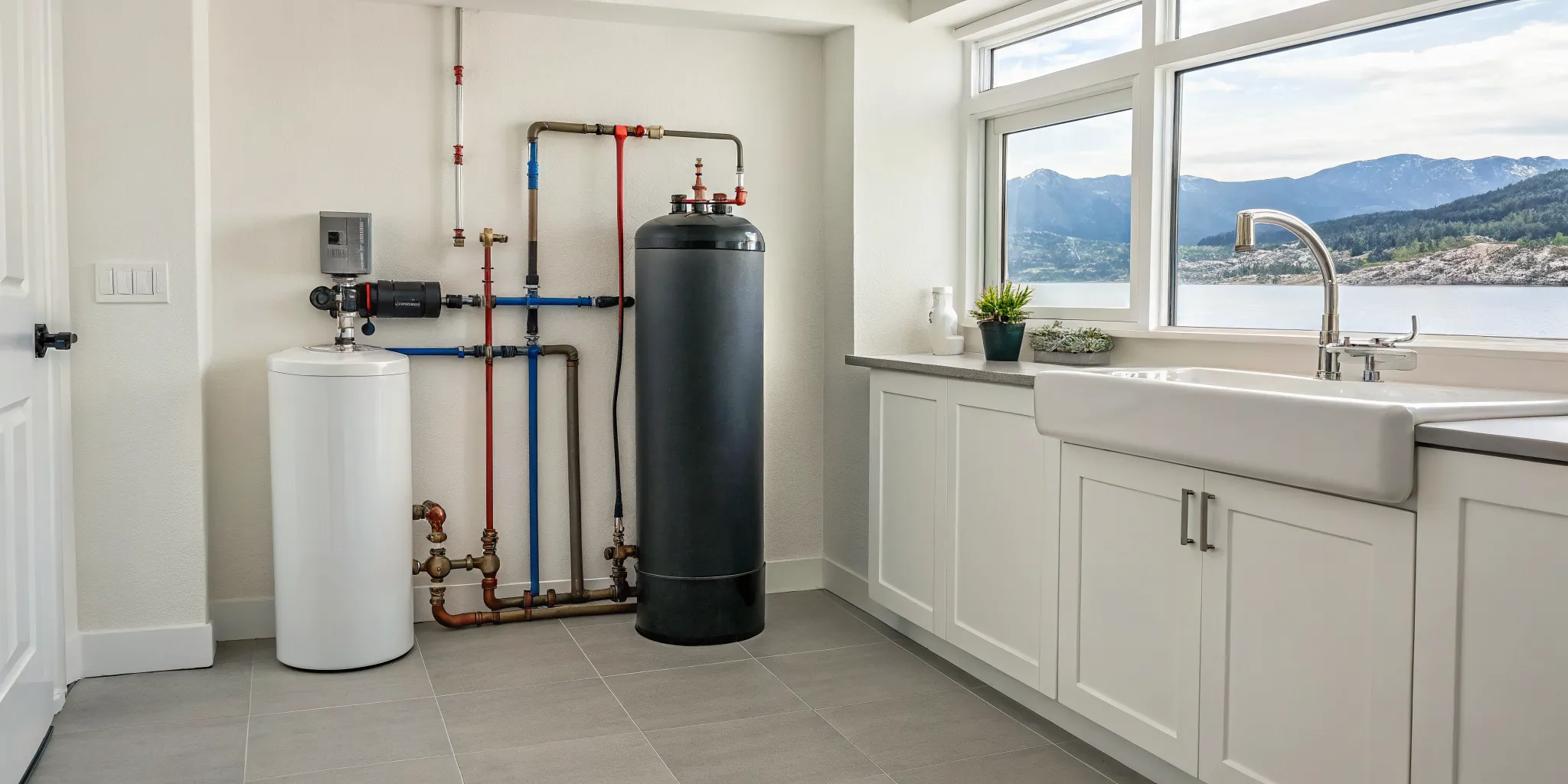
When you think about home maintenance, you probably focus on things you can see, like the roof or the paint. But one of the costliest issues for Okanagan homeowners is invisible: hard water damage. That high mineral content in our water forces your appliances to work harder, driving up energy bills and leading to premature breakdowns. Replacing a water heater or dishwasher years earlier than you should is an expense no one wants. Investing in a water softener system for home isn't just another purchase; it's a protective measure for your biggest investments. At TruFinity Plumbing Heating & Cooling, we see it as a way to save you money in the long run by extending appliance life and preventing costly repairs.
Key Takeaways
- Protect your home from hard water damage: Okanagan's high mineral content shortens the lifespan of expensive appliances like water heaters and dishwashers. A water softener is the most effective way to prevent costly scale buildup and premature replacements.
- Proper sizing and installation are crucial: The performance of your water softener depends on choosing the right capacity for your family's needs and ensuring it's installed correctly. Professional installation prevents leaks, protects your warranty, and guarantees the system is calibrated for maximum efficiency.
- A water softener is an investment that pays off: Beyond protecting your appliances, a softener reduces your spending on soap, detergent, and energy. With minimal annual upkeep, it delivers long-term savings that make it a smart financial decision for your home.
Why Your Okanagan Home Needs a Water Softener
If you live anywhere from Kelowna to Penticton, you’re already familiar with the challenges of our local water. It’s not just you; our entire region has notably hard water with high mineral content. This reality "causes faster sediment buildup in water heaters, mineral deposits in pipes, and reduced appliance lifespan." While you might see the effects as chalky spots on your dishes or a film on your shower door, the real issues are often hidden from view, silently impacting your home’s plumbing and your wallet.
The daily annoyances are frustrating enough. Hard water makes it difficult to get a good lather with soap, leaves your skin feeling dry and itchy, and can make your hair feel dull. You might also notice your clothes and linens look faded and feel stiff right out of the laundry. These are all signs that minerals like calcium and magnesium are winning the battle against your soaps and detergents.
The bigger concern, however, is what’s happening inside your pipes and appliances. That same mineral scale builds up in your water heater, dishwasher, and washing machine, forcing them to work harder and less efficiently. This not only drives up your energy bills but also leads to more frequent repairs and a shorter lifespan for these expensive appliances. TruFinity Plumbing Heating & Cooling often sees equipment fail years earlier than it should, simply due to the strain caused by hard water.
A whole-home water softener is the most direct and effective solution. By installing one of our water filtration services, you can remove these damaging minerals before they ever enter your plumbing system. The benefits are immediate and far-reaching. A water softener "eliminates hard water problems," giving you everything from "cleaner dishes and softer skin" to peace of mind. It’s an investment that protects your home, saves you money on energy and repairs, and makes daily life a little more comfortable.
What Type of Water Softener is Right for You?
Choosing a water softener system for your home can feel like a big decision, but it doesn't have to be complicated. The best system for you really comes down to a few key factors: your family’s size, how much water you use, and the specific water hardness in your area. Here in the Okanagan, where we deal with significant mineral content, picking the right type is crucial for protecting your home’s plumbing and appliances from long-term damage.
Let’s walk through the three main types of water filtration systems so you can feel confident about which one fits your needs. Understanding the differences will help you make a smart investment that provides your family with soft, clean water for years to come. TruFinity Plumbing Heating & Cooling can help you assess your home's specific requirements to find the perfect match.
Salt-Based Ion Exchange Systems
This is the most common and effective type of water softener, and for good reason. Salt-based systems work by using a process called ion exchange to physically remove the hard minerals, like calcium and magnesium, from your water. According to the Department of Energy, these systems are the gold standard for actually removing the minerals that cause scale buildup. For Okanagan homes, this is often the best defense against hard water damage. The result is water that not only protects your pipes and appliances but also "provides cleaner dishes and softer skin." The main upkeep is simple: you just need to add salt to the brine tank periodically.
Salt-Free Water Conditioners
If you’re looking for a low-maintenance alternative, a salt-free system might catch your eye. Instead of removing minerals, these systems "condition" the water, changing the structure of the minerals so they are less likely to stick to surfaces and form scale. This means you won't have to buy or add salt. However, it's important to know that these conditioners don't actually soften the water by removing minerals. While they can help reduce scale, they may be less effective in areas with very hard water like ours, or in homes with high water usage. They are a good option for some, but may not provide the complete solution many Okanagan homeowners are looking for.
Dual-Tank Systems
For larger households or homes with very high water demand, a dual-tank water softener is the ultimate solution. These systems feature two resin tanks, ensuring you have a continuous supply of soft water, 24/7. While one tank is in its cleaning (or regeneration) cycle, the second tank seamlessly takes over, so your family never experiences a moment of hard water. This makes them perfect for busy families who can’t afford any downtime. While dual-tank systems require more space and a larger initial investment, they offer unmatched convenience and are a powerful solution for combating the toughest hard water challenges in the Okanagan.
What to Look For in a Water Softener System
Choosing the right water softener system can feel a bit overwhelming with all the different features and specs out there. But don't worry, it really comes down to a few key factors that match a system to your home's specific needs. Since we deal with such hard water here in the Okanagan, picking a system that’s up to the task is crucial for protecting your pipes and appliances. Let’s walk through the most important features to consider so you can make a confident choice for your home.
System Capacity and Grain Rating
Think of a water softener's grain capacity as the amount of water hardness it can remove before it needs to "regenerate" or clean itself. In the Okanagan, where our water has a high mineral content, you need a system that won't be constantly running a cleaning cycle. A properly sized system ensures you have a steady supply of soft water without wasting salt and water on excessive regeneration. A professional can help you calculate the right capacity based on your household's water usage and our local water conditions, ensuring your system runs efficiently.
Iron Removal Capability
Hardness isn't the only issue in our water; sometimes, iron comes along for the ride. Excess iron can leave behind those frustrating reddish-brown stains in your sinks, tubs, and laundry. Not all water softeners are designed to handle iron, so if a water test shows it’s present in your supply, you’ll want a system specifically equipped for iron removal. This feature is a must-have for keeping your fixtures and fabrics looking their best and is a key part of a total water filtration solution.
Flow Rate and Water Pressure
Have you ever been in the shower when someone starts the dishwasher, only to have the water pressure drop? That’s something a good water softener can help prevent. The flow rate, measured in gallons per minute (GPM), tells you how much softened water can move through your home at once. A system with a high flow rate ensures you can run multiple appliances simultaneously without noticing a difference. This is especially important for busy families and larger homes where water demand is high throughout the day.
Regeneration Type and Efficiency
Regeneration is the process where the system flushes out the collected minerals and recharges itself with salt. Modern softeners are much more efficient than older models. They use smart technology to regenerate only when necessary, based on your actual water usage, rather than on a fixed timer. This demand-initiated regeneration saves a significant amount of salt and water over the life of the system, which is great for both your wallet and the environment. It’s a feature that adds long-term value and reduces operating costs.
Smart Technology and Monitoring Features
Today’s water softeners come with some impressive tech. Many systems now include smart features that can monitor your water usage, send you alerts when the salt is running low, and even let you track performance from an app on your phone. These conveniences offer incredible peace of mind, taking the guesswork out of maintenance. While not strictly necessary, smart technology makes it easier than ever to ensure your system is running at peak efficiency, protecting your home’s plumbing and appliances around the clock.
Comparing Performance, Price, and Long-Term Value
Choosing a water softener system can feel like a big decision, but it doesn't have to be complicated. When you look past the marketing, there are three key things to compare: how well a system performs, its upfront price, and its long-term value. A cheap system that constantly needs salt or fails to protect your appliances isn't a good deal. The right system is an investment in your home’s plumbing, your appliances, and even your daily comfort. It’s about finding a balance that fits your home’s needs and your budget, ensuring you get reliable performance for years to come.
At TruFinity Plumbing Heating & Cooling, we believe in helping you make an informed choice. Let’s break down what you should be looking for in each of these areas so you can feel confident you’re selecting the best water softener for your Okanagan home.
What Really Matters for Performance
Performance is all about how effectively a system removes the minerals that cause hard water. A key factor is the flow rate, measured in gallons per minute (GPM). A higher flow rate ensures you won’t experience a drop in water pressure, even when you’re running the dishwasher and showering at the same time. You should also look at the grain capacity, which determines how much hardness the system can remove before it needs to regenerate. For the Okanagan’s hard water, a system with the right capacity will run more efficiently. High-quality water filtration services focus on matching these specs to your household’s specific water usage.
Understanding the True Cost and Value
While the sticker price is important, the true value comes from what you get for your money. For most Okanagan homeowners, a professional-grade system and installation will be an investment of between $1,500 and $3,500. Think of this not just as a purchase, but as a way to protect your home. A quality water softener “Extends appliance life,” saving you from premature and costly replacements of your water heater, dishwasher, and washing machine. To help make this important home upgrade more accessible, TruFinity Plumbing Heating & Cooling currently has special offers and rebates, including $250 OFF a new water softener system.
Salt Efficiency and Operating Costs
The main ongoing cost for a salt-based water softener is the salt itself. However, modern systems are designed for high efficiency, using advanced regeneration technology that minimizes both salt and water consumption. This saves you money every month. Beyond salt, routine upkeep is minimal. For most systems, the average “Maintenance cost approximately $100 annually.” To make this even easier, our TruLoyalty+ Membership includes twice-a-year system tune-ups, ensuring your water softener runs at peak efficiency and helping you get the most out of your investment. Regular service keeps operating costs low and prevents unexpected issues.
Common Water Softener Problems to Watch For
A water softener is a fantastic investment for your home, but like any hardworking appliance, it needs a little attention to perform its best. Staying on top of a few simple maintenance tasks can prevent bigger headaches down the road and ensure you’re always getting the soft, mineral-free water you love. Most issues are easy to spot and fix yourself, but knowing what to look for is the first step.
Think of it as a quick health check-up for your system. By regularly checking on salt levels, making sure the resin bed is clean, and preventing pesky salt bridges, you can keep your softener running efficiently for years. These small steps protect your investment and help you avoid the surprise of returning hard water. If you ever run into a problem you can't solve, the certified team at TruFinity Plumbing Heating & Cooling is always here to help with professional water filtration services.
Preventing Salt Bridges
One of the most common issues you might encounter is a salt bridge. According to the U.S. Department of Energy, "Sometimes, a hard crust of salt (a 'salt bridge') can form in the brine tank. This stops the softener from working right, so you need to break it up." This hardened crust forms above the water line, creating an empty space below it. The water can't dissolve the salt, so the resin beads in your system don't get regenerated, and you end up with hard water again.
To check for a bridge, just take a look inside your salt tank. If the salt level looks full but your water is hard, you might have one. You can gently tap the outside of the tank or use a broom handle to carefully break up the crust.
Keeping Your Resin Bed Clean
The resin bed is the heart of your water softener. It’s where tiny beads grab onto hard minerals like calcium and magnesium, removing them from your water. Over time, these beads can get clogged with iron, sediment, and other contaminants, which makes them less effective. This is especially true here in the Okanagan, where our water has a high mineral content.
To keep things fresh, you can flush the resin bed with a special cleaner to remove buildup. Using a resin bed cleaner once a year can restore the beads to their peak performance and extend the life of your system. It’s a key part of the annual maintenance that keeps your water feeling soft and clean.
Monitoring Your Salt Level
This is the easiest and most important task for any water softener owner. Your system uses salt to clean its resin beads and flush away the hard minerals it has collected. If the salt runs out, the regeneration process can't happen, and your water will quickly become hard again.
A good rule of thumb is to check your salt levels every four to six weeks. You’ll want to keep the tank at least half full at all times, but try not to fill it to the very top, as this can contribute to salt bridging. When you add more, use the type of salt recommended by your system’s manufacturer. This simple habit ensures your softener always has the fuel it needs to do its job.
Breaking Down the Costs: Installation and Maintenance
Thinking about a water softener is a smart move for any Okanagan homeowner, but it’s natural to wonder about the budget. The good news is that it’s a predictable and worthwhile investment in your home’s health and longevity. Understanding the full picture, from the initial purchase to the minor yearly upkeep, helps you see the incredible value it brings. It’s not just about buying an appliance; it’s about protecting your pipes, water heater, and other fixtures from the harsh effects of our region's hard water.
Let's break down what you can expect to invest, so you can plan with confidence and see how a water softener pays for itself over time.
Initial Investment and Installation
The upfront cost for a high-quality water softener, including professional installation, typically ranges from $1,500 to $3,500 in the Okanagan. This price covers a reliable system that’s properly sized for your home and installed by certified technicians who ensure it runs perfectly from day one. While it’s a significant investment, it’s one that immediately starts protecting your home. To make it more accessible, TruFinity Plumbing Heating & Cooling often has special offers and rebates, like $250 off a new water softener system. We also provide flexible financing options to help you manage the cost without delay.
Annual Maintenance and Operating Expenses
Once your system is up and running, the ongoing costs are quite minimal. You can expect to spend approximately $100 annually on maintenance, which is mostly for salt. A 40-pound bag of salt usually costs between $5 and $10 and will last for a few months, depending on your household's water usage. This small yearly expense is all it takes to keep your system working efficiently to provide soft water. For total peace of mind, our TruLoyalty+ Membership includes system tune-ups, helping you protect your investment and ensure your water softener continues to extend the life of your appliances for years to come.
Professional Installation vs. DIY: What's the Best Choice?
After you’ve chosen the right water softener, the next step is getting it installed. For handy homeowners, a DIY installation can seem like a great way to save some money. But installing a water softener is more complex than it appears. The process involves cutting into your home’s main water supply line, making secure plumbing connections, setting up a drain line, and programming the system to handle the Okanagan’s uniquely hard water.
An incorrect installation can lead to frustrating issues like leaks, a drop in water pressure, or an inefficient system that wastes salt and water. Any initial savings from a DIY job can quickly vanish if you have to call in a professional to fix mistakes or deal with water damage. The choice between professional installation and DIY really comes down to weighing an upfront cost against long-term performance and peace of mind. At TruFinity Plumbing Heating & Cooling, we believe that protecting your home and ensuring your new appliance works perfectly from day one is the smartest investment you can make.
Why Go with a Pro
Opting for a professional installation gives you confidence that the job is done right the first time. Our team at Trufinity is made up of certified technicians, including Red Seal Plumbers, who manage these installations every day. We do more than just connect the pipes; we assess your home’s plumbing to find the best location, ensure every connection is leak-proof, and calibrate the system for peak efficiency. A professional install also protects your manufacturer’s warranty, which can be voided by improper DIY work. Plus, we stand by our craftsmanship. Our TruLoyalty+ members receive a two-year labor warranty, giving you complete confidence in your new system.
The Pitfalls of a DIY Install
A DIY installation might look simple in a video, but small mistakes can create big headaches. One of the most common issues is a leak caused by improperly secured pipe fittings, which can lead to slow drips and serious water damage over time. Another frequent error is setting up the drain line incorrectly, which could cause wastewater to back up into your home. Beyond the plumbing, incorrect programming can leave you with water that’s still hard or make the system regenerate too often, wasting money on salt and water. A botched DIY job often ends with a call for plumbing repairs that cost more than the professional installation would have in the first place.
The Features Homeowners Love Most
Beyond the technical specs, a water softener is an investment in your home's health and daily comfort. Homeowners who make the switch often tell us they can't imagine going back. The benefits show up in noticeable ways, from the kitchen sink to the laundry room and even your morning shower. It’s about making your home run more smoothly, protecting your appliances, and saving you money over time. Let’s look at the specific features that consistently win homeowners over.
Efficiency and Smart Technology
Modern water softeners are designed to be incredibly efficient. Many systems include smart technology that monitors your water usage and regenerates only when necessary, rather than running on a fixed schedule. This means less waste and lower operating costs. High-performance systems also maintain a strong flow rate, so you won't experience a drop in water pressure, even when multiple appliances are running. When installed by a professional, these smart systems are calibrated perfectly to your home’s needs, giving you set-it-and-forget-it peace of mind.
Health and Home Benefits
This is where you’ll feel the difference every day. A water softener "Eliminates hard water problems" by removing the minerals that cause so many frustrations. The result? It "Provides cleaner dishes and softer skin." You’ll notice your glassware is free from chalky spots, your hair feels less dry, and your clothes look brighter. Hard water minerals build up inside your pipes and appliances, but our water filtration services can stop that damage before it starts, keeping your home’s plumbing system healthy from the inside out.
Long-Term Cost Savings
A water softener is one of the few home improvements that actively pays you back. By preventing scale buildup, it "Extends appliance life" for your water heater, dishwasher, and washing machine, saving you from expensive repairs. You’ll also spend less on soap, shampoo, and laundry detergent because soft water allows them to lather more effectively. Plus, your water heater will run more efficiently. With a low "Maintenance cost approximately $100 annually" and our current offer for $250 OFF a water softener system, the long-term savings make it a smart financial decision.
Get the Best Value on Your System in the Okanagan
Finding the right water softener system is about more than just the initial price tag; it’s about securing long-term value for your home. In the Okanagan, most homeowners can expect a total investment of $1,500 to $3,500 for a professional-grade system and installation. The key to getting the best value within that range is choosing a system that’s perfectly matched to your family’s needs. A great starting point is to look for a system with the right-sized grain capacity, typically around 3,000 to 5,000 grains per person in your household. This ensures the softener works efficiently without wasting salt or water.
When you start to compare different water softener brands, you’ll notice that different models excel in different areas. For example, industry reports often praise systems like the SpringWell SS for its high hardness removal rate or the HydroClean3 for its salt-saving technology. While these details are helpful, the best system is always the one that solves your specific hard water problems. This is where professional guidance makes all the difference. Our Red Seal Plumbers can assess your home’s water usage and hardness level to recommend a system that delivers real results, from softer skin to longer-lasting appliances.
At TruFinity Plumbing Heating & Cooling, we help you maximize your investment from day one. We’re currently offering $250 OFF a new water softener system to make this essential upgrade more accessible. We also provide flexible financing options to fit your budget. To protect your new system for years to come, consider our TruLoyalty+ Membership. It includes twice-a-year system tune-ups, which are crucial for keeping your water softener running efficiently and preventing costly repairs down the road. True value comes from a quality product, expert installation, and dedicated ongoing care.
Let's Find the Perfect Water Softener for Your Home
Choosing the right water softener system can feel like a big decision, but it doesn’t have to be complicated. It’s all about matching the right features to your family’s needs and the specific challenges of our Okanagan water. Getting this right means you’ll have a system that works efficiently for years, protecting your home and making daily life a little bit better. From softer skin to cleaner dishes and longer-lasting appliances, the perfect system is a true investment in your home's comfort and value.
When you start comparing models, one of the first things to look at is the grain capacity. A good rule of thumb is to choose a system sized for 3,000 to 5,000 grains per person in your household. This ensures your softener can handle your water usage without regenerating too often, which saves salt and water. Beyond size, consider the system's specific performance capabilities. Some models are designed not just to soften water but also to reduce ferrous iron, tackling those stubborn reddish-brown stains you might see in sinks and tubs.
Another key factor is the flow rate, measured in gallons per minute (GPM). A system with a high flow rate, like 15 GPM, ensures you won’t experience a drop in water pressure, even when multiple faucets or appliances are running. When it comes to budget, Okanagan homeowners can generally expect to invest between $1,500 and $3,500 for a professional-grade water softener system and installation. While it's a significant upfront cost, it prevents expensive premature replacements of your water heater, dishwasher, and washing machine.
At TruFinity Plumbing Heating & Cooling, our team helps you sort through these details to find the ideal fit. We look at your household size, water usage, and budget to recommend a system that delivers real value. Our Red Seal Plumbers handle the installation from start to finish, ensuring it’s done right. Plus, we’re currently offering $250 OFF a new water softener system. Let our team provide a personalized recommendation to protect your home from hard water for good.
Related Articles
- How Much Does It Cost to Install a Water Softener in the Okanagan?
- What Is the Monthly Cost of Running a Water Softener?
Frequently Asked Questions
How can I tell if my home has hard water without a professional test? The signs of hard water are usually all around you. You might notice chalky white spots on your faucets, shower doors, and glassware even after cleaning. Your soap and shampoo may not lather well, and your skin might feel dry or itchy after a shower. Another big clue is in the laundry room; if your towels feel stiff and your clothes look faded, the high mineral content in our Okanagan water is likely the cause.
Will a water softener make my drinking water taste salty? This is a very common concern, but the answer is no. A properly functioning salt-based water softener uses a process called ion exchange, where it swaps hard minerals for a tiny, almost unnoticeable amount of sodium. The water that comes out of your tap will not taste salty. The salt is only used to clean the resin beads inside the system and is then flushed away down the drain.
How long does a typical water softener system last? A quality water softener is a long-term investment in your home. With proper installation and consistent maintenance, you can expect a modern, high-efficiency system to last between 10 and 15 years. Regular service, like what’s included in the TruFinity Plumbing Heating & Cooling membership plan, helps ensure your system runs at peak performance and reaches its full lifespan.
What does the installation process involve and how long does it take? A professional installation is a straightforward process that our certified technicians can typically complete in just a few hours. The process involves finding the best location for the unit, carefully cutting into your home's main water line, and making secure connections for the softener and its drain line. Once it's hooked up, we program the system based on your home's water usage and our local water hardness to ensure it runs efficiently from day one.
What happens if I forget to add salt to the system? Forgetting to add salt won't damage your water softener, so there's no need to panic. However, the system will not be able to regenerate or clean its resin beads. This means it will stop softening your water, and you will notice the signs of hard water returning to your home. Once you add more salt, the system will resume its normal regeneration cycle and you'll have soft water again.

.webp)