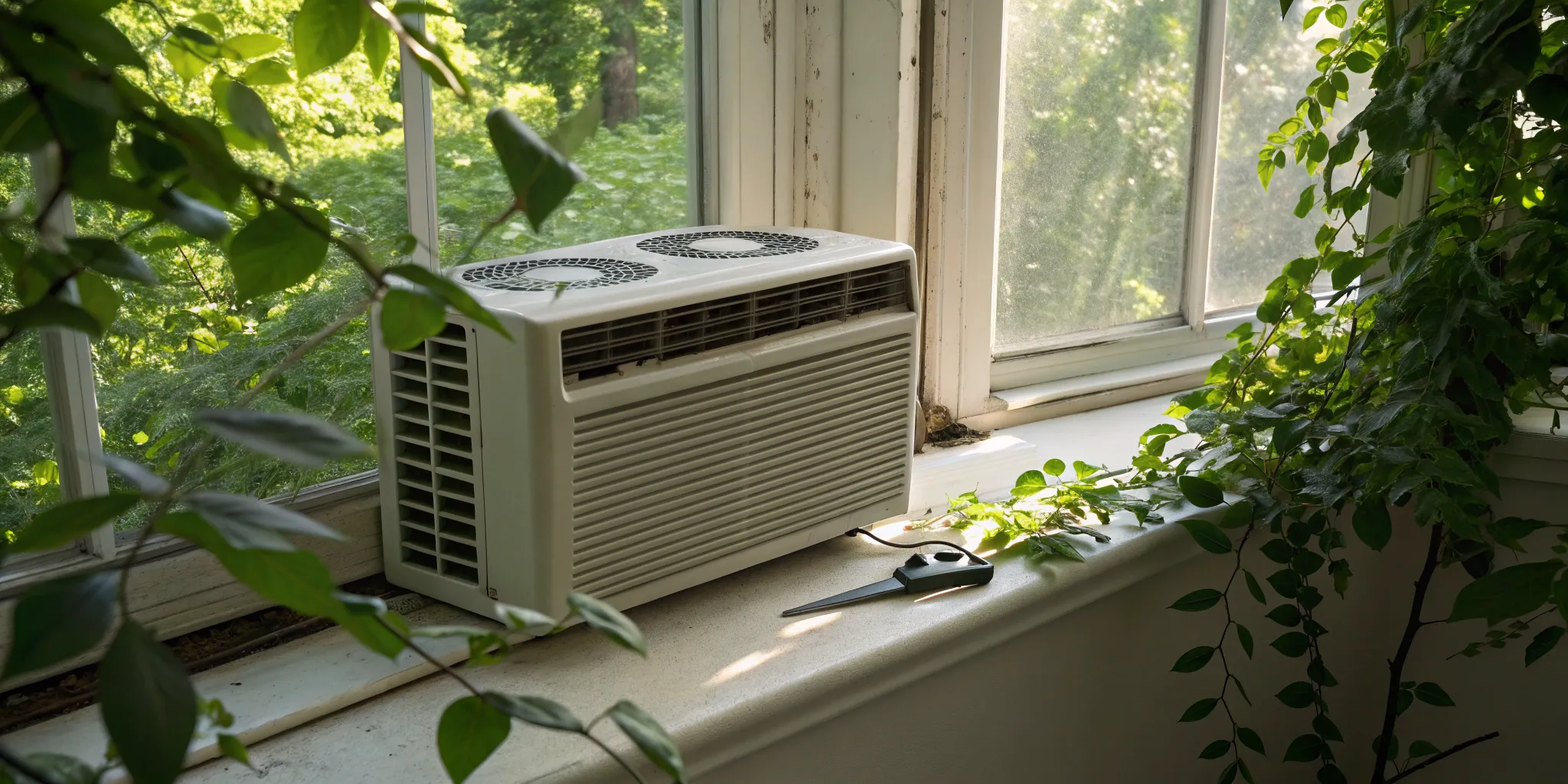
That humming box in your window is a true hero during a hot Okanagan summer. But when it starts making a strange noise or blowing lukewarm air, that hero-status quickly turns to stress. You’re left wondering: is this a simple fix I can handle myself, or is this the beginning of a costly problem? The uncertainty of whether to call for a professional window ac repair or start shopping for a new unit can be overwhelming. This guide is here to help you make a smart, confident decision. We’ll walk through the most common issues, helping you diagnose the problem and understand when a DIY solution is safe and when it’s time to call in an expert.
Key Takeaways
- Start with the simple fixes first: Before calling for service, check for common culprits you can handle yourself, like cleaning a dirty air filter or unclogging the exterior drain hole. These simple steps resolve a surprising number of cooling issues.
- Weigh the cost against the age of your unit: If your window AC is over eight years old and facing an expensive repair, it's often more cost-effective to replace it. A new, energy-efficient model can save you money on future repairs and lower your monthly utility bills.
- A little maintenance goes a long way: The best way to avoid future problems is through consistent care. Regularly cleaning the filter and coils, combined with an annual professional tune-up, will keep your unit running efficiently and extend its lifespan.
Is Your Window AC Acting Up? Common Problems
That humming box in your window is a lifesaver during an Okanagan summer, but when it starts acting strange, it can be a real source of stress. Is it a simple fix or a sign of a bigger problem? Most window AC issues fall into a few common categories, from strange noises to a frustrating lack of cool air. The good news is that many of these problems have straightforward solutions you can handle yourself. For others, a quick call for professional air conditioner repair is the safest and most effective route. Let’s walk through the most frequent issues to help you figure out what’s going on with your unit.
Not Cooling Enough?
This is easily the most common complaint. If your AC is running but the room still feels warm, the first thing to check is the filter. A dirty, clogged filter is the number one cause of poor cooling because it restricts airflow. The same goes for dirty coils. If cleaning those doesn't do the trick, check the thermostat sensor. Sometimes the small wire sensor gets knocked out of place; you can gently bend it back so it’s near the coil but not touching it. If you’ve tried these fixes and still get lukewarm air, you might be dealing with a faulty compressor, which is a much more serious issue that requires an expert.
Leaking Water?
Finding a puddle of water under your window AC is alarming, but it’s usually not a sign of a major failure. Water is a normal byproduct of the cooling process, and your AC has a drain system to manage it. If it’s leaking, it’s typically because that system is blocked or misaligned. First, check that the unit is level and tilted slightly backward in the window to allow water to flow out the drain pan correctly. Next, find the drain hole on the outside part of the unit and make sure it isn’t clogged with debris. These are simple adjustments you can likely handle yourself without needing to call for service.
Is It Freezing Over?
Seeing a layer of ice on your AC unit is a clear sign that something is wrong. While it looks dramatic, your first step is simple: turn the unit off and let it thaw completely. Once it’s dry, you can turn it back on, but don’t stop there. Freezing is a symptom of an underlying problem, like restricted airflow from a dirty filter or, more seriously, low refrigerant levels. While you can handle the thawing, you’ll want a professional to perform a proper diagnosis to figure out why it froze. Ignoring the root cause will only lead to it freezing up again.
Making Strange Noises?
Your AC should produce a consistent hum, so any new rattling, banging, or screeching is worth investigating.
- Rattling: This often means something is loose or there’s debris inside the unit. Check for leaves or twigs that might have gotten inside and clean them out.
- Vibrations: A vibrating sound usually points to an improper installation. Make sure the unit is secure in the window frame.
- Banging or Screeching: These more aggressive sounds often point to a problem with the fan. A fan blade might be bent, or the motor may need lubrication. While you can try straightening a blade, more serious damage requires an expert.
Can I Fix My Window AC Myself?
When your window air conditioner starts acting up, the first question is usually, "Can I fix this on my own?" The answer is often yes. Many common AC issues are surprisingly simple to resolve with a bit of basic maintenance. Taking the time to troubleshoot can save you from a service call and get your cool air flowing again quickly.
However, it's just as important to recognize when a problem is beyond a simple fix. Some repairs, especially those involving electrical components or refrigerant, are best left to a professional. Attempting them without the right tools and training can be dangerous and may lead to more expensive damage. The key is knowing which tasks are safe to tackle yourself and when it’s time to call for backup. This guide will help you understand the difference so you can make a smart, safe decision for your home.
Easy Fixes You Can Handle
You might be surprised by how many window AC problems you can solve without any special skills. If your unit is leaking water or freezing up, a DIY fix is often all you need. Start by checking for the most common culprits: a dirty filter or clogged coils. You can also make sure the unit is level in the window and that the drain pan is tilted correctly to allow water to escape. If you notice a musty smell, a good cleaning with antibacterial soap and water can often clear it up. These simple maintenance steps can resolve many performance issues and are a great starting point for any troubleshooting.
Know Your Limits: When to Stop
While it’s great to be self-sufficient, some jobs are strictly for the pros. If you suspect a refrigerant leak, hear grinding noises from a broken compressor, or face any complex electrical problems, it’s time to put the tools down. These issues require specialized knowledge and equipment to diagnose and repair safely. Trying to handle them yourself can pose a serious risk of injury or cause irreversible damage to your AC unit. If you’ve tried the basic fixes and the problem persists, or if you’re just not comfortable with the repair, calling for professional AC services is the safest and most effective choice.
Your DIY Repair Toolkit
Before you start any inspection or repair, your first step is always safety. Unplug the AC unit from the wall or turn off its dedicated circuit breaker. Once the power is off, you’ll only need a few basic items for most DIY-friendly tasks. A screwdriver, some cleaning cloths, a soft brush, and a spray bottle with a mixture of water and mild soap are usually enough to get the job done. For musty smells caused by mold, having some hydrogen peroxide on hand can be helpful. Regularly inspecting and cleaning the coils will also prevent dirt buildup, which is a leading cause of poor AC performance.
How to Fix Common Window AC Issues Yourself
Before you pick up the phone, it’s worth knowing that many common window AC problems can be solved with a little bit of troubleshooting. You don’t need to be an HVAC expert to handle the basics. Often, poor performance comes down to simple maintenance tasks that have been overlooked. Taking a few minutes to check for these common culprits can save you time, money, and the discomfort of a warm room. Let's walk through a few straightforward fixes you can safely try at home to get your cool air flowing again.
Clean Filters and Coils for Better Airflow
If your AC isn't cooling like it used to, a dirty filter is the most likely suspect. A clogged filter restricts airflow, forcing the unit to work harder and less efficiently. You should aim to "clean your air filters every two weeks and replace them every three to four months." Most are easy to slide out; you can wash reusable ones with gentle soap and water and let them dry completely before putting them back. While you’re at it, take a look at the metal fins, or coils. You can "regularly look at and clean the coils to stop dirt from building up, which can make your AC work poorly." A soft brush or a special coil cleaning foam can do the trick.
Stop Leaks and Unclog Drains
Seeing a puddle of water under your window unit can be alarming, but it’s often an easy fix. Window ACs are designed to drain condensation outside, which requires a slight downward tilt away from your room. First, "make sure the drain pan is tilted correctly, the AC unit is level in the window, and the drain hole isn't blocked." If the unit is level, the water can’t escape properly and may leak inside instead. You can also check the small drain hole on the exterior part of the unit. If it’s clogged with debris, you can often "unclog the drain hole yourself" with a paperclip or a small piece of wire to get the water flowing where it should.
How to Safely Thaw a Frozen AC
Ice buildup on your AC coils is a clear sign that something is wrong—usually poor airflow from a dirty filter or a more serious issue like low refrigerant. If you see ice, your first step is to "turn off the AC and let the ice thaw and dry completely." Running the unit while it's frozen can cause serious damage to the compressor. Once all the ice is gone, you can clean the filter and see if that solves the problem. However, since freezing is often a symptom of a deeper issue, it's wise to "call a professional to find out why it froze in the first place" to prevent it from happening again.
Simple Electrical Checks
If your window AC won't turn on at all, don't panic just yet. The problem might not be with the unit itself. Before assuming the worst, perform a few simple electrical checks. Start by going to your home's electrical panel to "check if the circuit breaker tripped." If it has, flip it back on. Next, inspect the power cord for any visible signs of damage. If the cord looks fine, "try plugging it into a different outlet" that you know is working. These basic steps can help you quickly rule out a simple power supply issue before you schedule a professional AC repair.
When to Call a Pro for AC Repair
While tackling a home project yourself can be incredibly satisfying, some jobs are best left to those with the right training and tools. When it comes to your window AC, knowing your limits isn't just about saving time—it's about safety and preventing a small issue from becoming a costly disaster. Components like refrigerant and high-voltage electrical parts require a delicate and knowledgeable touch.
Calling a professional isn't admitting defeat; it's making a smart choice to protect your home, your family, and your investment. A certified technician can accurately diagnose the root cause of a problem, ensuring the fix is done right the first time. For complex issues, a professional air conditioner repair is always the safest and most effective solution. If you're facing any of the serious problems below, it's time to put down the screwdriver and pick up the phone.
Refrigerant Leaks and Compressor Failure
If your AC is blowing warm air or you notice a hissing sound, you might have a refrigerant leak. Refrigerant is a chemical that can be harmful to you and the environment, and only EPA-certified technicians are legally allowed to handle it. A professional can safely find the leak, repair it, and recharge the system correctly. Another major issue is a failing compressor—the heart of your AC unit. If the compressor is broken, it’s often more cost-effective to replace the entire unit. A technician can give you an honest assessment of whether a repair is worth the investment.
Serious Electrical Problems
Electrical issues are non-negotiable—they require an expert. If your AC repeatedly trips the circuit breaker, you smell something burning, or the unit won’t power on at all, don’t try to diagnose it yourself. These symptoms can point to faulty wiring, a bad capacitor, or a failing motor, all of which pose a serious fire or shock hazard. Our NATE-certified technicians have the diagnostic tools to safely identify and fix these dangerous electrical faults. Trying to fix it yourself without the proper knowledge could lead to injury or permanent damage to the unit, so it’s crucial to call for professional help immediately.
Warning Signs That Demand an Expert
Beyond the obvious, there are a few other warning signs that mean it's time to call a pro. Pay close attention to strange smells. A chemical or exhaust-like odor could signal a refrigerant leak, while a sharp, metallic smell can indicate burning electrical components. In either case, you should turn off the AC right away. Loud, unusual noises like grinding, squealing, or banging are also red flags. These sounds often mean internal mechanical parts are broken or loose, and continuing to run the unit could cause a complete system failure. When you notice these serious signs, it's best to schedule a service with a trusted expert.
How to Choose the Right AC Repair Service
When your window AC unit is on the fritz, finding the right person for the job can feel like a challenge. You want someone who is skilled, honest, and won’t leave you with a bigger problem than you started with. The good news is that a little bit of homework goes a long way. By focusing on a few key areas—credentials, communication, and reputation—you can confidently hire a professional who will get your home cool and comfortable again.
Choosing a local company means you’re hiring a neighbor who understands the Okanagan climate and is accountable to the community. A trustworthy technician will not only fix the immediate issue but also help you understand how to keep your system running efficiently all summer long. Let’s walk through what to look for to ensure you’re getting true service and care.
What Credentials Matter
Before you let anyone work on your AC, it’s important to check their qualifications. Think of credentials as proof that a technician has the right training and knowledge to handle the job safely and correctly. At a minimum, the company should be licensed and insured. This protects you in case of accidents or property damage.
Beyond that, look for technicians with specific industry certifications. For HVAC work, NATE (North American Technician Excellence) certification is the gold standard, showing a technician has mastered real-world skills. You should also ensure they are EPA-certified to handle refrigerants safely. Asking about these qualifications is a simple step that ensures you’re getting professional AC services from someone who truly knows their craft.
Key Questions to Ask Any Technician
Once you’ve confirmed a technician has the right credentials, a few direct questions can tell you a lot about their service quality. Don’t be shy—a good professional will be happy to provide clear answers.
Start with these questions:
- Do you offer upfront pricing? This helps you avoid surprise charges and ensures transparency from the start.
- What kind of warranty do you provide on parts and labor? A solid warranty shows the company stands behind its work.
- Have you worked on this brand or model of AC before? Experience with your specific unit can make for a quicker, more effective repair.
- What are my payment options? Knowing if they offer flexible solutions like financing can be helpful for larger repairs.
Their answers will give you a clear picture of their business practices and customer service approach.
Why Reviews and References Are a Must
A company’s reputation is one of the most reliable indicators of the experience you can expect. Before you book a service call, spend a few minutes reading online reviews. Look for patterns in the feedback—do customers consistently mention professionalism, timeliness, and fair pricing? A high star rating is great, but the details in the comments are where you’ll find the real story.
For example, seeing comments about how a company sends a technician’s photo before they arrive or how they left the workspace clean shows a commitment to customer care. Don’t hesitate to check out a company’s reviews on Google or their own website. A long history of positive feedback is a strong sign that you’re choosing a service provider your neighbors already trust.
What Does Professional Window AC Repair Cost?
When your window AC stops working, one of the first questions that comes to mind is, "How much will this cost to fix?" It’s a fair question, and the answer helps you decide whether to repair the unit or start shopping for a new one. The cost of a professional repair isn't a single flat rate; it depends on what’s wrong, the age of your unit, and even where you live.
At TruFinity, we believe in complete transparency, which is why we provide upfront pricing before any work begins. This way, you’re never caught off guard by the final bill. Understanding the potential costs can give you peace of mind and help you budget accordingly. We’ll break down the typical expenses for common problems, explore factors that influence pricing right here in the Okanagan, and show you how to make sense of a repair estimate. Our goal is to give you the information you need to make a confident decision about your home's AC services.
Typical Repair Costs by Problem
While every repair is unique, we can look at some general numbers to get a baseline. A professional window AC repair guide suggests the average cost is between $106 and $363, with most homeowners paying around $234. Simpler fixes, like replacing a faulty thermostat or a worn-out fan motor, will land on the lower end of that spectrum. However, more complex issues, such as a refrigerant leak that needs to be located and sealed or a failing compressor, will push the cost toward the higher end. Think of these figures as a starting point to help you weigh your options.
What Affects the Price in the Okanagan
Several local factors can influence the final cost of your window AC repair. The biggest one is often the severity of the problem itself. As local experts point out, delaying repairs can allow a small issue to snowball into a much larger, more expensive one. The age and brand of your unit also play a role, as parts for older or less common models can be harder to find and more costly. Finally, the accessibility of the unit and the time required for the technician to diagnose and fix the issue will be factored into the labor costs.
How to Read an Estimate
A good repair estimate should be clear, detailed, and easy to understand. When a technician provides you with a quote, it should break down the costs for both parts and labor. Don’t be afraid to ask questions. Make sure you understand if there’s a diagnostic fee and whether that fee is applied to the final repair cost if you decide to move forward. It’s also smart to ask about the warranty on both the new parts and the technician’s work. A reputable company will stand by their service, giving you confidence that the fix is built to last.
Should You Repair or Replace Your Window AC?
It’s the big question every homeowner faces when an appliance starts to fail: is it worth fixing, or is it time to start fresh? A window AC unit is no different. Making the right call can save you from future headaches and surprise costs. Before you decide, it helps to look at a few key factors: the age of your unit, the cost of the repair, and how well it’s been running lately. Thinking through these points will help you make a smart financial decision and keep your home comfortable.
Consider Your AC's Age and Efficiency
Like most appliances, window air conditioners have a typical lifespan. Most last about 8 to 10 years. If your unit is getting close to that age, sinking money into a major repair might not be the best investment. Older units are also much less energy-efficient than modern ones. You might be paying for a repair only to continue paying high energy bills. A new, more efficient model can often lower your monthly utility costs, helping the investment pay for itself over time.
Repair vs. Replace: A Quick Cost Analysis
Let’s talk numbers. The average repair for a window AC can run anywhere from $100 to over $350. A helpful rule of thumb is to multiply the estimated repair cost by the age of your AC in years. If that number is more than $5,000, replacement is usually the smarter financial move. For example, if a repair on your 8-year-old unit costs $400, the calculation is $400 x 8 = $3,200, so a repair is reasonable. But if that repair is $700, the total is $5,600, signaling it’s time to replace. Getting a clear estimate from professional AC services will give you the solid numbers you need to decide.
Signs It's Time for a New Unit
Sometimes your AC gives you clear signals that it’s on its last legs. If you’re calling for repairs more and more often, those costs are adding up and a replacement is likely overdue. Another major sign is a sudden spike in your summer energy bills, which means the unit is struggling to keep up and losing efficiency. If your unit is over 10 years old or your technician has trouble finding replacement parts, it’s definitely time to start looking at new options. Investing in a new unit can give you peace of mind and access to better offers and rebates on energy-efficient models.
Which Window AC Brands Are Most Reliable?
When you're investing in a window AC unit, you want one that will last. Choosing a reliable brand from the start can save you a lot of frustration and money on future repairs. Some brands are known for their durability and energy efficiency, while others have a reputation for being easier to service when something does go wrong. Thinking about this ahead of time is a smart move that pays off in comfort and peace of mind.
Best Brands for the Okanagan Climate
During our hot Okanagan summers, you need a window AC that is both powerful and energy-efficient. You don't want to sacrifice a cool home for a sky-high utility bill. Brands like LG, Midea, and Frigidaire consistently get high marks for performance and reliability. Many homeowners also appreciate the design of U-shaped units from companies like Midea and Danby, which allow you to open and close your window even with the AC installed. When you're looking for the best window air conditioners, focus on models with good energy efficiency ratings to keep cooling costs down.
Units That Are Easier to Fix
No appliance is immune to problems, but some are certainly simpler to repair than others. Brands like LG are often praised for their straightforward design and installation. For example, models like the LG LW6017R are popular because they are relatively easy to handle and service. When a manufacturer makes parts accessible and designs units logically, it often means a quicker and more affordable repair for you. Our technicians are familiar with all major brands, but working on a well-designed unit can definitely streamline the process.
Checking for Parts and Warranty
Before you buy any window AC, take a minute to look into its warranty and the availability of replacement parts. A strong warranty is a good sign that the manufacturer stands behind its product. Knowing what’s covered can save you from unexpected costs. It's also wise to choose a brand with a good track record for making parts available. Delaying a small fix because a part is hard to find can lead to bigger, more expensive problems down the road. If you're ever unsure about a unit's condition or warranty, our professional AC services can provide a clear diagnosis and help you understand your options.
How to Prevent Future AC Problems
An ounce of prevention is truly worth a pound of cure, especially when it comes to your home's cooling system. Staying ahead of potential issues with your window AC not only saves you from the stress of a mid-summer breakdown but also helps manage your energy bills and extend the life of your unit. A little bit of attention throughout the year can make a huge difference. By creating a simple maintenance routine and knowing what warning signs to look for, you can keep your AC running smoothly and efficiently when you need it most. Think of it as a small investment of your time for a big return in comfort and peace of mind.
Your Seasonal Maintenance Checklist
Giving your window AC a bit of TLC doesn't have to be complicated. A few simple habits can keep it humming. First, make checking the air filter a regular task. A clogged filter restricts airflow, forcing your unit to work harder and less efficiently. Plan to clean or replace it every few weeks during peak season. Next, take a look at the coils. Gently cleaning away any dust or debris buildup helps your AC cool more effectively. Finally, give the whole unit a good cleaning at the beginning and end of each cooling season. This simple checklist helps maintain good airflow and prevents minor issues from turning into major headaches.
The Value of a Professional Tune-Up
While DIY maintenance is fantastic, some tasks are best left to the experts. A professional tune-up goes beyond a simple cleaning, addressing the mechanical and electrical components you shouldn't handle yourself. Technicians are trained to safely manage high voltages and refrigerants, which can be hazardous. During a tune-up, a certified pro can spot developing problems like a small refrigerant leak or a failing compressor before they lead to a complete system failure. At TruFinity, our comprehensive AC services include a 25-point inspection to ensure every part of your system is in top shape. For ongoing care, our TruLoyalty Membership includes annual tune-ups to keep your system running reliably all year.
What to Watch For All Year
Your AC will often give you subtle hints that something is wrong before it stops working entirely. Keep an eye out for these common warning signs. Is the air coming out not as cold as it used to be, or is the airflow weak? Have you noticed it turning on and off more frequently than usual (a problem known as short cycling)? Pay attention to any unusual noises, like grinding or squealing, as well as any water leaking where it shouldn't be. Another big clue can be found on your utility bill—if it’s steadily climbing without a change in your usage, your AC’s efficiency may be declining. Catching these signs early gives you the chance to call for a repair before you’re left sweating it out.
Related Articles
- Why Is My AC Not Cooling? 5 Easy Fixes to Try | TruFinity
- AC Repair or Replace? A Homeowner's Guide | TruFinity
- AC Repair Cost: Your Guide to Repair vs. Replace | TruFinity
- AC Air Conditioner Repair Guide | TruFinity
Frequently Asked Questions
What's the very first thing I should check if my window AC isn't cooling properly? Before you assume the worst, always start with the air filter. A dirty, clogged filter is the most common reason for poor cooling performance because it chokes off the airflow your unit needs to work effectively. Slide it out, give it a good cleaning with soap and water if it's reusable, and let it dry completely before putting it back. This simple step solves the problem more often than you'd think.
Is it really a big deal if I don't clean my AC filter regularly? Yes, it absolutely is. A neglected filter does more than just reduce cooling; it forces your AC's components to work much harder, which drives up your energy bill and can lead to premature wear and tear. That buildup of dust and grime can also cause the unit to freeze over or develop a musty smell. Consistent cleaning is the single best thing you can do to keep your AC running efficiently and extend its lifespan.
Why can't I just add more refrigerant myself if I think it's low? Handling refrigerant is a job that should always be left to a certified professional for safety and legal reasons. It's a chemical that requires special equipment to manage correctly, and releasing it into the air is harmful to the environment. More importantly, low refrigerant is almost always a symptom of a leak. A technician won't just top it off; they will find and repair the leak first, which is the only way to properly solve the problem.
My AC is leaking water inside. Does that mean it's broken? Not necessarily. A little water leaking indoors is alarming, but it's usually caused by a simple drainage issue rather than a major mechanical failure. Most often, the unit isn't tilted correctly in the window to let condensation drain outside, or the small drain hole on the exterior is clogged with debris. Checking these two things will typically resolve the leak without needing a service call.
What does a professional tune-up actually involve that I can't do myself? A professional tune-up goes far beyond the basic cleaning you can do at home. Our technicians perform a comprehensive inspection of the electrical components, check refrigerant levels, lubricate motor parts, and test the thermostat's accuracy. They have the tools and training to safely identify and address small issues with the internal mechanics before they become expensive breakdowns, ensuring your unit is running safely and at peak efficiency.



.webp)