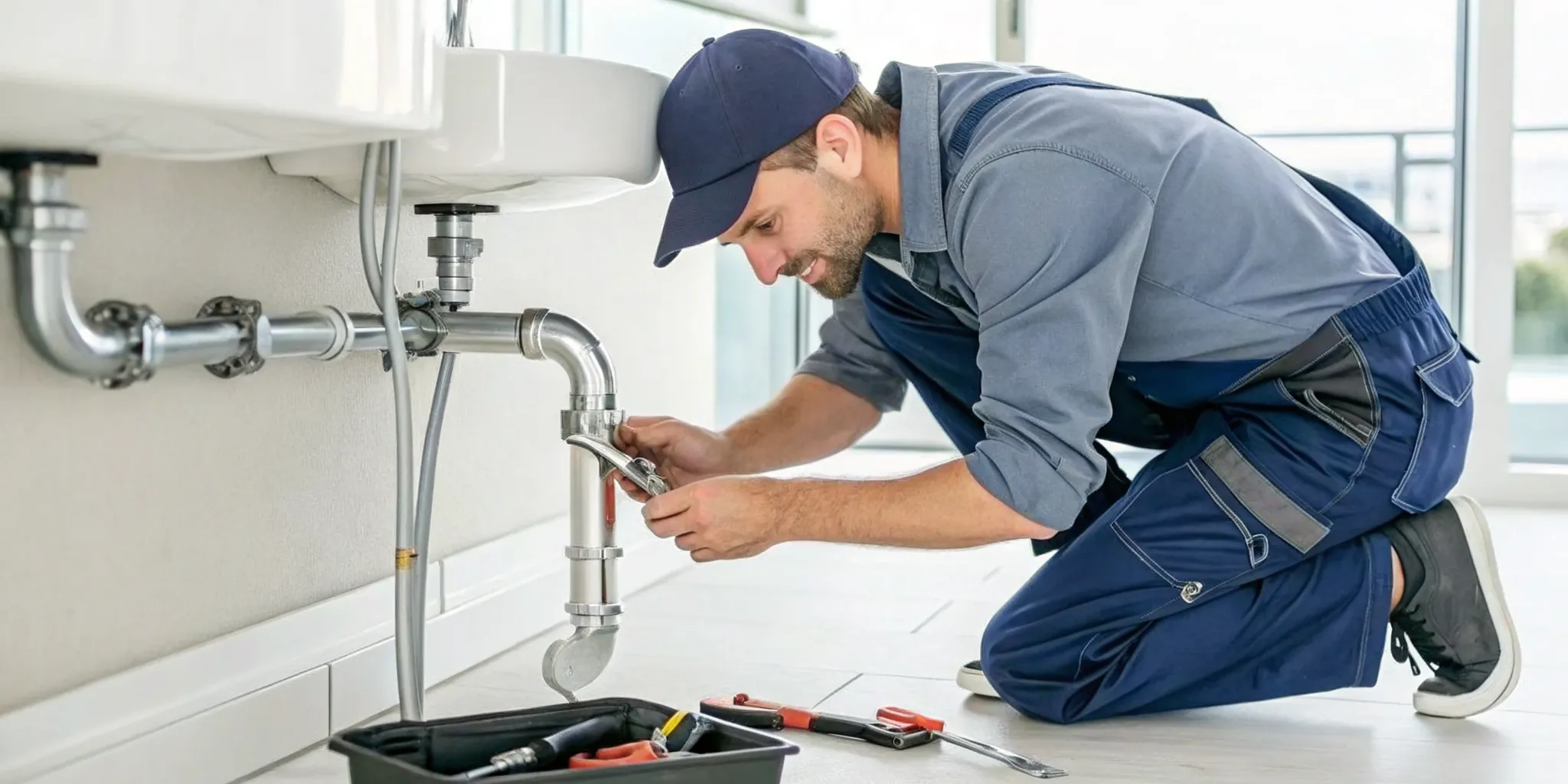
Living in the Okanagan means dealing with unique challenges, from freezing winter temperatures to the aging Poly B pipes found in many older homes. These local factors put our plumbing systems under constant stress, making leaks a common but serious issue. Understanding why pipes fail here is the first step toward a lasting solution. This article breaks down the common culprits behind local plumbing problems and explains your best options for a reliable fix. We'll cover everything from simple patches to full re-pipes, giving you the essential knowledge for a successful leaking pipe repair in the Okanagan that stands up to our climate.
Key Takeaways
- Understand Your Repair and Cost Options: A simple fix for an accessible leak might cost between $500 and $1,500, while a full home re-pipe for older systems like Poly B can range from $3,000 to $8,000. Knowing these ranges helps you weigh your options, from a quick patch to a long-term replacement.
- Prevention is Your Best Defense: You can avoid most plumbing emergencies with a few proactive steps. Schedule annual inspections to catch early warning signs, check that your home's water pressure is not too high, and plan to replace aging pipes before they fail.
- Choose a Qualified Plumber in an Emergency: When a pipe leaks, first shut off your main water supply, then call a professional. Look for a licensed plumber who offers 24/7 availability, uses modern leak detection tools, and provides a clear warranty for their work.
How to Spot a Leaking Pipe in Your Okanagan Home
A leaking pipe isn’t always as dramatic as a burst pipe flooding your basement. More often, the signs are subtle, starting as a minor nuisance before growing into a major headache. The key is knowing what to look for, listen for, and even smell. Catching a leak early can save you from costly water damage and repairs down the road. If you’re worried about a potential leak, start by playing detective in your own home. Pay attention to any changes, no matter how small they seem. Here are the three most common signs that you might have a leaking pipe.
Look for water damage and visual clues
Your eyes are your first line of defense. Keep a lookout for damp or discolored spots on your walls, ceilings, or floors, as these are classic signs of a slow leak. You might notice paint that’s bubbling or peeling, or wallpaper that’s starting to pull away from the wall. Warped floorboards or loose tiles can also signal moisture seeping from below. Don’t forget to check inside cabinets under sinks and around the base of your toilets and tubs. Any sign of mold, mildew, or a persistent damp spot is a clear signal that it’s time to call for professional plumbing repairs.
Check for spikes in your water bill
Sometimes the most obvious clue isn't inside your home at all, but in your mailbox. If your water bill suddenly jumps without a clear reason, you could have a hidden leak. A single tap that drips just ten times a minute can waste over 2,000 liters of water in a year, and a hidden leak in a wall or under your foundation can waste much more. Make a habit of reviewing your monthly bills. A steady, unexplained increase is a strong indicator that water is escaping somewhere in your system. It’s a simple check that can help you find a problem long before it causes visible damage.
Listen for odd sounds and smells
Your ears and nose can also alert you to trouble. In a quiet house, you might hear the faint sound of dripping, hissing, or running water, even when all the taps are off. These sounds often point to a leak inside a wall or under the floor. You might also hear gurgling sounds from your drains, which can indicate a blockage or pressure issue that could lead to a leak. Another telltale sign is a persistent musty or earthy smell. This odor is often caused by hidden moisture and mold growth from a slow, undetected leak. If a room smells damp no matter how much you air it out, a hidden plumbing issue could be the cause.
Why Do Pipes Leak in the Okanagan?
A pipe leak might seem to appear out of nowhere, but there’s always a cause. In the Okanagan, from urban homes in Kelowna to acreage properties in Lake Country residents face unique challenges, from dramatic temperature swings to the aging materials found in older properties. Understanding these common culprits is the first step in preventing a small drip from becoming a major disaster. Most leaks can be traced back to three main issues: our local climate, the age and type of your pipes, and the quality of our water.
How our climate puts pipes at risk
The Okanagan’s distinct seasons are beautiful, but they can be tough on your plumbing. The cycle of freezing and thawing puts immense stress on pipes. When water freezes, it expands, and that expansion can be enough to crack a pipe, especially if it’s older or already weak. Leaking pipes are often caused by corrosion, high water pressure, and freezing temperatures. You might not even notice the damage until the spring thaw when the ice melts and water starts to escape. This is why it's so important to have your plumbing systems checked regularly and to ensure any exposed pipes are properly insulated before winter arrives.
The problem with aging Poly B pipes
If your home was built between the late 1970s and mid-1990s, there’s a good chance it has Polybutylene (Poly B) piping. While popular for its affordability at the time, this material has a known history of failure. Poly-B pipes, which were commonly used in homes built in the 1970s and 1980s, are prone to leaks due to their susceptibility to deterioration over time. The plastic reacts to chlorine in the water supply, becoming brittle from the inside out. This means the pipe can look perfectly fine on the surface while being dangerously close to bursting. Unfortunately, with Poly B, it’s not a matter of if it will leak, but when.
Damage from hard water and corrosion
The Okanagan is known for its hard water, which is high in minerals like calcium and magnesium. While safe to drink, these minerals can cause significant problems for your plumbing. Over time, mineral deposits build up inside your pipes, a process called scaling. This not only restricts water flow but also accelerates corrosion. Corrosion can occur in pipes due to hard water, which contains high levels of minerals that can lead to rust and deterioration. This process slowly eats away at the pipe material, eventually causing pinhole leaks that can go undetected for months, silently causing water damage behind your walls.
What Does Leaking Pipe Repair Cost in the Okanagan?
Talking about the cost of a leaking pipe can be stressful, especially when you’re worried about water damage. The final price depends on a few key things: where the leak is, how hard it is to get to, and what kind of repair is needed. A simple fix under the kitchen sink will cost much less than a hidden leak inside a wall.
At TruFinity Plumbing Heating & Cooling, we believe in upfront pricing so you know exactly what to expect. We’ll walk you through the options and provide a clear estimate before any work begins. Our goal is to give you all the information you need to make the best choice for your home and your budget, living up to our promise of "True Service, Infinite Care."
Understanding diagnostic fees and hourly rates
The first step in any repair is figuring out exactly what’s wrong. This is where a diagnostic fee comes in. Think of it as the cost for a professional, licensed plumber to travel to your home and use their expertise and tools to pinpoint the source of the leak. For non-members, this fee is typically between $125 and $150, and it’s usually applied toward the cost of the repair if you decide to move forward.
Once the problem is identified, the repair cost is often based on an hourly rate, which generally ranges from $150 to $200 for standard plumbing repairs. This covers the technician’s time and skill. A transparent plumber will always explain these costs before starting the work.
Comparing costs: minor fixes vs. major repairs
Not all leaks are created equal, and their repair costs reflect that. A minor, easily accessible leak, like a dripping faucet or a loose connection under a bathroom sink, is a relatively quick fix. For straightforward jobs like these, most homeowners in the Okanagan can expect the cost to fall within the average repair range of $500 to $1,500.
However, if the leak is hidden behind a wall, under a concrete slab, or requires replacing a significant section of pipe, the cost will be higher. These jobs involve more labor, specialized equipment for detection, and potentially drywall or flooring repair. This is when costs can start to climb toward the major replacement range.
The price of a full re-pipe (and your financing options)
Sometimes, a single leak is a symptom of a bigger problem, especially in older homes with materials like Poly B piping. In these cases, a full home re-pipe might be the most sensible long-term solution. This is a major project, and costs can range from $3,000 to $8,000 or more, depending on the size of your home and the complexity of the job.
We understand that a full re-pipe is a significant investment. That’s why TruFinity Plumbing Heating & Cooling offers flexible financing options to help manage the cost. This allows you to protect your home with a reliable new plumbing system without facing the entire financial burden at once.
How a membership plan can lower emergency costs
An emergency leak never happens at a convenient time. Burst pipes often occur after hours or on a weekend, leading to expensive after-hours fees. A great way to manage these unexpected costs is by joining a maintenance plan. For example, our TruLoyalty Membership offers benefits like waived after-hours fees, priority scheduling, and even a two-year labor warranty for our TruLoyalty+ members.
Over time, these savings can really add up, especially when you factor in the peace of mind that comes with knowing you have a trusted team ready to help. A membership plan turns a reactive, costly emergency into a manageable, planned expense.
What Are Your Options for Fixing a Leaking Pipe?
Okay, you’ve found a leak. Now what? The good news is that you have several options, and you don’t have to make the decision alone. A professional plumber can assess the situation and recommend the best path forward, whether it’s a quick patch-up or a more permanent solution. Understanding your choices ahead of time can help you feel more in control. Here’s a breakdown of the most common repair methods, from immediate emergency actions to long-term fixes for your home’s plumbing system.
Your first steps in a pipe emergency
The moment you spot a leak, your first move should be to shut off the main water supply to your house. This will stop the flow and prevent further water damage while you figure out your next step. If you can, place a bucket under the drip to catch any remaining water. Then, call a professional. A true plumbing emergency can’t wait. At TruFinity Plumbing Heating & Cooling, we offer 24/7 emergency services with a 45-minute emergency response time across the Okanagan, so you can get help fast, day or night.
When a simple, localized repair is enough
Not every leak requires a massive overhaul. If the pipe is relatively new and the damage is isolated to one small spot, a simple, localized repair is often the perfect solution. This could involve patching the pipe or cutting out and replacing a small section of it. This approach is cost-effective and efficient for addressing minor issues, like a pinhole leak in an accessible copper pipe under your sink. It’s a great choice when the rest of your plumbing system is in good shape and the problem is just a one-off incident. A technician can quickly assess if this is the right fix for you.
Choosing trenchless repair to minimize disruption
If the leaking pipe is buried under your lawn, driveway, or garden, the thought of excavation can be daunting. This is where trenchless pipe lining comes in. This modern technique allows our technicians to repair underground pipes without extensive digging. Essentially, we create a new, durable pipe inside the old one. It’s a fantastic, minimally invasive option for fixing damaged sewer lines or water mains. You get a long-lasting repair without sacrificing your landscaping. Our team can use video camera inspections to see if your pipes are a good candidate for this technology.
Deciding on a complete re-piping solution
Sometimes, a small repair is like putting a bandage on a much bigger problem. If you’re dealing with recurring leaks, low water pressure, or discolored water, it might be time to consider a complete re-pipe. This is especially true for older Okanagan homes with outdated materials like Poly B piping, which is known to fail over time. A full re-pipe involves replacing your entire plumbing system with modern, durable materials like PEX or copper. While it’s a larger investment, it provides total peace of mind and protects your home from the risk of future leaks and catastrophic water damage. It’s the definitive solution for an aging, unreliable system.
How to Choose the Right Plumber for the Job
When you’re dealing with a leaking pipe, the last thing you want is to second-guess your choice of plumber. You need a professional who is not only skilled but also trustworthy and responsive. Making a quick, confident decision can save you from further stress and property damage. Think of it as having a checklist for quality. The right team will be transparent about their qualifications, ready to respond when you need them most, equipped with modern tools, and confident enough to stand behind their work. Here’s a straightforward guide to help you find a reliable plumber in the Okanagan.
Verify their certifications and licensing
Before you let anyone work on your home’s plumbing, it’s essential to confirm they are properly qualified. A licensed and certified plumber has proven their expertise and is committed to upholding safety and building codes. Don’t be shy about asking for credentials. Look for professionals with qualifications like a Red Seal Plumber certification, which is a standard of excellence in Canada. This ensures the person fixing your leak has the training to do the job right the first time. At TruFinity Plumbing Heating & Cooling, our team is fully licensed and certified, so you can have peace of mind knowing your home is in capable hands for all plumbing repairs.
Confirm their emergency availability
A burst pipe doesn’t stick to a 9-to-5 schedule, so your plumber shouldn’t either. When water is causing damage, every minute counts. Look for a company that offers 24/7 emergency services and can give you a clear timeline for their arrival. A plumber who provides a rapid response can help minimize damage and get your home back to normal faster. TruFinity Plumbing Heating & Cooling offers a 45-minute emergency response time because we understand that some problems can’t wait. When you call us, you’re getting a team that’s ready to help day or night, ensuring you’re never left to handle a plumbing crisis alone.
Ask about their leak detection technology
Finding the source of a leak, especially one hidden behind a wall or under a floor, used to mean a lot of guesswork and cutting into drywall. Today, the best plumbers use advanced technology to pinpoint the problem without unnecessary destruction. Ask potential plumbers about the tools they use. Companies that invest in electronic leak detection equipment and high-definition waterproof cameras can find the exact location of a leak quickly and accurately. This modern approach saves you time, money, and the headache of major repairs to your home. We use these tools to make our drain and sewer services as efficient and non-invasive as possible.
Review their warranties and guarantees
A reputable plumber will always stand behind their work. A strong warranty or service guarantee is a clear sign that a company is confident in the quality of its repairs and dedicated to customer satisfaction. Before agreeing to any work, ask about the warranties they offer on parts and labor. This protects your investment and ensures that if anything goes wrong with the repair, they will make it right. At Trufinity, we believe in our craftsmanship, which is why we offer robust guarantees, including a two-year labor warranty for our TruLoyalty+ members. Our commitment to quality is also reflected in our hundreds of positive customer reviews.
How Can You Prevent Future Pipe Leaks?
After dealing with a leak, the last thing you want is a repeat performance. Thankfully, you can take proactive steps to protect your home and plumbing. A little prevention goes a long way in avoiding the stress and expense of water damage. By paying attention to your pipes, you can catch small issues before they become major emergencies. Here are four practical ways to keep your plumbing in top shape.
Schedule regular maintenance and inspections
Scheduling regular plumbing maintenance is the easiest way to prevent a disaster. An annual inspection allows a licensed plumber to spot early signs of trouble, like corrosion or failing seals. Water leaks are often preventable with proactive maintenance. A technician can identify weak spots in your pipes and check for wear, giving you a clear picture of your plumbing’s health. This helps you address minor issues before they cause significant damage.
Monitor your water pressure
High water pressure puts constant strain on your entire plumbing system. Over time, this pressure can weaken pipe joints, fittings, and appliance connections, leading to leaks or a burst pipe. You can buy an inexpensive water pressure gauge at a hardware store to test it yourself; ideally, it should be between 40 and 60 PSI. If it’s too high, a plumber can install a pressure-reducing valve to protect your pipes from unnecessary stress and extend their lifespan.
Know when it's time to replace old pipes
Some pipes just have a limited lifespan. If your home has older materials like galvanized steel or the notoriously problematic Poly B, you might face recurring leaks as the system ages. While patching a leak is a good short-term fix, it doesn’t solve the underlying problem of deteriorating pipes. If you’re experiencing frequent leaks, investing in a full re-pipe is often the most reliable and cost-effective solution in the long run, saving you from repeated repair costs and water damage.
Get peace of mind with a protection plan
For ongoing protection and priority service, consider a home maintenance plan. These plans make regular upkeep simple and affordable. For example, TruFinity Plumbing Heating & Cooling offers a TruLoyalty Membership that includes annual inspections, discounts on repairs, and priority scheduling. When you have a plan, you don’t have to worry about finding a reliable plumber in an emergency. You already have a trusted team ready to help, ensuring any issue is handled quickly and correctly.
Related Articles
- Cost to Fix a Burst Pipe 2025: Price Guide | TruFinity Blog
- Understanding the Cost of Poly B Replacement in Kelowna: A Homeowner's Guide
- Fix a Broken PVC Pipe Outside: DIY Repair Guide
Frequently Asked Questions
What's the very first thing I should do if I discover a leaking pipe? Your immediate priority is to prevent more water damage. Find your home's main water shut-off valve and turn it off completely. This will stop the flow of water to the leak. Once you've done that, your next step is to call a professional plumber to assess the situation and begin the repair.
How can I tell if my leak is a true emergency? A leak becomes an emergency if it's causing significant, active flooding that you can't contain, if water is coming through a ceiling, or if it's near electrical outlets or panels. Basically, if the water poses an immediate threat to your home's structure or safety, you should call for emergency service right away.
I have Poly B pipes. Is it okay to just repair a single leak? You can certainly repair a single leak in a Poly B pipe, but it's often a temporary fix. Because Poly B material becomes brittle and fails over time, one leak is usually a warning sign that the entire system is becoming unreliable. For a lasting solution and to prevent future leaks, we almost always recommend a full re-pipe to replace the old material.
How long does a typical pipe repair take? The time required depends entirely on the leak's location and complexity. A straightforward repair on an exposed pipe under a sink might take just an hour or two. A more involved job, like fixing a leak behind a wall or performing a trenchless repair, could take the better part of a day. We will always provide a time estimate along with our quote before starting any work.
Can a membership plan actually save me money on a leak repair? Yes, it can make a big difference, especially when a leak happens unexpectedly. Our TruLoyalty members don't have to pay extra for after-hours or weekend emergency calls, which is a significant saving right there. Members also get discounts on repairs and priority service, so you get help faster. The plan is designed to make plumbing care more manageable and less costly over time.


.webp)