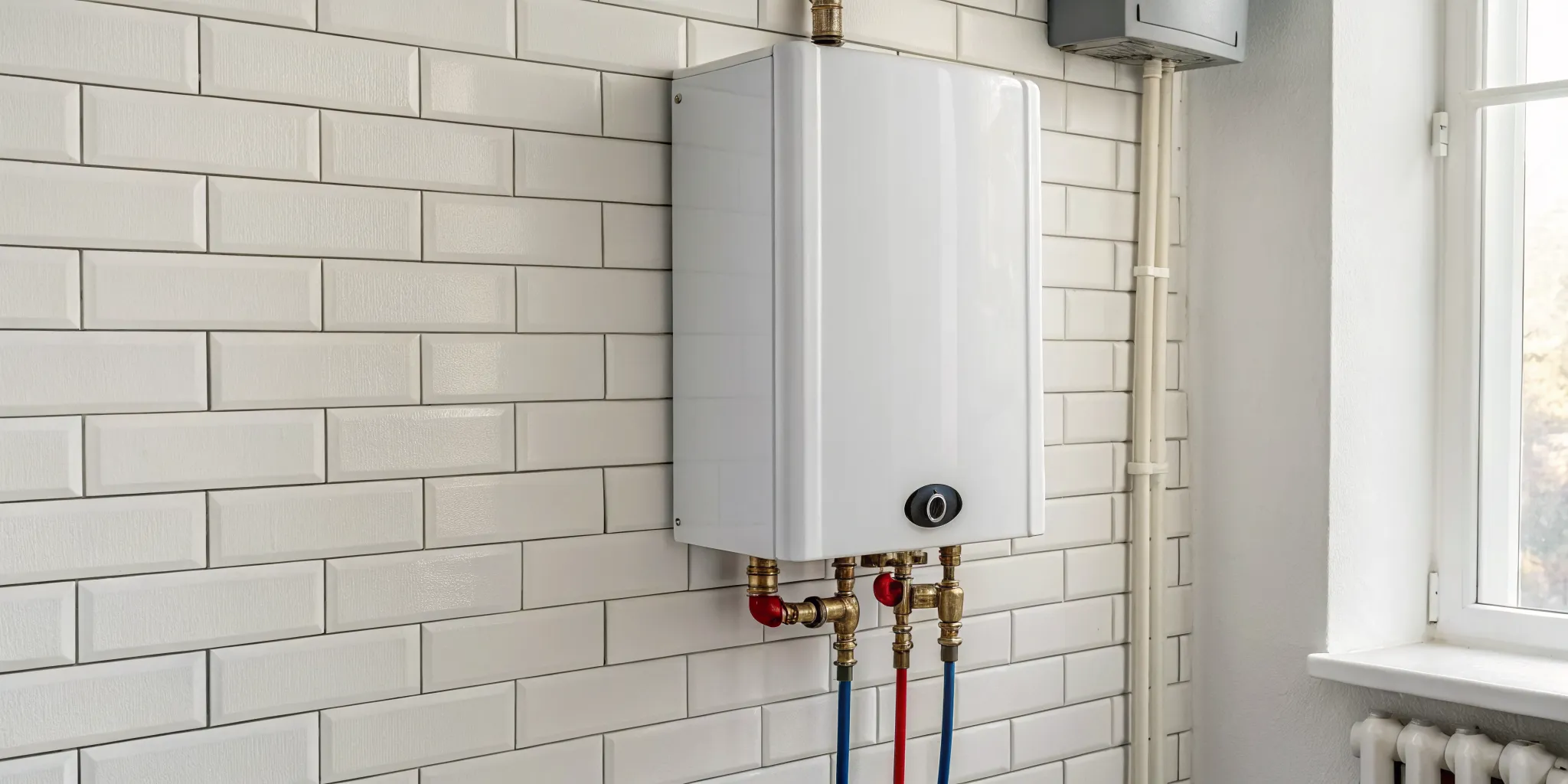
Living in the Okanagan means dealing with challenges unique to our region, and our water quality is a big one. The hard water in Kelowna, Vernon, and Penticton is tough on appliances, especially water heaters. If you’re considering a hot water heater tankless unit, you need a plan to protect it from damaging mineral scale. The good news is that with the right approach, you can enjoy all the benefits of endless hot water without worry. As local experts, we see the effects of hard water every day. This article explains why filtration and proper maintenance are non-negotiable here and how we can help.
Key Takeaways
- Get endless hot water and save energy: A tankless system heats water on demand, so you never run out, and it lowers your utility bills by not wasting energy keeping a large tank of water hot.
- Plan for maintenance to combat hard water: To get a long life from your unit in the Okanagan, you must address our mineral-rich water; annual flushing is critical to prevent scale buildup and protect your investment.
- Always hire a certified professional for installation: A tankless water heater is not a DIY project, as it involves complex gas and plumbing work that requires a licensed expert to ensure safety and performance.
What is a tankless water heater?
If you’ve ever had to cut a shower short because the hot water ran out, you’re familiar with the limits of a traditional tank-style water heater. A tankless water heater, often called a demand-type heater, is a modern solution designed to solve that exact problem. Instead of storing a large volume of water and keeping it hot 24/7, a tankless unit heats water precisely when you need it.
Think of it as the difference between a big coffee urn that keeps coffee warm all day and a single-serve machine that brews a fresh, hot cup the moment you want one. This on-demand approach provides an endless supply of hot water and is much more energy-efficient, since the system isn’t wasting energy keeping water hot when no one is using it. For homeowners in the Okanagan looking to upgrade their home’s comfort and reduce utility bills, understanding how this technology works is the first step. TruFinity Plumbing Heating & Cooling specializes in advanced plumbing solutions, including the installation and service of these efficient systems.
How it works
The process behind a tankless water heater is simple yet powerful. When you turn on a hot water tap in your kitchen or bathroom, a sensor inside the tankless unit detects the flow of water. This immediately triggers a high-powered heating element, either a gas burner or an electric coil, which heats the water as it passes through a series of pipes inside the unit. The water is heated to your desired temperature almost instantly and then travels directly to your faucet. When you turn the tap off, the unit shuts down completely, using no energy. This efficient process is why they are also known as demand-type water heaters.
Tank vs. tankless water heaters
The most obvious difference between a tank and a tankless water heater is the absence of a large storage tank. Traditional heaters keep 40 to 50 gallons of water hot around the clock, leading to standby heat loss and a finite supply. A tankless unit eliminates both issues, providing continuous hot water while saving valuable floor space with its compact, wall-mounted design. Furthermore, tankless water heaters typically have a much longer lifespan, often lasting over 20 years compared to the 10 to 15 years of a conventional tank. While the initial investment can be higher, the long-term energy savings and extended lifespan make it a compelling upgrade. Trufinity often has rebates and offers available to make the switch more affordable.
Benefits of going tankless
If you're tired of planning your day around your hot water tank's schedule, you're not alone. Many Okanagan homeowners are switching to tankless water heaters for a few key reasons. Beyond just the promise of endless hot water, these modern systems offer impressive energy savings and a much longer lifespan than their tank-based counterparts. They represent a smart, long-term investment in your home's comfort and efficiency. Let's look at the three biggest benefits you can expect when you make the switch.
Enjoy endless hot water
The most celebrated benefit of a tankless water heater is exactly what it sounds like: a continuous, on-demand supply of hot water. Unlike a traditional tank that stores and heats a limited amount of water, a tankless unit heats water the moment you turn on the tap. This means no more waiting for the tank to refill and reheat between showers, laundry loads, and running the dishwasher. You can fill up a large soaker tub without a second thought or let the whole family shower back-to-back after a day at the lake. It’s a simple upgrade that completely changes how you use hot water in your home.
Increase energy efficiency and lower utility bills
Traditional water heaters constantly burn energy to keep dozens of gallons of water hot, even when you aren't using it. This is called standby heat loss, and it adds up on your monthly utility bills. Tankless systems eliminate this waste entirely by only heating water when you need it. For many homes, this can result in significant energy savings. According to the U.S. Department of Energy, demand-type water heaters can be much more energy-efficient than conventional storage tank models. Over time, those savings can make a real difference, helping to offset the initial investment while reducing your home's overall energy consumption.
Save space and get a longer lifespan
If your utility room feels cramped, a tankless water heater can free up a surprising amount of space. These compact, wall-mounted units replace the bulky, floor-standing tank, giving you back valuable square footage for storage or other uses. Beyond the space-saving design, tankless water heaters are also built to last. A well-maintained unit typically has a lifespan of 15 to 20 years, which is significantly longer than the 10 to 15-year lifespan of most traditional tanks. This durability means you won’t have to worry about a replacement for a very long time, making it a reliable and cost-effective choice for your home.
Drawbacks of tankless water heaters
While the benefits of endless hot water and energy savings are compelling, tankless water heaters aren't the perfect solution for every home. It’s important to look at the full picture before making a decision. Being aware of the potential downsides helps you make a smart, confident investment in your home’s plumbing system. Let's be honest about the challenges: a higher initial cost, more complex installation needs, and potential limits on hot water output. Understanding these factors will ensure you choose a system that truly fits your family’s needs and budget without any surprises down the road.
Higher upfront cost
The most significant hurdle for many homeowners is the initial investment. Tankless water heaters generally have a higher purchase price than traditional storage tank models. The installation can also be more expensive, as it might require upgrades to your home's plumbing, gas lines, or electrical systems. While these units pay for themselves over time through lower energy bills, the upfront expense is a key factor to consider. To make this investment more manageable, many homeowners explore financing options that spread the cost over time, allowing them to enjoy the long-term savings sooner.
Specific installation requirements
Switching to a tankless system isn't always a simple swap. These units have specific needs that often require professional adjustments to your home. For example, a gas model might need a larger gas line to meet its fuel demand, and new venting is almost always required. According to the Department of Energy, it's best to have a qualified professional handle the installation to comply with local building codes and safety standards. This is why working with certified technicians, like the Red Seal Plumbers and Class B Gasfitters at TruFinity Plumbing Heating & Cooling, is essential for a safe and effective plumbing installation.
Potential output limitations
A single tankless water heater can only produce a certain amount of hot water at one time, measured in liters per minute. While you'll never run out of hot water, a smaller unit might struggle to keep up if you're running two showers and the dishwasher simultaneously. For larger families or homes with high simultaneous demand, this can be a drawback. The solution is often to install a larger, higher-capacity unit or even multiple units to meet the demand, but this adds to the upfront cost. A professional assessment can help you determine the correct flow rate for your household, ensuring you get the performance you expect.
How much does a tankless water heater cost in the Okanagan?
Let’s talk about the bottom line. A tankless water heater is an investment, and it’s important to understand the full picture of what it costs. The price you see on the box is just the beginning. You also have to consider professional installation, long-term energy savings, and available offers that can make the switch more affordable. For Okanagan homeowners, the total cost of ownership is what really matters, especially when you factor in the system's lifespan and efficiency over time.
Thinking about the cost involves looking at the initial purchase, the installation, and the money you’ll save month after month on your utility bills. We’ll break down each part so you can see how a tankless water heater might fit into your budget and why it’s a popular upgrade for homes in Kelowna, Vernon, and Penticton.
Unit costs: Gas vs. electric
The first expense is the unit itself. The price can vary quite a bit depending on the brand, size, and whether you choose a gas or electric model. Generally, electric tankless units are less expensive upfront, with popular models often falling in the $600 to $800 range. Natural gas units, which are more powerful and common in the Okanagan, typically have a higher initial cost, often starting around $1,200 and going up from there for high-efficiency models.
Remember, these prices are just for the hardware. The final cost will also include professional installation, which is essential for ensuring your new heater operates safely and efficiently. Think of the unit cost as the starting point for your budget.
Installation costs and pricing factors
The installation is where costs can differ the most from home to home. Unlike a simple appliance swap, installing a tankless water heater can be complex. If you’re switching from a traditional tank, your home might need upgrades to accommodate the new system. Factors that influence the installation price include venting requirements for gas models, potential upgrades to your gas line for proper flow, and any necessary electrical work.
Because of these variables, professional installation is not a step to skip. Our licensed, Red Seal Plumbers and Class B Gasfitters at TruFinity Plumbing Heating & Cooling have the expertise to handle these complexities safely, ensuring your system is installed to code for reliable, long-term performance.
Calculating your long-term savings
While the upfront cost is higher, a tankless water heater is designed to save you money over its lifespan. According to the U.S. Department of Energy, homes that use 41 gallons or less of hot water daily can see energy efficiency gains of 24% to 34% compared to a conventional tank heater. That translates directly into lower monthly utility bills.
Furthermore, tankless units are built to last. They have a typical lifespan of 20 years or more, which is almost double that of a traditional tank heater. When you combine the energy savings with the longer lifespan, the initial investment starts to make a lot of sense. Proper maintenance, like the annual tankless flush included in our TruLoyalty+ Membership, helps ensure you get those full 20+ years of service.
Available rebates, financing, and offers
We want to make upgrading your home as accessible as possible. At TruFinity Plumbing Heating & Cooling, we help homeowners take advantage of every opportunity to save. We currently offer $500 OFF a new tankless water heater installation. Plus, to combat the Okanagan’s hard water, we’re including a Free Inline Sediment Water Filtration System with every tankless installation to protect your investment from mineral buildup.
On top of our direct discounts, various manufacturer and provincial rebates may be available. We can help you identify which ones apply to your new system. To manage the upfront cost, we also provide flexible financing options, allowing you to enjoy endless hot water now and pay over time. Check our offers and rebates page for the latest details.
Is a tankless water heater right for your home?
Deciding to switch to a tankless water heater is a big step, and it’s not a one-size-fits-all solution. The right choice depends on your family’s habits, your home’s layout, and your budget. Before you make a decision, it’s important to think through a few key factors. Answering these questions will help you figure out if an on-demand system fits your lifestyle and ensure you get a unit that delivers the endless hot water you’re looking for without any surprises.
Consider your household size and hot water needs
The first thing to consider is how much hot water your household actually uses, especially at peak times. A tankless water heater heats water on demand, but it can only produce a certain amount at once, typically between two to five gallons per minute (GPM). If you have a large family or frequently run the dishwasher while someone is showering, a single unit might struggle to keep up. For bigger households, you might need a more powerful model or even multiple units to meet your needs. Thinking honestly about your morning routine and evening chores will give you a clear picture of your home's hot water demand.
Choose the right size and flow rate
Once you know your habits, you can determine the right size and flow rate for your home. To do this, you can calculate your needs by adding up the flow rates of all the fixtures you might use at the same time. For example, a standard showerhead uses about 2.0 GPM and a dishwasher uses about 1.5 GPM. If you run both, you’ll need a unit that can provide at least 3.5 GPM. A mid-size home often does well with a 4-6 GPM unit, while larger homes may require 6.5 GPM or more. Our team at TruFinity Plumbing Heating & Cooling can help you perform this calculation during a consultation to ensure you select the perfect model.
Gas vs. electric: What’s best for Okanagan homes?
Tankless water heaters are available in both natural gas and electric models, and the best choice for you often depends on your home’s existing infrastructure. Gas-powered units generally offer a higher flow rate, making them a great option for larger families and for handling the Okanagan’s cold winter groundwater temperatures more effectively. If you have an existing gas line, installation is more straightforward. Trufinity’s certified Class B Gasfitters are fully qualified to handle these heating service installations safely. Electric models are highly efficient and can be a good fit for smaller homes or properties without gas service, but they may require an electrical panel upgrade to handle the power draw.
Key features to look for
Today’s tankless water heaters come with some impressive technology. Many new Rheem models, for example, include Wi-Fi connectivity that lets you control your system from a mobile app. You can adjust the temperature, track your energy and water usage, and even receive maintenance alerts directly on your phone. Some units can also integrate with smart home systems like Amazon Alexa or Google Home, allowing you to use voice commands to turn on the water or set a specific temperature. These features offer more than just convenience; they give you precise control over your home’s energy consumption and help you keep your system running perfectly.
How does Okanagan's hard water affect tankless units?
A tankless water heater is a fantastic investment in efficiency and comfort, but here in the Okanagan, we have a unique challenge to consider: our water. The water flowing into our homes is rich in minerals like calcium and magnesium. While harmless to drink, this "hard water" can be tough on your plumbing and appliances, especially a high-performance tankless unit.
The narrow pipes and intricate heat exchanger inside a tankless system are highly susceptible to mineral buildup, also known as scale. Over time, this scale acts like a layer of insulation, forcing the unit to work harder to heat your water. This not only reduces its efficiency but can also lead to premature failure. The good news is that with the right strategy, you can enjoy all the benefits of endless hot water without letting hard water shorten your system's life. It comes down to understanding the risk, using proper filtration, and committing to simple, regular maintenance.
Why mineral buildup is a local concern
The water in Kelowna, Vernon, and across the Okanagan has a high mineral content, which leads to faster sediment buildup in water heaters. For a tankless unit, this isn't just a minor inconvenience; it's a direct threat to its performance and longevity. As scale coats the internal heat exchanger, it can't transfer heat to the water as effectively. You might notice your utility bills creeping up or that it takes longer for your water to get hot. If left unchecked, this buildup can restrict water flow and cause the unit to overheat, leading to costly repairs or even a complete system breakdown. This is why proactive care is so much more critical here than in regions with softer water.
The importance of inline sediment filtration
The best way to handle scale is to stop it before it ever enters your tankless water heater. This is where a water filtration system becomes your unit's best friend. An inline sediment filter or a full water softener is installed on your main water line to capture minerals before they can cause damage. Think of it as a protective shield for your investment. At TruFinity Plumbing Heating & Cooling, we’ve seen the difference this makes firsthand. That’s why we include a free inline sediment water filtration system with every new tankless water heater installation, giving you immediate protection. You can learn more about our comprehensive water filtration services and how they protect your entire home.
Protect your investment from scale damage
Even with a great filter, some microscopic minerals can find their way through. That’s why the second step to protecting your investment is regular professional maintenance. A tankless water heater needs to be flushed, or "descaled," annually to dissolve any mineral deposits that have formed inside. This simple service restores your unit to peak efficiency and is essential for preventing long-term damage. Because this is so important in our region, TruFinity Plumbing Heating & Cooling includes a tankless water heater flush as part of our TruLoyalty+ Membership. This makes it easy and affordable to give your system the care it needs to provide reliable, endless hot water for years to come.
What maintenance does a tankless water heater need?
A tankless water heater is a fantastic, long-lasting appliance, but it’s not a “set it and forget it” piece of equipment. To get that 20-year lifespan and keep it running efficiently, it needs a little bit of regular care. Think of it like changing the oil in your car; it’s a simple step that prevents major problems down the road. For homeowners in the Okanagan, this is especially important because our hard water can be tough on plumbing fixtures.
The main maintenance tasks involve flushing the system to remove mineral buildup, keeping filters and vents clear, and performing regular visual inspections. While some of these are simple checks you can do yourself, the most critical task, descaling, is often best left to a professional. Staying on top of this schedule ensures you get the endless hot water and energy savings you invested in, year after year.
Annual descaling and flushing
Descaling, or flushing, is the single most important maintenance task for your tankless water heater. This process involves circulating a special solution through the unit’s heat exchanger to dissolve the mineral scale that builds up over time. Because the Okanagan has notably hard water, this isn't an optional step. That limescale buildup forces your heater to work harder, reduces its efficiency, and can eventually lead to clogs or component failure.
For most homes here, an annual flush is the minimum. At TruFinity Plumbing Heating & Cooling, we handle this for you. Our TruLoyalty+ Membership includes an annual tankless water heater flush, taking this essential task off your to-do list and protecting your investment.
Checking the air filter and venting
If you have a gas tankless water heater, it needs to breathe. Your unit has an air intake filter and an exhaust vent that must remain clear of obstructions. A clogged filter or blocked vent can starve the unit of oxygen, leading to poor performance, reduced efficiency, or even a complete shutdown for safety reasons.
A quick visual check a few times a year is a great habit. Look for dust or debris on the intake screen and ensure the exterior vents are free from leaves, snow, or animal nests. Your owner’s manual will have specific instructions for your model, but keeping the airways clear is a simple way to ensure your heater runs safely and effectively.
Signs your unit needs service
Your tankless water heater will usually give you a heads-up when something is wrong. Getting familiar with the signs of trouble can help you catch a small issue before it becomes a major headache. If you notice any of the following, it’s time to call a professional:
- Fluctuating water temperatures
- A sudden drop in water pressure
- Rumbling, popping, or whining noises from the unit
- Visible water leaks or corrosion on the case
- An error code flashing on the digital display
Ignoring these symptoms can lead to more extensive damage. A quick service call can often resolve the problem and prevent an emergency no-hot-water situation.
Why you need a professional maintenance plan
While you can handle visual inspections, a full maintenance service from a qualified technician is the best way to protect your water heater. Descaling requires the right equipment and cleaning solutions, and a professional can do it safely and thoroughly. During a service call, a certified technician can also inspect the entire unit, check gas connections for safety, and spot early signs of wear that you might miss.
The team at Trufinity includes Red Seal Plumbers with Class B Gasfitter certifications, so we have the expertise to service your unit correctly. A professional maintenance plan, like our TruLoyalty+ Membership, makes upkeep effortless and ensures your manufacturer’s warranty remains valid.
Common myths about tankless water heaters
When you’re thinking about a big home upgrade like a new water heater, it’s easy to get tangled up in conflicting information. Tankless water heaters, in particular, are surrounded by a lot of buzz, and not all of it is accurate. Let's clear the air and look at some of the most common myths so you can make a decision that feels right for your home and family.
Myth: "Tankless means instant hot water."
This is probably the most common misunderstanding about on-demand water heaters. While they heat water on demand instead of storing it, "instant" isn't quite the right word. The unit starts heating water the moment you turn on the tap, but that hot water still has to travel through your home’s pipes to reach your shower or sink. The time it takes is the same as it was with your old tank heater. The real benefit is that the hot water won't run out. According to the U.S. Department of Energy, most tankless water heaters provide two to five gallons of hot water per minute, so you can enjoy a long, hot shower without worrying about it turning cold.
Myth: "Tankless units are maintenance-free."
It would be nice if this were true, but like any major appliance, tankless water heaters need regular care to perform their best. This is especially important here in the Okanagan, where our hard water can cause mineral buildup (scale) inside the unit’s delicate components. To keep your heater running efficiently, it needs to be flushed, or descaled, annually. This process circulates a solution through the system to dissolve the mineral deposits left by our water. Neglecting this can lead to lower efficiency and a shorter lifespan. Our TruLoyalty+ Membership includes an annual tankless water heater flush to make this essential task one less thing for you to worry about.
Myth: "One size fits all homes."
Choosing a tankless water heater isn’t a one-size-fits-all situation. The right unit for a small condo will be very different from what a large family with multiple bathrooms needs. To pick the right model, you need to think about your household’s peak hot water usage. How many showers, faucets, or appliances might be running at the same time? An undersized unit will struggle to keep up, leaving you with lukewarm water when you need it most. A professional can help you calculate your home's flow rate requirements to ensure you get a system that perfectly matches your needs. The team at TruFinity Plumbing Heating & Cooling can help you find the right fit for your home and lifestyle.
Why professional installation is essential
While it can be tempting to tackle home improvement projects yourself, installing a tankless water heater is one job you should always leave to a certified professional. These are sophisticated appliances that interact with your home’s plumbing, electrical, and, in many cases, gas systems. An incorrect installation can lead to poor performance, water damage, a voided manufacturer warranty, or even serious safety hazards like gas leaks or improper venting.
Think of professional installation as the first step in protecting your investment. When you hire a qualified team like TruFinity Plumbing Heating & Cooling, you’re not just paying for a service; you’re paying for peace of mind. Our technicians ensure your new unit is sized correctly for your home’s needs, installed according to strict safety standards, and calibrated for optimal efficiency. We handle the entire process, so you can simply relax and get ready to enjoy endless hot water. A professional setup guarantees your system runs safely and effectively for its entire lifespan, saving you from the stress and expense of future problems.
Navigating permits, gas lines, and codes
Installing a new water heater, especially a gas model, isn't as simple as just hooking up a few pipes. It involves complex work that must adhere to specific local building codes and regulations. In the Okanagan, permits are often required to ensure the installation is done safely and correctly. According to the U.S. Department of Energy, improper installation can create significant safety risks. A licensed professional understands these requirements and manages the entire permitting process for you. This ensures your installation is fully compliant, protecting you from potential fines and guaranteeing your home and family are safe.
What certifications to look for in an installer
When you’re choosing a company to install your tankless water heater, you want to see proof of their expertise. Don’t be afraid to ask about their team’s qualifications. At a minimum, installers working with gas lines should have a Class B Gasfitter Certification, and the plumbing work should be done by a Red Seal Plumber. These certifications are not just fancy titles; they represent years of rigorous training and a deep understanding of safety protocols. The team at TruFinity Plumbing Heating & Cooling holds these exact credentials, and our technicians also receive manufacturer-specific training to stay current on the latest technology. This ensures your plumbing system is in the most capable hands.
Ready to switch to endless hot water?
If you’re tired of planning your day around a limited supply of hot water, a tankless system could be the perfect upgrade for your home. Imagine running the dishwasher and a load of laundry while still having enough hot water for a relaxing shower. Because these on-demand units heat water exactly when you need it, you get an endless supply. They are also significantly more energy-efficient. The U.S. Department of Energy finds that for homes that use a moderate amount of hot water, tankless heaters can be 24% to 34% more efficient than traditional storage-tank models.
Beyond the continuous hot water and energy savings, tankless units offer a much longer lifespan, often lasting 20 years or more with proper care. That’s nearly double the life of a conventional tank heater. Their compact, wall-mounted design also frees up valuable floor space in your utility room or basement. While the initial investment is higher, the combination of lower monthly energy bills and a longer operational life makes a tankless water heater a smart financial decision for many Okanagan homeowners.
At TruFinity Plumbing Heating & Cooling, we make the switch straightforward and worry-free. Our Red Seal certified plumbers and Class B gasfitters handle every detail of the installation, ensuring your new system is safe, efficient, and up to code. To make this upgrade more accessible, we have several offers and financing options available, including $500 off your tankless water heater installation. We also address the Okanagan’s hard water head-on by including a free inline sediment filtration system to protect your investment from damaging mineral buildup. For long-term peace of mind, our TruLoyalty+ Membership includes the annual flushing your system needs to operate at peak performance for years to come.
Related Articles
- How Much to Install a Tankless Water Heater: A Breakdown... | TruFinity
- Tankless Water Heater for a 2-Bathroom House | TruFinity
- Get a Quote for Tankless Installation | TruFinity
Frequently Asked Questions
Will a tankless water heater really save me money in the long run? Yes, for most households, a tankless water heater is a smart financial investment over time. While the initial purchase and installation cost is higher than a traditional tank, the savings come from two key areas. First, you'll see a noticeable reduction in your monthly energy bills because the unit only heats water when you need it, eliminating the cost of keeping 50 gallons hot 24/7. Second, these systems are built to last, often for 20 years or more, which is almost double the lifespan of a typical tank heater. When you combine the energy savings with the fact that you won't have to replace the unit as often, the long-term value becomes very clear.
How do I know if a tankless unit can handle my family's hot water needs? This is a great question, and the answer comes down to proper sizing. A tankless water heater's capacity is measured by its flow rate, which is how many liters of hot water it can produce per minute. A common concern is that a unit won't be able to keep up with multiple simultaneous uses, like running a shower and the dishwasher. However, a professional can calculate your home's peak hot water demand and recommend a unit that is perfectly sized to meet your family's needs, ensuring you get that endless supply of hot water without any drop in performance.
Is it true that tankless water heaters are maintenance-free? That is a common myth, and while they are very reliable, they are not maintenance-free. To keep a tankless unit running efficiently for its full 20-year lifespan, it requires an annual service appointment. The most important task is flushing, or descaling, the system to remove the mineral buildup caused by our hard water here in the Okanagan. Skipping this yearly maintenance can lead to reduced efficiency and can shorten the life of your heater, so it's an essential step to protect your investment.
What's involved in switching from a tank heater to a tankless one? Switching to a tankless system is more involved than a simple swap. Because these units have different requirements, the installation often requires professional adjustments to your home's existing infrastructure. For a gas model, this could mean upgrading the gas line to provide enough fuel or installing new, specialized venting. An electric model might need changes to your home's electrical panel. This is why a professional assessment from a certified technician is so important, as they can identify exactly what your home needs for a safe and effective installation.
Will I get hot water instantly from the tap with a tankless heater? While the term "on-demand" might suggest instant hot water, there is still a short wait. The unit begins heating water the moment you turn on the faucet, but that hot water still needs to travel through the pipes to reach your sink or shower. The time it takes for the water to travel is the same as it was with your old tank heater. The key difference and major benefit is that once the hot water arrives, it will never run out.


.webp)