
Are you tired of thermostat wars or paying to cool rooms you aren’t even using? A mini-split system offers the perfect solution with its room-by-room temperature control, making it a popular choice for homeowners across the Okanagan. Once you’ve decided it’s the right fit, the next crucial step is the installation. An improper mini split air conditioning system installation can lead to a host of problems, including poor efficiency, costly leaks, and even a voided warranty. Before you break out the toolbox, let’s explore what the process really involves. We’ll break down the pros and cons of DIY versus professional service to help you protect your investment and ensure years of reliable comfort.
Key Takeaways
- Prioritize Professional Sizing and Installation: The efficiency of your mini-split depends entirely on a correct installation. A professional uses precise load calculations to match the unit to your space and safely manages the technical electrical and refrigerant work, preventing poor performance and future issues.
- Protect Your Investment and Warranty: Attempting a DIY installation can void your manufacturer's warranty, leaving you responsible for costly repairs. Hiring a certified professional not only ensures the job is done right but also keeps your warranty intact, giving you crucial peace of mind.
- Vet Your Installer Thoroughly: When choosing a professional, look for key credentials like NATE certification and positive local reviews. Always ask for an itemized quote, confirm they are licensed and insured, and inquire about their labor warranty to ensure you're working with a reputable company.
What Is a Mini-Split AC System?
If you've ever wished you could cool just one room without running a central AC, or if you're looking for an efficient way to heat and cool a home addition or a garage, a mini-split system might be exactly what you need. A ductless mini-split is a versatile heating and cooling system that doesn't rely on a network of air ducts to deliver comfortable air. Instead, it uses a small outdoor unit connected to one or more indoor units mounted on a wall or ceiling.
These systems are a fantastic solution for homes without existing ductwork, for targeting specific rooms, or for anyone looking to upgrade their home's energy efficiency. They give you precise control over your home's temperature, room by room. “At TruFinity, we specialize in ductless mini-split installation, repair, and maintenance, helping Okanagan homeowners — whether in Kelowna, Upper Mission, Rutland, West Kelowna, Penticton, Vernon, or on acreage properties in Lake Country — find the perfect fit for their space and lifestyle.
How Do Mini-Splits Work?
A mini-split is a type of heat pump, which means it’s incredibly efficient at both heating and cooling. Instead of generating heat, it moves it. In the summer, it works like a traditional air conditioner, pulling heat from inside your home and transferring it outside. In the winter, it reverses the process, extracting heat from the outdoor air (even when it’s cold!) and moving it inside to warm your home.
The real magic is in the "zone control." Because each indoor unit operates independently, you can set different temperatures for different rooms. This means you can keep your bedroom cool for sleeping without wasting energy cooling the entire house overnight. It’s a simple, effective way to customize your comfort and manage your energy use.
Why Are Mini-Splits a Smart Choice for Okanagan Homes?
Living in the Okanagan means dealing with hot summers and chilly winters. Mini-splits are perfectly suited for our four-season climate. Modern cold-climate models are highly effective, providing reliable heat even when temperatures dip as low as -25°C. Because they don't lose energy through leaky ductwork, they are exceptionally efficient, which can lead to significant savings on your utility bills.
Installation is also much less invasive than a traditional ducted system, making them ideal for older homes or new additions. Plus, their energy efficiency often makes them eligible for significant government incentives. Many homeowners can access provincial and federal rebates that make the initial investment even more attractive. It’s a smart, flexible solution for year-round comfort.
Why Choose a Mini-Split Over Traditional AC?
If you're exploring cooling options, you've likely come across mini-split systems. They look a bit different from the traditional central air conditioning units you might be used to, but that unique design is exactly what makes them such a powerful and flexible solution for many homes. Unlike central AC, which relies on a network of ducts to push cool air throughout the house, a mini-split system uses a slim outdoor unit connected to one or more indoor units mounted on the wall or ceiling.
This ductless approach offers some incredible advantages, especially for homes in the Okanagan. Whether you live in an older house without existing ductwork, are planning a new addition, or are simply tired of paying to cool rooms you barely use, a mini-split offers a level of control and efficiency that traditional systems often can't match. They provide both heating and cooling, making them a year-round workhorse perfectly suited for our hot summers and chilly winters. It’s about getting the right temperature in the right room, right when you need it, without the waste or hassle of a bulky, all-or-nothing system.
Save Money and Energy
Let's talk about one of the biggest perks: long-term savings. While the initial cost of a mini-split can sometimes be higher than a traditional window unit, their energy efficiency is off the charts. Because they don't use ducts, you avoid the significant energy loss that happens when cooled air travels through hot attics or crawl spaces. This efficiency means lower monthly utility bills. Plus, many high-efficiency models qualify for government rebates and offers, making the upfront investment even smarter. It’s a practical way to upgrade your home’s comfort while being kinder to your wallet and the environment.
Get Room-by-Room Temperature Control
Do you have that one room that’s always too hot or a family member who prefers a different temperature? Mini-splits solve this with zone control. Each indoor unit has its own thermostat, allowing you to "regulate temperatures in occupied rooms independently." You can cool your living room during the day and your bedroom at night without wasting energy on empty spaces. This is a game-changer for home comfort, ending thermostat wars for good. It’s perfect for creating personalized comfort zones, whether it’s for a home office, a nursery, or a sun-drenched upstairs bedroom. You get precise control exactly where you need it most.
Skip the Ductwork
For many homeowners, the biggest advantage of a mini-split is in its name: it’s ductless. Installing ductwork for a central AC system is an invasive, expensive, and messy project, especially in older homes that weren't built for it. A mini-split installation is much simpler and faster. It only requires a small, three-inch hole in the wall to connect the indoor and outdoor units. This preserves the character of your home and avoids the hassle of a major renovation. This makes mini-splits an ideal solution for home additions, converted garages, or any space where extending existing ductwork just isn't practical. You can find more details on our cooling services page.
What Does Mini-Split Installation Involve?
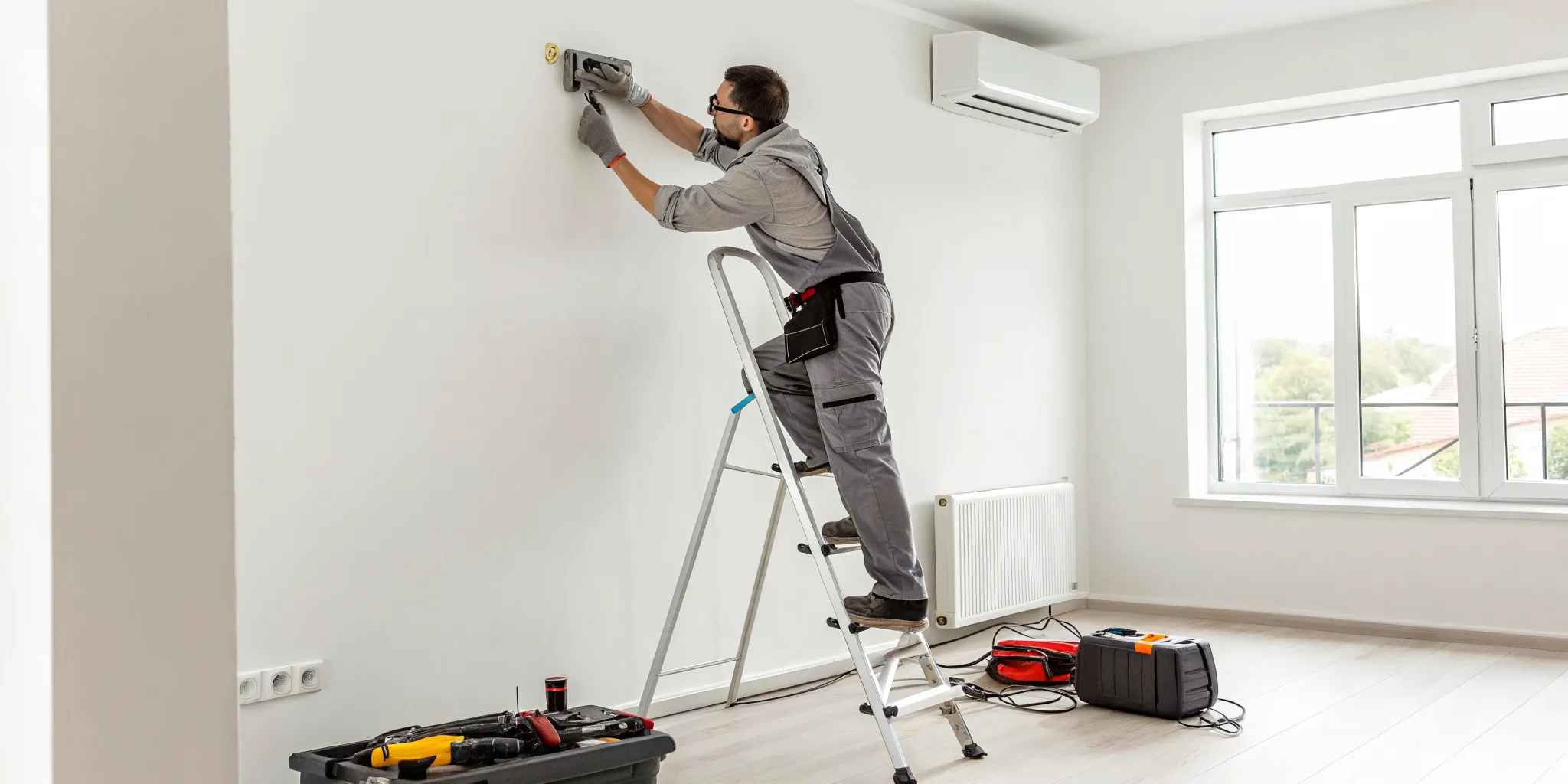
Installing a mini-split system is a bit more involved than just hanging a unit on the wall and plugging it in. It’s a precise process that blends carpentry, electrical work, and specialized HVAC knowledge. Each step, from choosing the right spot to making the final connections, is critical for ensuring your system runs efficiently and safely for years to come. A small mistake in any of these areas can lead to poor performance, higher energy bills, or even damage to the unit itself.
Let’s walk through the key stages of a professional installation. Understanding what’s involved can help you appreciate the skill required and make an informed decision about whether to tackle it yourself or bring in a certified technician. From calculating the exact cooling power your room needs to safely handling refrigerant lines, a proper installation is all about the details.
Sizing Up Your Space for the Right Fit
Getting the size right is the most important first step. A mini-split that’s too small will struggle to cool your room on a hot Okanagan day, while one that’s too big will cycle on and off too frequently, wasting energy and failing to properly dehumidify the air. A professional doesn’t guess—they perform professional calculations (known as a Manual J load calculation) that account for room dimensions, window placement, insulation levels, and ceiling height. This ensures the unit is perfectly matched to your space for optimal comfort and efficiency.
Placing the Indoor Unit
Where you put the indoor unit matters for both performance and aesthetics. Ideally, it should be mounted high on an exterior wall, free from obstructions like furniture or curtains that could block airflow. This allows the cool air to circulate effectively throughout the room. A technician will also consider the wall’s structural integrity to ensure it can support the unit securely and plan a location that allows for the straightest possible path for the lines running to the outdoor condenser, which keeps the installation clean and efficient.
Connecting the Indoor and Outdoor Units
Once the locations are set, the two units need to be connected. This involves drilling a small, three-inch hole through your exterior wall to pass a bundle of components called a line set. This set includes refrigerant tubing, electrical wiring, and a condensate drain line to remove moisture. The outdoor condenser must be placed on a solid, level pad with plenty of clearance for air intake and exhaust. A pro ensures the hole is perfectly sealed to prevent drafts, moisture, or pests from getting inside.
Handling the Electrical and Final Testing
This is where safety and technical expertise are non-negotiable. A mini-split requires a dedicated electrical circuit, and the wiring must be done to code by a qualified person. After connecting the electrical, the refrigerant lines are the next critical step. A technician uses a vacuum pump to remove all air and moisture from the lines before charging the system with refrigerant. Handling refrigerants requires a special government certification and tools. Finally, the system is tested to ensure it’s running correctly, cooling effectively, and free of leaks.
Gearing Up for Installation: Tools and Materials
If you're thinking about installing a mini-split yourself, one of the first steps is taking stock of the tools and materials you'll need. It’s easy to focus on the cost of the unit itself, but the equipment required for a safe and effective installation can add up quickly, both in price and complexity. This isn't just about having a good drill and a level; installing a mini-split correctly requires specialized HVAC equipment that most homeowners don't have lying around in the garage. From vacuum pumps to manifold gauges, these tools are essential for a job done right.
Beyond the hardware, there are critical safety and legal considerations, especially when it comes to handling electrical wiring and refrigerants. A professional team arrives with everything needed, from the right-sized wrenches to the certifications required to handle refrigerants according to federal and provincial regulations. Before you commit to the DIY path, it’s important to get a clear picture of what’s truly involved in gearing up for the job. It’s often more than homeowners bargain for, and understanding these requirements can help you make a more informed decision that protects your investment and your home.
The Must-Have HVAC Tools
A successful mini-split installation depends on a set of specialized tools that ensure the system runs efficiently and lasts for years. You'll need a vacuum pump to remove all moisture and air from the refrigerant lines—a critical step that prevents system failure. You’ll also need a set of manifold gauges to check pressures, a torque wrench for tightening flare nuts to precise specifications, and a nitrogen tank for pressure testing. As DIY installers often discuss online, the cost for these essential tools alone can be significant, with some estimating an investment of around $950. This upfront cost is one of the biggest hidden factors in a DIY project.
Safety Gear and Refrigerant Rules
Proper installation is about more than just tools; it’s about safety and compliance. Working with high-voltage electrical connections is a serious risk, and improper wiring can lead to equipment damage or even a fire. It’s also crucial to follow local building codes to ensure your installation is safe and legal. Furthermore, handling refrigerants is strictly regulated. Our teams include EPA-certified technicians who are trained to manage these substances safely and legally, protecting both your system and the environment. Venting refrigerant is illegal, and without the proper recovery equipment and training, you risk damaging your new unit and facing potential fines.
DIY vs. Pro Installation: Which Is Right for You?
Deciding to install a mini-split system is a great step toward year-round comfort in your Okanagan home. The next big question is: should you tackle the installation yourself or hire a professional? While the appeal of saving money on a DIY project is strong, installing a ductless mini-split is a complex job that involves electrical wiring, refrigerant handling, and precise measurements. It’s much more involved than assembling furniture or painting a room.
An improper installation can lead to more than just a headache—it can result in poor performance, higher energy bills, and even serious safety hazards. Before you start watching tutorial videos, it’s important to weigh the true costs and benefits. We’ll walk through the key factors you need to consider, from the technical skills required to warranty protection and the real-world costs, so you can make a confident choice for your home and family.
Why Technical Skill and Code Knowledge Matter
A mini-split installation isn't just about mounting units on the wall. It requires a deep understanding of HVAC systems, electrical codes, and refrigerant management. Professionals use specialized tools and knowledge to perform a "Manual J load calculation," which ensures your system is perfectly sized for your space—not too big, not too small. An incorrectly sized unit will struggle to keep you comfortable and will use far more energy than necessary.
Furthermore, handling refrigerant is regulated for environmental and safety reasons, and it requires EPA-certified technicians to do it legally and safely. A professional ensures every electrical connection is secure, every line is properly sealed, and the entire system operates at peak efficiency from the moment it’s turned on.
Protecting Your Warranty
Your new mini-split system is a significant investment, and its warranty is your safety net. However, most manufacturers are very clear in their terms: the warranty is often voided if the system isn't installed by a licensed and certified HVAC professional. If you attempt a DIY installation and a component fails a few months later, you could be responsible for the full cost of the repair or replacement.
By working with a manufacturer-authorized installer, you ensure your warranty remains intact. This protects you from defects and gives you peace of mind knowing that your investment is covered. It’s a crucial detail that can save you thousands of dollars and a lot of stress down the road.
Comparing the Costs: DIY vs. Pro
At first glance, DIY seems like the cheaper route. You buy the unit and avoid labor costs. However, the hidden expenses can add up quickly. To do the job right, you’ll need specialized tools like a vacuum pump, manifold gauge set, and a torque wrench, which can easily cost over $950 to buy or rent.
When you hire a professional, the quote includes the unit, labor, all necessary tools, and the expertise to get the job done right the first time. Plus, you avoid the costly risk of mistakes that could damage the unit or your home. If you’re concerned about the upfront cost, many companies offer flexible financing options to make a professional installation more manageable for your budget.
Common (and Costly) Installation Mistakes to Avoid
The idea of saving money with a DIY project is always appealing, but a mini-split installation isn’t like assembling furniture. It’s a technical job that blends electrical work, plumbing, and HVAC expertise. Even small mistakes can lead to big headaches, from a system that doesn’t cool properly to serious safety hazards. Understanding the common pitfalls can help you make an informed decision about whether to tackle it yourself or call in a professional.
Getting it wrong can mean more than just a frustrating weekend. It can void your warranty, reduce your system's efficiency, and shorten its lifespan. A professional installation ensures every component works together perfectly, giving you the reliable comfort you invested in. Our NATE-certified technicians are trained to handle every detail, from precise sizing calculations to final safety checks, so you can enjoy peace of mind along with your perfectly cooled home. Let’s walk through the most critical mistakes to avoid.
The Risk of Wrong Sizing and Refrigerant Leaks
One of the first steps in any installation is choosing the right-sized unit, and it’s more science than guesswork. A system that’s too big will constantly turn on and off, failing to dehumidify your air properly and wasting energy. One that’s too small will run nonstop without ever reaching the target temperature. Professionals use a "Manual J load calculation" to analyze your home's specific needs, ensuring a perfect fit.
Refrigerant is the lifeblood of your AC, and handling the lines that carry it is a delicate process. These lines must be perfectly connected and sealed to prevent leaks. Even a tiny leak can drain the system, leaving you with warm air and a costly repair bill. Our EPA-certified technicians have the specialized tools and training to manage refrigerants safely and ensure your system’s connections are flawless.
Electrical Dangers and Safety Risks
Working with your home’s electrical system is serious business. Mini-splits are powerful appliances that typically require a dedicated 220-volt circuit, which is not a standard outlet. An incorrect electrical connection is more than just a performance issue—it’s a major safety risk. Faulty wiring can damage the unit’s sensitive electronic components, create a fire hazard, or even lead to a dangerous electric shock.
Your safety and your home’s integrity are the top priorities. A licensed professional understands the specific electrical requirements for your mini-split and ensures all connections are secure, compliant, and safe. Trusting an expert with the wiring protects your investment and, more importantly, your family.
Avoiding Permit Problems and Code Violations
Did you know that many municipalities require a permit for HVAC installations? This is because the work involves electrical systems and controlled substances like refrigerants. Skipping this step can cause major issues down the road. If work is done without a permit, you could face fines, have trouble passing a home inspection when you decide to sell, or even be required to remove the entire system.
A reputable installer will know the local Okanagan building codes and handle the entire permitting process for you. This guarantees your installation is not only done correctly but also fully compliant with local regulations. When you work with a trusted company, you can be confident the job is done right and to the letter of the law, as our many positive customer reviews show.
How to Choose the Right Pro for the Job
Choosing the right professional for your mini-split installation is just as important as choosing the system itself. The quality of the installation directly impacts your system's efficiency, lifespan, and performance. A great installer ensures your unit runs perfectly from day one, while a poor installation can lead to years of headaches and wasted energy. This isn't just about getting the job done; it's about investing in your home's comfort and safety for the long haul.
When you hire a professional, you're paying for their expertise, precision, and peace of mind. They have the specialized tools and training to handle refrigerants safely, perform accurate load calculations, and ensure every connection is secure. They also understand local building codes and manufacturer specifications, which protects your warranty and your home. Taking the time to vet your options and find a qualified, reputable company is the best way to guarantee you get the most out of your new mini-split system. At TruFinity, we believe in "True Service, Infinite Care," and that starts with a flawless installation.
Look for Certifications and Local Experience
When you start your search, the first thing to check for is proper credentials. Look for companies whose technicians are NATE-certified (North American Technician Excellence), as this is the gold standard for HVAC professionals. It means they’ve passed rigorous, real-world tests on their knowledge of heating and cooling systems. Also, check for manufacturer-specific training, like being a Daikin Comfort Pro, which shows they have specialized expertise with top brands.
Beyond certifications, local experience is key, especially in the Okanagan. A team that understands our four-season climate knows how to size and install a system that provides efficient heating in the winter and reliable cooling in the summer. Check for a strong local presence and positive customer reviews that speak to their reliability and quality of work in your community.
Key Questions to Ask Your Installer
Once you have a shortlist of qualified installers, it’s time to ask some important questions before making your final decision. A reputable contractor will be happy to provide clear, upfront answers.
Here’s what you should ask:
- Do you perform a Manual J load calculation? This is a critical step to ensure the system is sized correctly for your home’s specific needs.
- Can you provide a detailed, itemized quote? You want to see a clear breakdown of costs for equipment, labor, and any additional materials to avoid surprise charges.
- Are your technicians licensed and insured? This protects you and your property in case of any accidents during the installation.
- What does your installation process look like, and how long will it take?
- Do you handle all necessary permits?
Getting multiple quotes is always a good idea, but remember to compare more than just the price. Look at the quality of the equipment offered, the details of the service, and the thoroughness of their answers.
What to Look for in a Warranty
A solid warranty is your safety net. Most new mini-split systems come with a manufacturer's warranty that covers parts, but this is often contingent on the unit being installed by a certified professional. A DIY installation can easily void this warranty, leaving you on the hook for expensive replacement parts.
In addition to the manufacturer's parts warranty, ask about the installer's labor warranty. This covers the cost of service calls if an issue arises due to the installation work itself. A company that stands behind its work will offer a clear and comprehensive labor warranty. For example, our TruLoyalty+ members receive a two-year labor warranty on installations, giving them complete peace of mind that their investment is protected.
Breaking Down the Cost of a Mini-Split Installation
Let's talk about one of the biggest factors in your decision: the cost. While a DIY project might seem cheaper on the surface, a professional installation is an investment in your home’s comfort, safety, and efficiency. The final price tag isn't just about the unit itself; it includes the expertise, tools, and peace of mind that come with hiring a certified team.
The good news is that a professional installation doesn't have to break the bank. High-efficiency systems often qualify for significant savings through government rebates and flexible financing options, making them much more accessible. When you work with a trusted local company, you get transparent pricing and a clear understanding of how to make this smart investment work for your budget. It’s all about weighing the upfront cost against the long-term value and savings.
What Goes Into the Price of a Pro Install?
When you get a quote for a professional mini-split installation, you’re paying for more than just the equipment. The total cost, which typically ranges from $2,000 to $10,500, covers several critical components. This includes the indoor and outdoor units, specialized line sets, and all the necessary electrical wiring. More importantly, it covers the labor of certified technicians who have the right tools and training to handle refrigerants safely and ensure your system is installed to meet manufacturer specifications and local codes. The final price depends on the system's size, its efficiency rating (SEER), and how many indoor units you need for your home. At TruFinity, we provide upfront, transparent pricing so you know exactly what to expect from our cooling services.
Finding Rebates and Financing to Help You Save
One of the best parts about upgrading to an energy-efficient mini-split is that you can often get some money back. Here in the Okanagan, homeowners can access significant government incentives and BC rebates for installing qualifying heat pump systems. These programs are designed to make energy-efficient upgrades more affordable. We stay on top of the latest programs and can help you identify every saving you’re eligible for. You can explore current rebates and offers to see what’s available. To make the investment even more manageable, we also provide flexible financing options, allowing you to enjoy year-round comfort now and pay over time.
Related Articles
- Mini Split AC and Heat: The Homeowner's Guide | TruFinity
- Cost to Install a Mini-Split | TruFinity
- Cost of Heat Pump Installation in Kelowna | TruFinity Blog
Frequently Asked Questions
How long does a typical mini-split installation take? For a straightforward, single-zone system, a professional team can typically complete the entire installation in one day. This includes mounting both the indoor and outdoor units, running the line set, making all the electrical connections, and testing the system. A more complex multi-zone installation might extend into a second day, but a professional's experience and specialized tools make the process far more efficient than a multi-weekend DIY project.
Can a mini-split system really heat my home during a cold Okanagan winter? Absolutely. Modern mini-splits are not just for cooling; they are powerful heat pumps. The key is to choose a cold-climate model, which is specifically designed to operate efficiently in freezing temperatures. These systems can provide reliable, consistent heat even when it drops as low as -25°C, making them a fantastic all-in-one solution for year-round comfort in our region.
Are mini-split systems noisy? One of the best features of a ductless mini-split is how quiet it is. The indoor units operate at a level often compared to a soft whisper, so you'll barely notice it's running. The outdoor condenser is also designed for quiet operation, making it a significant improvement over the loud clatter of a traditional window AC unit or the rumble of an older central air system.
What kind of maintenance does a mini-split require after installation? Maintaining your mini-split is quite simple. As a homeowner, your main job is to clean the filters on the indoor units about once a month, which just involves a quick rinse. To keep the system running at peak efficiency and extend its lifespan, we recommend having a professional technician perform an annual tune-up to clean the coils and check the electrical and refrigerant levels.
Will installing a mini-split increase my home's value? Yes, it's a smart investment that can certainly increase your home's value. Energy-efficient upgrades are a major selling point for potential buyers. A mini-split system that provides both high-efficiency cooling and heating is a modern feature that adds significant appeal, especially in homes that previously lacked central air conditioning. It signals a comfortable, well-maintained, and energy-conscious home.

.webp)