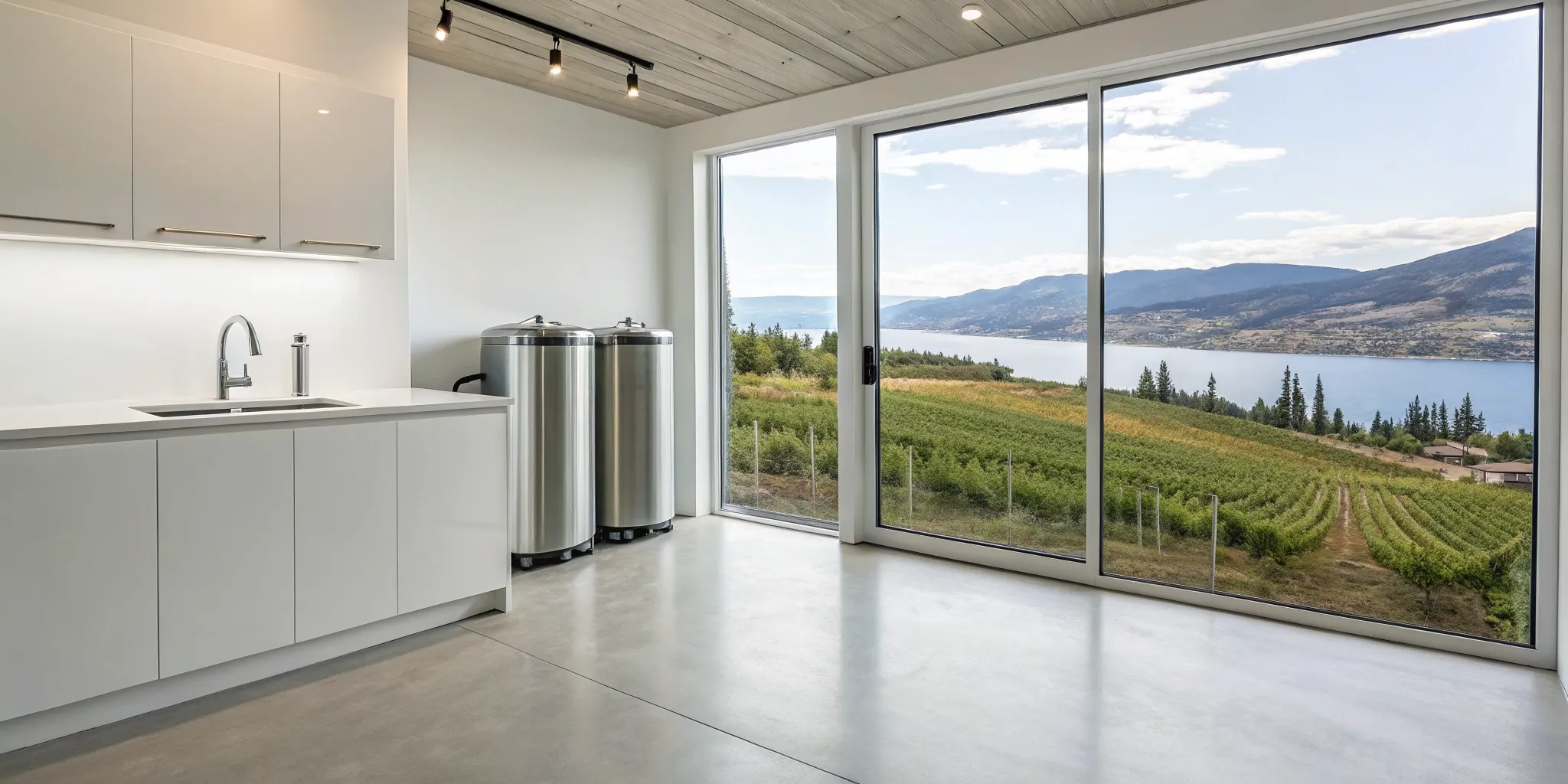
Your water heater, dishwasher, and washing machine are some of the most expensive and essential appliances in your home. Here in the Okanagan, their biggest enemy is our notoriously hard water. The high mineral content creates scale buildup that reduces efficiency, drives up energy bills, and can lead to early breakdowns. You wouldn't leave a new car out in a hailstorm, so why let hard water damage your valuable appliances? Investing in the best water softener system is one of the smartest moves you can make to protect your home. It’s a proactive solution that extends the life of your equipment and saves you money in the long run. Let's explore the options to find the perfect fit for your household's needs.
Key Takeaways
- Protect Your Home from Hard Water Damage: The high mineral content in Okanagan water can shorten the lifespan of your pipes and appliances. A water softener is a crucial investment to prevent costly scale buildup and protect your home's plumbing system.
- Decide Between True Softening and Scale Prevention: Salt-based systems are the only option that physically removes hard minerals for that classic soft water feel. Salt-free conditioners offer a maintenance-free alternative that stops scale from forming without altering the water's chemistry.
- Proper Sizing is Non-Negotiable: A system's capacity must match your home's specific water hardness and daily usage to run efficiently. Getting a professional water test is the most important first step to ensure you choose a system that won't waste salt, water, or money.
Salt vs. Salt-Free: Which Water Softener is Right for You?
When you start looking into water softeners, you’ll quickly find the main debate is between salt-based and salt-free systems. Both are designed to tackle the problems caused by the Okanagan’s notoriously hard water, but they work in very different ways. Understanding this difference is the key to choosing the right system for your home and protecting your pipes and appliances from scale buildup.
Your choice depends on your specific goals. Are you looking to completely remove the minerals that cause hardness, or are you more interested in a low-maintenance way to prevent scale from forming? Let's break down how each type works so you can make a confident decision.
Salt-Based Water Softeners: The Classic Solution
This is what most people picture when they think of a water softener. Salt-based systems use a process called ion exchange to physically remove hard minerals like calcium and magnesium from your water, replacing them with a small amount of sodium. This is the most effective way to get truly soft water. The result is water that feels slicker, helps soap lather better, and completely stops scale from building up in your water heater and dishwasher. The trade-off is that these systems require you to periodically add large bags of salt and they use a regeneration cycle to flush the collected minerals, which uses extra water.
Salt-Free Water Conditioners: The Low-Maintenance Alternative
A salt-free system is technically a "water conditioner," not a softener. It doesn't remove the hard minerals. Instead, it uses a process to change the structure of the minerals so they can't stick to surfaces and form scale. The main advantage here is convenience: there’s no salt to buy, no electricity needed for many models, and no wastewater from a regeneration cycle. However, because the minerals are still present, you won't get that slippery feeling of soft water, and its effectiveness can be limited in homes with extremely hard water, which is common in the Okanagan.
Making the Right Choice for Your Home
So, which one is better? If your top priority is eliminating scale to extend the life of your appliances and you want the full benefits of soft water (like brighter laundry and softer skin), a salt-based system is the most reliable choice. If you prefer a zero-maintenance solution and your main goal is simply to prevent scale buildup without altering the water's chemistry, a salt-free conditioner could be a great fit. The best way to know for sure is to have your water tested. A professional from TruFinity Plumbing Heating & Cooling can analyze your water hardness and discuss your household's needs to recommend the perfect water filtration solution for you.
Why Hard Water is a Big Deal in the Okanagan
If you live in the Okanagan, you’re likely very familiar with hard water. It’s the reason for those stubborn white spots on your dishes and the chalky film on your shower doors. Our region has notably hard water with high mineral content, which means it’s packed with dissolved calcium and magnesium. While these minerals aren’t harmful to your health, they can cause a lot of trouble for your home.
This mineral buildup, known as scale, doesn't just look bad; it can seriously impact your plumbing and appliances. Scale can clog your pipes, reduce water pressure, and coat the heating elements in your water heater. When your water heater has to work harder to heat water through a layer of mineral scale, its efficiency drops, and your energy bills can go up. Over time, this extra strain can lead to premature appliance failure, a costly problem that many Okanagan homeowners face. In fact, hard water is one of the main reasons appliances like dishwashers and water heaters have a shorter lifespan in this region.
Beyond the pipes and appliances, hard water affects your daily routines. You might notice that soaps and detergents don’t lather well, forcing you to use more product to get things clean. It can leave your skin feeling dry and itchy and your hair looking dull. Your laundry might come out feeling stiff and looking faded because mineral deposits get trapped in the fabric. It’s a frustrating cycle of cleaning and re-cleaning that never seems to end. Addressing the root cause with a proper water filtration solution is the only way to truly solve the problem.
A Quick Guide to Water Softener Types
Salt-Based Ion Exchange Systems
Often considered the traditional workhorse, salt-based systems are the only type that truly removes hard minerals like calcium and magnesium from your water. They use a process called ion exchange, where resin beads in a tank trap the hard minerals and swap them for sodium ions. For Okanagan homes with very hard water, this is the most effective way to get genuinely soft water. You’ll notice the difference in everything from spot-free dishes to better-lathering soap. The main upkeep is simply adding salt to the brine tank periodically.
Salt-Free Water Conditioners
If you want a low-maintenance option without adding salt, a salt-free conditioner is a great choice. It’s important to know these systems don’t actually remove minerals, so they don’t technically soften water. Instead, they use a process that crystallizes minerals, preventing them from forming scale inside your pipes and appliances. This is an excellent way to protect your plumbing and water heater without altering your water’s mineral content. They are a true set-it-and-forget-it solution, as they require virtually no regular maintenance from you.
Smart Water Softeners with App Control
For those who appreciate modern convenience, smart water softeners connect directly to an app on your phone. This gives you complete control and real-time data about your home’s water. You can monitor salt levels, track water usage, and receive alerts for maintenance, all from your phone. This technology helps you use salt and water more efficiently, which can save you money in the long run. It’s the perfect blend of powerful water treatment and user-friendly technology for a busy household.
Dual-Tank Systems for Non-Stop Soft Water
Large families or households with high water demand should consider a dual-tank system. This setup ensures you never run out of soft water. While a standard single-tank system needs to go offline for its cleaning (regeneration) cycle, a dual-tank model simply switches over to the second tank. This guarantees a continuous, 24/7 supply of soft water, no matter how many loads of laundry or showers are happening. The team at TruFinity Plumbing Heating & Cooling can help you determine if your usage warrants this type of powerful system.
How Do I Choose the Right Size Water Softener?
Picking the right size water softener is a bit like buying a new pair of shoes. If they’re too small, you’ll be uncomfortable, and if they’re too big, they’ll be inefficient and clumsy. A water softener that’s too small for your home will struggle to keep up, leaving you with hard water when you need it least. On the other hand, a system that’s too large will regenerate too often, wasting salt, water, and money. The goal is to find that perfect fit that runs efficiently and provides a consistent supply of soft water.
To get it right, you need to look at two main things: how much water your family uses each day and just how hard your water is. Here in the Okanagan, we know the water is exceptionally hard, which makes proper sizing even more critical for protecting your pipes and appliances. Getting these numbers right ensures your system can handle the demand without working overtime. While you can get a great estimate on your own, having a professional from TruFinity Plumbing Heating & Cooling perform a water test and assess your home’s plumbing will give you the most accurate recommendation.
Calculate Your Household's Water Needs
First, let’s figure out your home's daily water consumption. A straightforward way to estimate this is to multiply the number of people in your household by the average amount of water each person uses per day. A good baseline is about 75 gallons per person. So, for a family of four, the calculation would be 4 people x 75 gallons/person, which equals 300 gallons of water per day. This number is your starting point for determining the softener’s capacity. It also helps determine the necessary flow rate, ensuring you don’t lose water pressure when multiple taps or appliances are running at once.
Match Grain Capacity to Your Water Hardness
Next, you’ll match that daily water usage to your water’s hardness level. A water softener’s size is measured by its grain capacity, which is the number of hardness grains it can remove before it needs to regenerate. Water hardness itself is measured in grains per gallon (gpg). To find out how many grains your system needs to remove daily, you simply multiply your daily water usage by your water’s gpg. For example, if your 4-person household uses 300 gallons of water and your water hardness is 15 gpg (common in our area), you’d need to remove 4,500 grains of hardness each day (300 x 15). Our water filtration services can give you a precise gpg measurement.
What Features Actually Matter When You're Comparing Systems?
Once you’ve narrowed down the type and size of water softener you need, it’s time to look at the details. The features of a system can make a big difference in your day-to-day experience, your monthly bills, and how long the unit lasts. It’s easy to get lost in technical jargon, but a few key features truly determine a system's value. For example, a high-efficiency model might have a higher upfront cost but save you hundreds on salt and water over the years. A smart system could send an alert to your phone when it's low on salt, saving you the hassle of checking it manually.
Think about how your household uses water. Do multiple people shower at the same time? Are you interested in smart home technology? How important is a long-term warranty to you? Answering these questions will help you prioritize what matters most. We’ll break down the four main areas to focus on: how efficiently the system runs, the convenience of modern tech, the reliability of the brand, and the safety certifications that prove its performance. Choosing the right features ensures you get a system that not only solves your hard water problems but also fits seamlessly into your life. For a full breakdown of your options, our team at TruFinity Plumbing Heating & Cooling can walk you through our water filtration services.
Flow Rate and Efficiency
A system’s flow rate, measured in gallons per minute (GPM), determines how much softened water is available at any given time. A low flow rate can mean a frustrating drop in water pressure when the dishwasher is running and someone is in the shower. For most families, a system with a higher GPM is a better choice. Beyond flow rate, look for efficiency features like metered regeneration. Instead of regenerating on a fixed schedule, these smarter systems monitor your actual water usage and only run a cleaning cycle when necessary. This simple feature can significantly reduce salt and water consumption, saving you money over the life of the unit.
Smart Tech and Remote Monitoring
If you appreciate the convenience of smart home devices, you’ll be happy to know that many modern water softeners come with app integration. These systems connect to your home’s Wi-Fi, allowing you to monitor and manage them directly from your smartphone. You can track your water usage, check salt levels, and receive alerts if the system needs attention, no matter where you are. This smart technology takes the guesswork out of maintenance and gives you more control over your home’s water quality. It’s a great feature for busy homeowners who want peace of mind without having to constantly check on their equipment.
Warranties and Brand Reliability
A water softener is a significant investment in your home’s plumbing system, so you want to be sure it’s built to last. A strong warranty is one of the best indicators of a manufacturer's confidence in its product. Look for comprehensive coverage, paying attention to the warranty length for the mineral tank, the control valve, and the electronics, as these can vary. Choosing a reliable brand known for durability is just as important. At TruFinity Plumbing Heating & Cooling, we only install systems from reputable manufacturers, ensuring you get a high-quality product backed by both a great warranty and our expert service.
Safety and NSF Certifications
When you’re choosing a system that treats your home’s water, safety is non-negotiable. Look for products that are certified by the NSF (National Sanitation Foundation). Specifically, the NSF/ANSI 44 certification confirms that a water softener has been rigorously tested by a third party to verify it effectively reduces hardness minerals and is made from safe, approved materials. While this certification doesn’t rank one brand as better than another, it provides a crucial baseline of performance and safety. Seeing the NSF seal means you can trust that the system does what it claims to do.
How Water Hardness Impacts Your Choice
If you live in the Okanagan, you’re no stranger to the effects of hard water. That chalky buildup on your showerhead and the spots on your dishes are telltale signs. But the impact goes much deeper than that. The high mineral content in our local water creates scale that clogs pipes, damages appliances, and forces your water heater to work overtime. Choosing the right water softener isn’t just about convenience; it’s about protecting your home’s plumbing system.
The key is understanding that not all hard water is the same. The severity, measured in grains per gallon (GPG), directly determines which type and size of system will actually solve the problem. A system that’s too small will be inefficient and won’t keep up, while one that’s too large can be a waste of money. Getting a precise measurement of your home’s water hardness is the single most important step in finding a lasting solution. From there, you can confidently select a system that’s perfectly matched to your needs, ensuring your home is protected from the costly damage hard water can cause.
How to Test Your Water Hardness
Before you can choose a system, you need to know exactly what you’re dealing with. The hardness of your water is measured in grains per gallon (GPG), and this number will be your guide. You can get a rough idea using DIY water test strips, but for a decision this important, accuracy is key. A professional water analysis will give you a precise GPG reading and check for other common issues in Okanagan water, like chlorine or sediment. Our certified technicians at TruFinity Plumbing Heating & Cooling can perform a comprehensive test, giving you the exact data needed to choose the right solution. This step removes all the guesswork and ensures you’re investing in a system that will truly handle your home’s specific water filtration needs.
Pick the Right System for Your Hardness Level
Once you have your GPG number, you can determine the right "grain capacity" for your softener. This isn't about the physical size of the unit, but how many hardness grains it can remove before it needs to clean itself (a process called regeneration). To find the right capacity, you’ll need to multiply your GPG by your household's daily water usage. For an average family of four, experts often suggest a capacity of around 33,000 grains. However, in areas with very hard water like ours, you might need a higher capacity unit, such as a 48,000 or 64,000-grain system, to avoid constant regeneration. A Trufinity expert can do this calculation for you, ensuring your system runs efficiently without wasting salt or water.
When Salt-Based Systems Are a Must
For the level of water hardness we see across Kelowna, Vernon, and Penticton, a salt-based water softener is often the only truly effective choice. Unlike salt-free "conditioners" which only alter the structure of minerals, salt-based systems use a process called ion exchange to physically remove the hard minerals like calcium and magnesium from your water. This is the most reliable way to stop scale buildup in its tracks and protect your valuable appliances. If you have a tankless water heater or other high-efficiency appliances, removing these damaging minerals is essential for preserving their lifespan and efficiency. While other systems have their place, a salt-based softener provides the powerful, consistent performance needed to combat the Okanagan’s toughest water challenges.
The True Cost: Maintenance and Long-Term Expenses
When you're looking at a new water softener, the sticker price is just one part of the equation. To understand the true investment, you have to consider the long-term costs of maintenance, supplies, and eventual replacement. Different systems have very different needs, so knowing what to expect will help you choose a system that fits your budget and lifestyle for years to come. Let's break down the ongoing expenses for the most common types of systems so you can make a confident choice for your Okanagan home.
Upkeep for Salt-Based Systems
Salt-based systems are the classic choice for a reason: they excel at removing the hard minerals that cause so much trouble. To keep them running smoothly, they need a little regular attention. Your main task will be topping up the brine tank with salt, usually about once a month. The system also has a resin bed that does the heavy lifting, and this will need to be replaced every eight years or so. With proper care from a professional, these water softening systems can last 10 to 15 years, making them a reliable long-term solution for truly soft water.
Maintenance for Salt-Free Systems
If you prefer a more hands-off approach, a salt-free water conditioner might be your best fit. These systems don't remove minerals but instead condition them to prevent scale, so they don't require any salt. This means no heavy bags to haul and no monthly top-ups. The main maintenance task is replacing the internal media, but this is typically only needed every few years. According to the Department of Energy, salt-free systems can last a long time, sometimes up to 20 years, because they have fewer moving parts. They are a great low-hassle choice for protecting your pipes and appliances.
Lifespan and Replacement Costs
Any water softener is an investment in your home's plumbing health. Most systems have a lifespan of 10 to 15 years, but proper care can often extend that. While salt-free systems save you money on salt, salt-based systems provide more comprehensive softening. The best way to protect your investment is through professional maintenance. Our TruLoyalty Membership plans include system tune-ups that keep your equipment in top shape, helping you avoid unexpected breakdowns and costly replacements down the road. Regular service from TruFinity Plumbing Heating & Cooling is the key to getting the most out of your unit for years to come.
What to Budget: Upfront Price vs. Long-Term Value
Thinking about a water softener is a lot like any other major home improvement. It’s an investment in your home's health and your family's comfort. While it's easy to focus on the initial price tag, the real story is in the long-term value. A quality system doesn't just solve your hard water problems; it starts paying you back from day one by protecting your pipes, appliances, and even your skin. Let's break down the costs so you can see the full picture, from the upfront purchase to the everyday savings.
Upfront Costs by System Type
The initial price for a whole-house water softener typically falls between $1,000 and $1,500, depending on the type, size, and features you choose. Salt-based systems are a common choice for tackling the Okanagan's mineral-rich water, but salt-free conditioners can also offer great value since you won't have the recurring cost of buying salt. The best system for you depends on your home's specific needs. To help make this investment more manageable, TruFinity Plumbing Heating & Cooling often has special offers available, which can help reduce that initial cost and get you on the path to better water sooner.
Don't Forget Installation, Salt, and Energy Costs
Beyond the system itself, a few other costs are part of the equation. Professional installation is crucial for ensuring your system runs efficiently, and it's a cost you’ll want to factor in. For salt-based systems, you'll need to budget for salt bags, which you'll typically add about once a month. Over the long haul, these systems last about 10 to 15 years, but the internal resin may need replacing every eight years or so. Salt-free systems have a longer lifespan of 10 to 20 years and no salt costs, though their internal media may eventually need replacement.
How a Water Softener Saves You Money
This is where the investment really shines. A water softener can lead to some serious long-term savings. By preventing scale buildup, it helps your water-using appliances, like your water heater and dishwasher, run more efficiently and last longer. This translates directly to lower energy bills. Soft water also helps you use less soap and detergent, so you’ll save money on cleaning supplies. Plus, you get the added benefits of softer skin, brighter clothes, and spending way less time scrubbing hard water stains off your fixtures and shower doors.
Don't Fall for These Common Water Softener Myths
When you start looking into water softeners, you'll find a lot of information out there, and not all of it is accurate. It’s easy to get tangled up in conflicting advice and technical jargon. Let's clear the air and tackle some of the most common myths I hear from homeowners. Understanding the facts will help you feel confident about choosing the right system to protect your home’s plumbing and appliances from the Okanagan’s notoriously hard water.
Myth: Salt-Free Systems Remove Hard Minerals
This is one of the biggest points of confusion. While they are often called "salt-free softeners," these systems don't actually remove the hard minerals like calcium and magnesium from your water. Instead, a salt-free water conditioner uses a process that crystallizes these minerals, preventing them from sticking to your pipes and fixtures as scale. Think of it as changing the minerals' behavior rather than evicting them entirely. This is a fantastic, low-maintenance option for scale prevention, but you won't get that classic slippery-smooth feeling of truly soft water because the minerals are still technically there.
Myth: Soft Water is High in Sodium
It’s logical to think that a salt-based system would make your water salty, but that’s not the case. The process, called ion exchange, swaps the hard mineral ions for sodium ions. The amount of sodium added is incredibly small and directly related to how hard your water is to begin with. For most households, the amount of sodium in a glass of softened water is less than what you’d find in a slice of white bread. While it's generally safe for most people, if you're on a strict low-sodium diet, you can always discuss potassium-based alternatives with a professional.
Myth: All Water Softeners Are Expensive to Run
While there is an upfront investment, a water softener is one of those home improvements that pays you back over time. Hard water is tough on your appliances, forcing your water heater, dishwasher, and washing machine to work harder and fail sooner. Soft water extends their lifespan and improves their efficiency. It also means you’ll use far less soap, shampoo, and detergent. Salt-free conditioners have virtually no ongoing costs, while salt-based systems require salt bags periodically. When you factor in the savings and protection for your home, the long-term value is clear. TruFinity Plumbing Heating & Cooling also offers financing options to make the initial purchase more manageable.
Get Expert Installation and Support in the Okanagan
Picking the right water softener is a great first step, but making sure it’s installed correctly is what truly protects your investment. A professional installation ensures your system runs at peak efficiency from day one, which is especially important given the Okanagan’s notoriously hard water. An expert can assess your home’s specific plumbing layout and water usage to set up the system for maximum performance and a long, reliable lifespan. This isn't just about connecting pipes; it's about integrating a vital appliance into your home's plumbing ecosystem.
Working with a local company like TruFinity Plumbing Heating & Cooling means you get technicians who understand the unique challenges of our region’s water. We know exactly how the high mineral content here affects pipes, fixtures, and appliances. Our Red Seal Plumbers provide expert water filtration services tailored to local needs, ensuring you get a solution that works for your home, not just a generic fix. We’re your neighbors, and we’re committed to providing service that reflects our deep roots in the community.
Your water softener will also need a little care over the years to keep it working properly. Consistent maintenance is key to preventing unexpected issues and extending the life of your system. At Trufinity, we make this easy with our TruLoyalty Membership Program, which includes regular system tune-ups and priority service. This kind of ongoing support gives you peace of mind, knowing your system is always in top shape and that help is just a phone call away if you need it.
Ultimately, choosing a local provider is about trust and reliability. With hundreds of 4.9-star Google reviews, our team at TruFinity Plumbing Heating & Cooling has built a reputation for quality craftsmanship and genuine care. We stand behind our work and are here to support you long after the installation is complete. Be sure to check our current offers, as we often have promotions that can make upgrading your home’s water quality even more affordable.
Related Articles
Frequently Asked Questions
How do I know if I really need a water softener? Your home will give you some clear signs. If you notice chalky white residue on your faucets and shower doors, your dishes have stubborn spots even after washing, or your skin feels dry and itchy after a shower, you're seeing the effects of hard water. In the Okanagan, these issues are common and often indicate that your appliances, like your water heater and dishwasher, are working harder than they should be due to internal scale buildup.
Will a salt-based water softener make my drinking water taste salty? This is a very common concern, but the answer is no. The ion exchange process used by salt-based systems adds a very small amount of sodium to the water, not salt. The amount is so minimal that it's generally undetectable by taste and is often less than the sodium found in a single slice of bread. Your water will feel different, but it won't taste salty.
What's the real difference between a 'softener' and a 'conditioner'? The main difference is how they treat hard minerals. A salt-based water softener physically removes minerals like calcium and magnesium from your water, giving you truly soft water. A salt-free water conditioner, on the other hand, doesn't remove the minerals. Instead, it changes their chemical structure so they can't form scale, which protects your pipes and appliances without altering the water's mineral content.
How much maintenance is involved with a water softener? The level of upkeep depends on the type of system you choose. For a salt-based system, your main task is to add salt to the brine tank every month or two, which is a simple process. A salt-free conditioner is a more hands-off solution, typically only requiring its internal media to be replaced every few years. Both are quite manageable for the benefits they provide.
Why is professional installation so important for a water softener? A water softener is a complex piece of equipment that integrates directly into your home's plumbing. Professional installation by a team like TruFinity Plumbing Heating & Cooling ensures the system is sized correctly, calibrated to our region's specific water hardness, and connected properly to prevent leaks and maximize efficiency. This not only protects your warranty but also guarantees you get the best possible performance from your investment.

.webp)