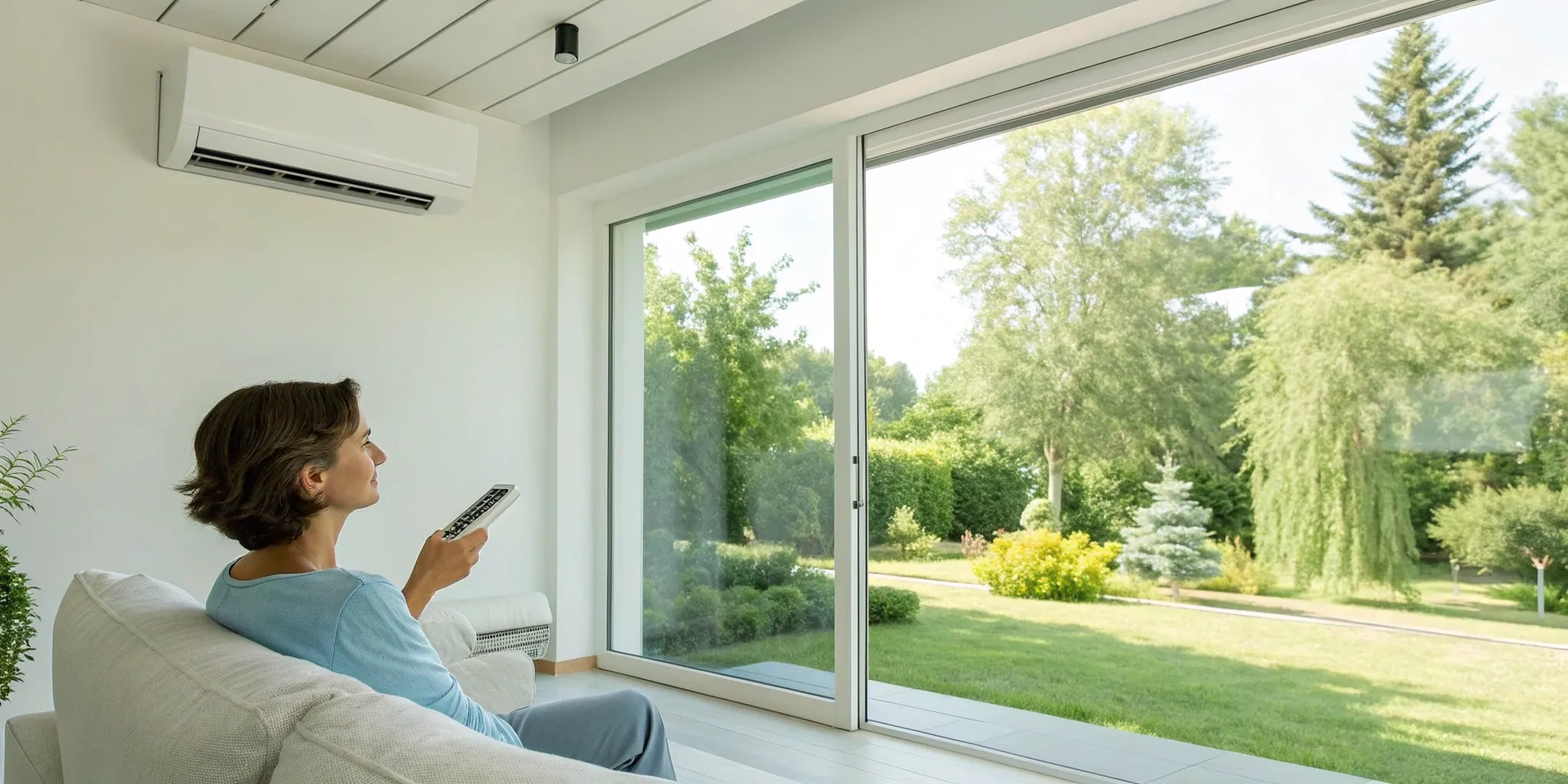
The best time to think about your air conditioner is before it breaks down. If your system is getting older, you might already be wondering how much life it has left. Making a proactive choice about ac repair vs replacement saves you from the stress and high costs of an emergency service call during a heatwave. An aging AC doesn't just risk failure; it quietly drives up your energy bills month after month. Instead of waiting for the inevitable, you can learn to spot the warning signs now. This guide will give you the tools to assess your system's health, understand the real costs, and make a strategic investment in your home’s comfort and value.
Key Takeaways
- Apply the $5,000 Rule: Multiply your AC's age in years by the estimated repair cost. If the total is over $5,000, your money is likely better spent on a new, reliable system instead of another temporary fix.
- Look beyond the initial price tag: A new AC is a significant purchase, but modern high-efficiency units reduce monthly energy bills. When combined with financing and rebates, a replacement often becomes the more cost-effective investment over time.
- Get an expert diagnosis for a confident choice: A rule of thumb is a great start, but a professional 25-point inspection and a proper load calculation provide the complete picture, ensuring you make a decision that guarantees long-term comfort and efficiency.
Is It Time to Repair or Replace Your AC?
When the Okanagan summer arrives, a reliable air conditioner isn't a luxury—it's essential for keeping your home comfortable. So, when your AC starts making strange noises or struggles to keep up with the heat, you’re faced with a big question: should you pay for another repair or invest in a full replacement? It’s a decision that involves balancing short-term costs with long-term value, and the right answer depends on a few key factors that are unique to your situation.
The age of your system, the frequency and cost of repairs, and your unit's overall efficiency all play a significant role. A quick fix might seem tempting, especially when you're trying to manage your budget, but it can sometimes be a temporary patch on a much larger problem. On the other hand, replacing a system that still has a few good years left in it isn't the most economical choice either. This is where a little knowledge goes a long way. By learning to spot the key warning signs and understanding how your AC's age impacts its performance, you can make a confident, cost-effective choice that ensures your family stays cool all summer long.
Key Warning Signs to Watch For
Your air conditioner will usually give you hints that it’s nearing the end of its life. If you find yourself calling for AC services every summer, it’s a clear sign the system is failing. Frequent breakdowns mean that even after one part is fixed, another is likely to fail soon. Also, pay attention to strange sounds like grinding, squealing, or clanking, which often point to serious mechanical problems. If your home has hot spots or the unit runs constantly without actually cooling the air, its core components are likely worn out. Any of these signs suggest it’s time to weigh the cost of another repair against a more permanent solution.
How Your AC's Age Affects the Decision
An air conditioner's age is one of the most important factors in the repair vs. replace debate. Most central air conditioners have a lifespan of about 10 to 15 years. If your unit is over a decade old and needs a significant repair, replacement is often the more sensible option. A useful guideline is the "$5,000 Rule": multiply the estimated repair cost by your AC unit's age in years. If the total is more than $5,000, a new system is generally a better long-term investment. Older units are not only less efficient but may also use outdated refrigerants that are expensive and difficult to source, making even minor repairs a costly headache.
Breaking Down the Costs: Repair vs. Replace
When your air conditioner gives out, your first thought is probably about the cost. It’s the biggest factor for most homeowners, and it’s easy to assume that a repair is always the cheaper option. While that might be true on the day of the service, it’s not always the most cost-effective choice in the long run. Understanding the full financial picture—from the immediate repair bill to the long-term energy savings of a new unit—is the key to making a decision you’ll feel good about for years to come. Let’s look at the numbers so you can see how they stack up for your home in the Okanagan.
What Do AC Repairs Typically Cost?
The cost of an AC repair can vary quite a bit. A minor fix, like replacing a capacitor or clearing a clogged drain line, might only set you back a few hundred dollars. However, more significant issues, such as a refrigerant leak or a failing compressor, can easily climb higher. At TruFinity, we see average AC repair costs fall between $500 and $1,500. The exact price depends entirely on the part that needs fixing and the labor involved. That’s why getting a professional diagnosis with upfront pricing is so important—it removes the guesswork and gives you a firm number to work with before we start any work.
Calculating the Real Cost of a New AC
A full AC replacement is a bigger investment, with typical costs ranging from $3,000 to $8,000. This price doesn't just cover the new unit itself; it also includes the critical work of professional installation. Proper installation by our NATE-certified technicians ensures your system runs at peak efficiency and that your manufacturer's warranty remains valid. The final cost depends on the size of your home, the efficiency rating (SEER) of the unit you choose, and the specific model. While the upfront cost is higher, you can make it more manageable with flexible financing options, and you’ll start seeing returns on your investment through lower monthly energy bills.
Apply the $5,000 Rule to Your Decision
If you’re stuck between the two options, there’s a simple guideline called the "$5,000 Rule" that can help. To use it, you multiply the age of your AC unit by the estimated repair cost. If the total is more than $5,000, replacement is generally the better financial choice. For example, if your 12-year-old air conditioner needs a $450 repair, the calculation is 12 x $450 = $5,400. Since that number is over the $5,000 threshold, it suggests that putting more money into an aging system isn't a wise investment. It’s a quick way to gauge whether a repair is just a temporary patch or a sensible fix.
How Much Does Your AC's Age Affect Your Energy Bill?
An older air conditioner can feel like a loyal friend that’s been with you through many Okanagan summers. But as it ages, it quietly becomes one of the biggest energy hogs in your home. While it might still blow cold air, it has to work much harder and longer than a modern unit to achieve the same result, and that extra effort shows up directly on your monthly utility bill. Think of it like driving a car from the early 2000s—it gets you where you need to go, but its fuel efficiency can't compete with today's models.
Technology has come a long way in the last decade. Improvements in compressor technology, refrigerant, and overall system design mean that new air conditioners use significantly less electricity. Upgrading isn't just about getting a new piece of equipment; it's about investing in a more efficient system that lowers your home's carbon footprint and puts money back in your pocket every month. The initial cost of a replacement can feel daunting, but when you factor in the long-term energy savings and available rebates and offers, the math often points toward a smart financial decision.
Why 10 Years Is the Magic Number
Industry experts generally agree that if your air conditioner is more than 10 years old, it’s time to start seriously considering a replacement. This isn't an arbitrary number. Around the 10-year mark, an AC's efficiency naturally declines, especially if it hasn't received regular maintenance. Parts begin to wear out, leading to more frequent and costly repairs that can quickly add up.
More importantly, the energy efficiency standards for HVAC equipment have changed dramatically. A 10-year-old unit that was top-of-the-line when installed is likely far less efficient than even a basic, entry-level model today. Continuing to run an outdated system means you're paying for wasted energy every time it kicks on. Thinking about an upgrade before it fails completely allows you to plan ahead and make a thoughtful choice for your home.
How New AC Units Improve Efficiency
Upgrading to a new air conditioner can have a massive impact on your energy consumption. Modern systems are engineered to cool your home more effectively while using less power. In fact, today's high-efficiency models can be 20% to 40% more efficient than units manufactured just a decade ago. This translates directly into lower monthly cooling costs, which is a welcome relief during a hot Okanagan summer.
Beyond the energy savings, new AC units offer features that improve overall comfort. Many come with variable-speed motors that run almost continuously at a low, steady speed, eliminating the noisy startups and temperature swings of older systems. When you invest in our professional air conditioner services, you also gain access to smart thermostat compatibility, which gives you precise control over your home's climate from anywhere.
Understand SEER Ratings and Save Money
When you start shopping for a new air conditioner, you'll hear the term "SEER rating." SEER stands for Seasonal Energy Efficiency Ratio, and it’s essentially a measure of your AC's efficiency—like miles per gallon for a car. The higher the SEER rating, the less energy the unit uses to cool your home. The minimum standard today is 13 or 14 SEER, depending on the region, but high-efficiency models can have ratings of 22 or even higher.
Choosing a unit with a higher SEER rating means you’ll see greater long-term savings on your energy bills. While these systems may have a higher upfront cost, the reduced operating expenses can pay for the difference over the unit's lifespan. Better performance, improved comfort, and more control are just a few of the benefits of a new system with a great SEER rating.
Explore Modern AC Technology Upgrades
If you’re leaning toward a replacement, you’re not just getting a new version of your old air conditioner. HVAC technology has made huge leaps, and a new system can completely change how your home feels. It’s about more than just cooling; it’s about creating a more comfortable, efficient, and healthier living space. Modern systems give you precise control over your environment, operate quietly in the background, and can significantly lower your monthly energy bills.
As authorized dealers for leading brands like Lennox, Bosch, and Daikin, we help homeowners in the Okanagan find the right technology for their needs. Upgrading your AC is an opportunity to invest in your home's long-term comfort and value. From smart systems that learn your routine to units that purify the air you breathe, the latest advancements are designed to fit your lifestyle. Let’s look at a few of the most impactful upgrades available today.
Smart Thermostats and Variable-Speed Systems
Imagine an AC that works more like the cruise control in your car than a simple on/off switch. That’s the magic of a variable-speed system. Instead of blasting cold air at full power and then shutting off, these units run continuously at lower, quieter speeds to maintain a perfectly consistent temperature. This eliminates those hot and cold spots and uses far less energy. Paired with a smart thermostat, you can control your home’s climate from your phone, set schedules that adapt to your life, and let the system optimize itself for savings. It’s the ultimate combination of comfort and control.
Why a Heat Pump Might Be Right for the Okanagan
Heat pumps are one of the most significant advancements in home comfort, and they are perfectly suited for the Okanagan’s climate. A heat pump is an all-in-one system that provides high-efficiency air conditioning in the summer and, by reversing its cycle, delivers cozy heating in the winter. Modern cold-climate heat pumps work effectively even on chilly days, making them a fantastic replacement for both your furnace and your AC. Plus, with generous government rebates and offers available for energy-efficient upgrades, installing a heat pump can be an incredibly smart financial decision that simplifies your home’s mechanical systems.
Breathe Easier with Better Air Filtration
Your home’s comfort isn’t just about the temperature—it’s also about the quality of the air you breathe. If anyone in your family deals with allergies or you’re simply concerned about dust and pollutants, a modern AC system can make a world of difference. Newer units offer advanced air filtration services that capture microscopic particles like pollen, pet dander, bacteria, and viruses. This technology helps create a healthier indoor environment, reducing irritants and letting everyone breathe a little easier. It’s an upgrade that you can truly feel, providing peace of mind with every breath.
Know When a New AC Is the Smartest Investment
Deciding to replace your air conditioner can feel like a huge step, but sometimes it’s the most sensible financial move you can make for your home. Instead of seeing it as just another expense, think of it as an investment in your comfort, your property value, and your long-term peace of mind. An aging AC that constantly needs fixing isn't just unreliable—it's a drain on your wallet. The money you spend on one repair after another could be put toward a modern, high-efficiency system that actually saves you money over time through lower energy bills and fewer service calls.
For homeowners in the Okanagan, where a functioning AC is essential for getting through those hot summer months, reliability is key. A new system gives you predictable performance and energy bills you can count on, so you're not left sweating during a heatwave. When you factor in long-term savings, available financial incentives, and the hidden costs of sticking with an old unit, you’ll often find that upgrading is the smartest path forward. It’s about shifting from a reactive cycle of emergency fixes to a proactive plan for a comfortable and efficient home that keeps your family happy and your budget in check.
Calculate Your Long-Term Savings
When you’re facing a hefty repair bill, it’s easy to focus on the immediate cost. But it’s worth pausing to do some simple math. A helpful guideline is the "$5,000 Rule": multiply the cost of the repair by the age of your AC unit in years. If the total is more than $5,000, replacement is generally the better long-term value. For example, a $600 repair on a 10-year-old system equals $6,000, signaling it’s time to consider an upgrade. An AC system that is over 12 years old is often a prime candidate for replacement, as its efficiency has likely declined significantly, and major component failures become more common. A new unit won't just eliminate repair costs—it will also lower your monthly energy bills.
Find Financing and Rebates to Lower Costs
The upfront cost of a new air conditioner is often the biggest hurdle, but you don’t have to face it alone. Many homeowners are surprised to learn how accessible a new system can be. Government bodies often provide rebates and incentives for upgrading to energy-efficient models, which can significantly reduce the initial price tag. Here at TruFinity, we also want to make sure you can make the best decision for your home without financial strain. That’s why we offer flexible financing options, including plans with zero payments and zero interest for three months. These programs allow you to get the reliable, efficient system you need now and pay for it over time in manageable installments.
Avoid the Hidden Costs of Constant Repairs
Sticking with an old, unreliable AC unit comes with more than just the obvious repair bills. There are several hidden costs that can quickly add up. Frequent breakdowns often lead to a gradual loss of efficiency, causing your energy bills to creep higher each month. Older systems may also use outdated refrigerants that are expensive and difficult to source. Perhaps the biggest hidden cost is the premium you’ll pay for emergency service when your AC inevitably gives out during a heatwave. Investing in a new system, especially one protected by a solid warranty through our TruLoyalty+ membership, helps you avoid these unpredictable expenses and enjoy consistent comfort without the stress.
Does the Season Affect Your Decision?
Let’s be honest—your air conditioner will never break down on a cool, comfortable day in May. It’s far more likely to give up during the peak of an Okanagan heatwave, leaving you scrambling for a solution when you need it most. While you can't always predict a failure, you can be proactive. Thinking about your AC’s health before it becomes an emergency gives you control over the timing, cost, and decision-making process. The season you're in plays a huge role in this, influencing everything from technician availability to equipment pricing.
Making a choice under pressure often leads to rushed decisions and paying for emergency service fees. By assessing your system during the milder spring or fall months, you can calmly weigh your options, schedule service at your convenience, and avoid the stress of a sweltering home. Planning ahead is the single best way to ensure you make a smart, cost-effective choice for your home's comfort. It allows you to research different models, understand financing options, and find the best deals without the added pressure of a deadline imposed by a broken unit. This foresight not only saves you money but also ensures you get the right system for your home, not just the one that's available fastest. The difference is between making a strategic investment in your home and a panicked purchase during the busiest, most expensive time of the year.
Plan Ahead vs. Reacting to an Emergency
There are two scenarios for dealing with an aging AC unit. The first is a frantic, sweaty call for an emergency repair in the middle of July. The second is a calm, scheduled consultation in April to discuss your options. The difference between these two experiences is planning. When your AC fails unexpectedly, your priority is getting cool air back on—fast. This urgency can lead you to choose a quick, expensive fix without considering the long-term picture.
Instead of waiting for a breakdown, it’s wise to have a professional take a closer look at your system before the cooling season begins. An inspection can identify whether a simple repair will get you through another summer or if a replacement is the more sensible investment. This proactive approach gives you time to research, budget, and schedule the work without the stress of a hot house and limited technician availability.
How to Time Your Purchase for the Best Price
If you suspect your AC is on its last legs, timing your replacement can lead to significant savings. The best time to buy a new air conditioner is during the HVAC "shoulder seasons"—spring and fall. During these milder months, demand for AC installation is lower, which means you'll likely find more flexible scheduling and potentially better pricing.
Manufacturers often release new models and offer promotions during the off-season to clear out last year's inventory. This is a great opportunity to get a high-efficiency unit at a lower price. While a repair might seem like the cheaper option upfront, investing in a replacement during the spring or fall can provide greater long-term value through improved energy efficiency and reliability. Keep an eye out for seasonal rebates and offers that can further reduce the cost of a new system.
Why You Need a Professional Opinion
Making the final call on your air conditioner can feel like a high-stakes decision, especially when you’re trying to balance your budget with long-term comfort. While it’s tempting to rely on a quick Google search, nothing replaces the value of a professional assessment. An experienced technician doesn’t just see a broken machine; they see the entire system, from the unit itself to the ductwork running through your home. They can spot underlying issues that might be causing frequent breakdowns or driving up your energy bills.
Think of it as getting a diagnosis from a specialist. A trained eye can determine if a simple repair will genuinely solve the problem or if it’s just a temporary fix for a system that’s on its last legs. According to industry experts, a thorough HVAC professional assessment should include an evaluation of your ductwork to ensure your system can operate efficiently. This isn't about upselling you; it's about giving you a complete picture so you can make a confident, informed choice that saves you money and stress. Getting a professional opinion on your AC services is the first step toward a reliable solution for your Okanagan home.
What Our 25-Point Inspection Covers
When we say we’ll take a close look at your system, we mean it. Our signature 25-point system inspections are designed to be incredibly thorough, giving us a complete understanding of your AC's health. We check everything from electrical connections and refrigerant levels to thermostat calibration and airflow. We also clean critical components like condenser coils, which helps your unit run more efficiently. This detailed process allows us to identify minor issues before they become costly emergencies. Regular maintenance can not only extend the life of your AC but also help you save on energy bills annually, making it a smart investment in your home's comfort.
Get the Right Size AC with a Free Load Calculation
If you’re leaning toward replacement, one of the most critical steps is ensuring the new unit is the right size for your home. An air conditioner that’s too big will cool your home too quickly and shut off, a process called "short-cycling" that fails to remove humidity and causes unnecessary wear. A unit that’s too small will run constantly without ever reaching the target temperature. That’s why we offer Free load calculations for system sizing. We measure your home’s square footage, window placement, insulation, and other factors to determine the perfect fit, ensuring your new system delivers reliable comfort and efficiency for years to come.
Trust the Expertise of NATE-Certified Technicians
When someone is working on a critical home system like your AC, you want to know they’re a true expert. Our team includes NATE-certified HVAC technicians, which is the highest standard of certification in our industry. NATE (North American Technician Excellence) certification means our technicians have passed rigorous, real-world tests to prove their knowledge in repairing and installing all types of HVAC systems. This expertise ensures they can accurately diagnose complex problems and recommend the best course of action. When you talk to a licensed professional, you get a custom recommendation you can trust, backed by proven skill and experience.
Don't Fall for These Common AC Myths
When it comes to your home's air conditioner, a few common misconceptions can lead you down a path of expensive repairs and frustration. It’s easy to fall for what seems like common sense, but these myths often ignore the bigger picture of your system's health and your long-term budget. Getting the facts straight helps you make smarter decisions, save money, and keep your home comfortable without the guesswork. Let's clear the air on two of the most persistent myths we hear from homeowners in the Okanagan.
Myth: If It Runs, It's Fine
It’s tempting to adopt an "out of sight, out of mind" approach to your AC. As long as it’s humming along and producing cool air, everything must be okay, right? Unfortunately, this is rarely the case. An air conditioner can run for months or even years while hiding underlying issues that silently drain your wallet. Small problems like dirty coils, low refrigerant, or clogged filters force the system to work harder, leading to a steady decline in efficiency and a noticeable increase in your energy bills. Ignoring regular maintenance is like skipping oil changes for your car—it will eventually catch up with you in the form of a major breakdown, often on the hottest day of the year.
Myth: A Quick Fix Is Always Cheaper
When your AC fails, the immediate goal is to get it running again as quickly and cheaply as possible. While a minor repair might seem like the most budget-friendly option, it can be a temporary patch on a much larger problem. Pouring money into frequent repairs for an aging system is often a losing battle. These costs add up, and you’re still left with an inefficient unit that costs more to run. If your AC is over a decade old and the repair bill is significant, that money is often better invested in a new, high-efficiency system. Modern units offer substantial energy savings and peace of mind, and flexible financing options can make the investment much more manageable than you might think.
Your Simple Framework for Making the Right Choice
Making a big decision about a home system can feel overwhelming, but it doesn’t have to be. When your air conditioner is on the fritz, you just want a clear path forward. This simple framework is designed to help you weigh your options logically, so you can feel confident about whether a repair or a full replacement is the right move for your home and your budget. It’s about finding the solution that brings you not just cool air, but also long-term peace of mind.
Ask Yourself These Key Questions
Before you even think about costs, take a moment to assess your current situation. The age of your AC unit is a big factor, but how heavily it’s been used through those hot Okanagan summers matters just as much. Start by asking yourself:
- How old is my AC? If your system is over 10-12 years old, it’s approaching the end of its typical lifespan. Parts become harder to find, and its efficiency is likely far below modern standards.
- How often am I calling for repairs? One repair is an inconvenience. Multiple service calls in the last couple of years suggest a larger, systemic problem.
- Is it keeping my home comfortable? If your AC runs constantly but can’t keep up, or if some rooms are icy while others are stuffy, it’s a sign the system is struggling to perform its basic job.
How to Do a Quick Cost-Benefit Analysis
Here’s a practical rule of thumb many homeowners find helpful: the $5,000 Rule. Simply multiply the age of your AC unit by the estimated repair cost. If the total is more than $5,000, a replacement is likely the more sensible financial choice.
For example, let’s say your 10-year-old air conditioner needs a repair that costs $550. 10 years x $550 = $5,500
Since that number is over $5,000, investing in a new, reliable system is probably a better use of your money than sinking more cash into an aging unit. With average repairs costing between $500 and $1,500, it’s easy to see how quickly an older system can become a financial drain. A new installation is a bigger upfront investment, but our flexible financing options can make it much more manageable.
Get Expert Advice for Your Okanagan Home
A rule of thumb is a great starting point, but it can’t replace a professional assessment. An experienced technician can spot issues you can’t see, like failing components or inefficient performance that’s driving up your energy bills. This is where a thorough, professional evaluation becomes invaluable.
Our NATE-certified technicians perform a comprehensive 25-point system inspection to give you a complete picture of your AC’s health. We also provide free load calculations before any replacement to ensure your new unit is perfectly sized for your home—a critical step for maximizing efficiency and comfort. Getting a clear, transparent diagnosis from a trusted expert is the final piece of the puzzle, giving you the information you need to make the best decision for your family.
Related Articles
- AC Air Conditioner Repair Guide
- Furnace & AC Replacement Cost
- How Much to Install Central Air Conditioner? Costs & Guide
Frequently Asked Questions
My AC is over 10 years old but seems to be working fine. Should I still consider replacing it? It's smart to think ahead, even if your AC hasn't failed yet. A unit that's over a decade old is running far less efficiently than modern systems, which means you're likely paying more than you need to on your monthly energy bills. Replacing it proactively allows you to avoid a stressful and expensive emergency breakdown during a summer heatwave, and it gives you time to choose the right system for your home without being rushed.
What is the "$5,000 Rule" and how do I use it? The "$5,000 Rule" is a simple guideline to help you gauge whether a repair is a worthwhile investment. You multiply your air conditioner's age in years by the estimated cost of the repair. If the result is more than $5,000, it suggests that putting that money toward a new, reliable system is the better long-term financial decision. It’s a quick way to put the cost of a repair into perspective against the age and remaining lifespan of your unit.
Are new air conditioners really that much more efficient? Yes, the difference is significant. HVAC technology has improved dramatically over the last decade. A new, high-efficiency air conditioner can use 20% to 40% less energy to cool your home compared to a model from ten years ago. This translates directly into lower utility bills all summer long. Plus, modern systems offer better humidity control and more consistent temperatures, which makes your home feel much more comfortable.
What's involved in a professional AC assessment? When one of our NATE-certified technicians inspects your system, they perform a comprehensive 25-point inspection to get a full picture of its health. They check everything from electrical components and refrigerant levels to airflow and overall performance. If you're considering a replacement, we also perform a free load calculation to ensure your new unit is perfectly sized for your home's unique layout, which is critical for achieving maximum efficiency and comfort.
How can I manage the cost of a new AC system? The upfront cost of a new system can feel like a big hurdle, but there are ways to make it much more manageable. We offer flexible financing options that allow you to pay for your new air conditioner over time with manageable monthly payments. It's also worth looking into available government rebates and manufacturer offers, which can significantly reduce the total price of an energy-efficient upgrade.


.webp)